 Afrikaans
 Azərbaycan
 Bosanski
 Čeština
 Dansk
Dansk Deutsch
 English
 Español
 Filipino
 Français
 Hrvatski
 Indonesia
 Italiano
 Magyar
 Melayu
 Nederlands
 Norsk
Norsk Oʻzbek
 Polski
 Português
 Română
 Slovenčina
 Slovenščina
 Suomi
Suomi Svenska
 Tiếng Việt
 Türkçe
 Ελληνικά
 Беларуская
 Български
 Русский
 Српски
 Українська
 עברית
עברית اردو
اردو العربية
 پښتو
پښتو فارسی
فارسی አማርኛ
አማርኛ मराठी
मराठी বাংলা
বাংলা தமிழ்
தமிழ் ไทย
ไทย မြန်မာ
 한국어
한국어 中文
中文 日本語
日本語

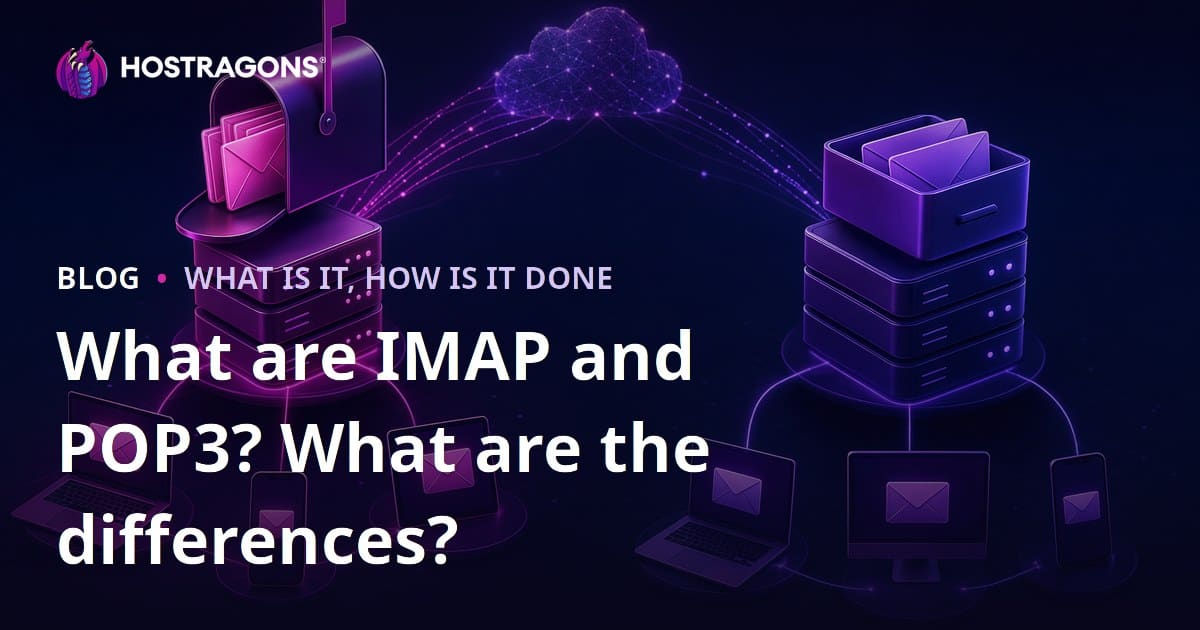
In email communication, two terms that frequently come up are IMAP and POP3, which define how emails are retrieved from the server. This blog post thoroughly explores what the IMAP and POP3 protocols are, their histories, and the key differences between them. topics discussed include the advantages offered by IMAP, the disadvantages of POP3, preview steps, and which protocol you should choose. Additionally, methods for managing email and important points to consider when using these protocols are also highlighted. Ultimately, a comprehensive guide is provided to help you choose the protocol that best fits your needs.
IMAP and POP3: Basic Definitions
In email communication, how messages are retrieved and managed is of utmost importance. This is where IMAP (Internet Message Access Protocol) and POP3 (Post Office Protocol version 3) come into play. Both protocols facilitate the retrieval of messages from email servers, but they exhibit significant differences in their operational principles and features. These differences can directly influence the user's email experience.
- What are IMAP and POP3?
- IMAP: Stores emails on the server and allows users to access them from various devices.
- POP3: Downloads emails from the server and typically stores them on the device.
- Synchronization: IMAP allows for synchronization across email accounts.
- Accessibility: Emails can be accessed from anywhere with IMAP.
- Storage Destinations: POP3 generally stores emails locally on the device.
IMAP allows emails to remain on the server, enabling users to access the same emails from different devices. This is particularly beneficial for users who utilize multiple devices or collaborate in teams. On the other hand, POP3 downloads emails from the server, saving them to the user's device. In this case, emails can only be accessed from the device to which they were downloaded, and copies on the server may be deleted.
| Feature | IMAP | POP3 |
|---|---|---|
| Email Storage | On the server | On the device (Generally) |
| Accessibility | Access from multiple devices | Access from one device (after downloading) |
| Synchronization | Available | Not available |
| Internet Connection Requirement | Continuous connection recommended | Only during download |
These fundamental differences between the two protocols shape their usage scenarios and user preferences. For instance, for a user with a constant internet connection who wants to access emails from different devices, IMAP may be a more suitable option, while for a user with limited internet access who prefers to keep their emails on a single device, POP3 could be the better choice.
The choice between IMAP and POP3 depends on the user's needs and expectations. Both protocols possess unique advantages and disadvantages, and selecting the right protocol can significantly enhance the email experience.
History of IMAP and POP3
IMAP and POP3 are foundational elements of email communication and have both undergone extensive development. These protocols have played crucial roles in the evolution of email technology and shaped the modern email experience. Both protocols are designed to cater to different needs and usage scenarios.
POP3 (Post Office Protocol version 3) emerged in 1984, based on the principle of downloading emails from the server and storing them on local devices. Initially offering a simple solution, its shortcomings became apparent over time, and a more advanced protocol was needed. POP3 maintained its popularity, especially during times of limited internet connectivity.
Timeline: Development of IMAP and POP3
- 1984: The first version of POP3 was released.
- 1988: The first version of IMAP was developed.
- 1996: IMAP4 was launched, providing enhanced features and flexibility.
- 2000s: With the proliferation of broadband internet, IMAP gained further popularity.
- Today: Both protocols are still in use, but IMAP better meets modern email needs.
IMAP was initially developed in 1988 and allows emails to remain on the server, providing access from different devices. This feature offers significant advantages, especially for users employing multiple devices. IMAP aims to address the shortcomings of POP3 by providing greater flexibility and control in email management.
| Protocol | Year Developed | Key Features |
|---|---|---|
| POP3 | 1984 | Downloads emails from the server and stores them on the local device. |
| IMAP | 1988 | Leaves emails on the server, allowing access from different devices. |
| IMAP4 | 1996 | Enhanced version of IMAP, offering more features and flexibility. |
| Modern Email | Today | Primarily uses IMAP, focusing on synchronization and multiple device support. |
Today, IMAP and POP3 are still in use, but the advantages of IMAP and its alignment with modern email requirements have made it the more commonly preferred option. Especially with the rise of mobile devices and constant internet connectivity, the importance of IMAP has further increased.
Key Differences Between IMAP and POP3
IMAP and POP3 are two distinct protocols used for receiving emails, each with its unique operational principles. The primary difference lies in how emails are stored—whether on the server or downloaded. While POP3 downloads emails from the server, IMAP allows them to remain on the server. This creates significant disparities concerning accessibility and synchronization across different devices.
Comparison of IMAP and POP3 Protocols| Feature | IMAP | POP3 |
|---|---|---|
| Email Storage | On the server | On the local device (After Downloading) |
| Multiple Device Support | High (Synchronized Access) | Low (Typically Single Device) |
| Internet Connection Requirement | Continuous connection required | Only required during download |
| Email Management | Server-based | Local-based |
These fundamental differences directly influence usage scenarios. For instance, users wanting to access emails from multiple devices who wish for the security of having their emails on the server will find IMAP to be a more suitable choice. Conversely, for circumstances where internet connectivity is limited and users prefer to retain their emails on a local device, POP3 may offer more advantages.
- Features Illustrating the Differences
- Email Storage Location: IMAP stores on the server, POP3 downloads to the device.
- Multiple Device Support: IMAP can sync with multiple devices, while POP3 is generally limited to one.
- Internet Connectivity: IMAP requires a continuous connection, while POP3 only needs it during downloads.
- Email Management: IMAP provides server-based management, while POP3 requires local management.
- Security: IMAP offers a more secure backup option by storing emails on the server.
Below, we will delve deeper into the differences between IMAP and POP3 in terms of storage structure and user experience.
Storage Structure
The storage structure of IMAP and significantly impacts email management. The IMAP protocol stores all emails on the server, allowing users to access the same emails from various devices (computer, phone, tablet, etc.). Changes (such as marking as read, deleting, organizing into folders, etc.) are synchronized across all devices. In contrast, POP3 downloads emails from the server and saves them to the local device. This means the emails can only be viewed on the device they were downloaded to, and there’s no synchronization with other devices.
User Experience
From a user experience standpoint, IMAP and POP3 offer important differences. IMAP and provides fast and continuous access to emails, making it ideal for mobile devices and users of multiple devices. Changes made to emails instantly reflect on other devices, delivering a consistent experience to the user. However, POP3 offers offline access to emails after downloading them but may create a fragmented experience for users switching between devices due to its lack of synchronization.
Advantages of IMAP
IMAP and POP3 are two commonly encountered protocols in the email realm. The benefits offered by IMAP are particularly appealing to users who use multiple devices and want to access their emails from anywhere. Let’s closely examine the standout advantages of IMAP.
Benefits of Using IMAP
- Multiple Device Support: Access your emails from various devices (phone, tablet, computer, etc.) simultaneously.
- Server-based Operation: Your emails are stored on the server, thus conserving space on your device and reducing the risk of data loss.
- Synchronization: Changes in your emails (marking as read, deleting, replying, etc.) are automatically synchronized across all your devices.
- Quick Access: You can quickly glance at emails by just downloading the headers and choose to download their content whenever you need.
- Advanced Searching: Use advanced search features on the server to easily find the emails you need.
- Security: Storing backups of your emails on the server means even if your device fails, your data remains intact.
Another significant advantage of IMAP is how it streamlines email management. For example, if you delete an email on one device, this action also reflects on all your devices. Thus, keeping your inbox organized and preventing clutter becomes much easier.
Thanks to its synchronization, support for multiple devices, and server-based operating principle, IMAP is tremendously compatible with modern email usage habits. Especially with the increasing prevalence of mobile devices, the benefits of IMAP have become even more pronounced.
Disadvantages of POP3
Although POP3 was widely preferred in the past for its simplicity and easy setup, it has some significant disadvantages when considering modern email usage habits. These disadvantages can be particularly decisive for users who utilize multiple devices and need constant access to their emails. The choice between IMAP and POP3 can become clearer by evaluating these disadvantages.
Key Disadvantages of the POP3 Protocol| Disadvantage | Description | Potential Consequences |
|---|---|---|
| Lack of Synchronization | Emails are not synchronized across devices after being downloaded from the server. | Different statuses (read/unread) of emails can be displayed across devices. |
| Risk of Data Loss | If emails are deleted from the server and an issue occurs on the device, there’s a risk of losing them. | Loss of access to important emails may occur. |
| Limited Accessibility | Emails can only be accessed from the device they were downloaded to. | Issues arise when needing access to emails from another device. |
| Archiving Difficulties | Centralized archiving of emails is challenging. | Email archiving and backup processes become complex. |
One of the biggest disadvantages is the lack of synchronization. POP3 typically deletes emails from the server once downloaded (depending on settings), which means emails remain only on the device they were downloaded to and are not synchronized across devices. For example, when you read an email on your phone, the same email may still appear as unread on your tablet.
Warnings for Using the POP3 Protocol
- Don't forget to back up your emails.
- You may need to configure your email accounts separately on different devices.
- Carefully check your email client's settings (e.g., whether emails should be left on the server).
- Ensure your email provider supports POP3.
- Keep your security measures updated, as POP3 passwords can be sent unencrypted.
Another critical disadvantage is the risk of data loss. Once emails are downloaded from the server, if an issue arises on your device (e.g., hard disk failure), you may lose access to the emails. Without a copy on the server, it may not be possible to retrieve these emails again. This poses a significant problem, particularly for important emails that need to be stored.
The limited accessibility of POP3 is also a factor to consider. Being able to access emails only from the device they were downloaded to can create issues when you need to access emails from another device or location. As many people now use multiple devices, this limitation may eliminate POP3 as a practical option. IMAP and other modern protocols solve this accessibility concern.
Preview Steps for IMAP and POP3

Understanding how each protocol works and how they may affect your email experience before using IMAP and POP3 is essential. Preview steps can assist you in selecting the correct protocol and optimizing your email setup. This process enables you to identify the solution that best meets your needs.
First, review the fundamental differences between IMAP and POP3. IMAP keeps your emails on the server and allows access from multiple devices. POP3, however, downloads your emails to your device and may delete them from the server (depending on the settings). This distinction plays a crucial role in determining which protocol may be more suitable for you.
The following table compares the essential features of IMAP and POP3 protocols. This table will help you better understand the advantages and disadvantages of each protocol.
| Feature | IMAP (Internet Message Access Protocol) | POP3 (Post Office Protocol version 3) |
|---|---|---|
| Email Storage | Stored on the server | Downloaded to the device (and optionally deleted from the server) |
| Multiple Device Support | Excellent | Limited |
| Internet Connection Requirement | Requires continuous connectivity (for reading/sending emails) | Only needed during download and sending |
| Email Management | Synchronized on the server | Managed on the device |
In the next step, check the settings of your email client. Most email clients (e.g., Outlook, Gmail, Thunderbird) support both IMAP and POP3. You will need to specify which protocol you want to use. Selecting the correct protocol during setup is essential for a smooth email experience.
Setup Requirements
- Your email address and password.
- The IMAP and POP3 addresses of your email server (e.g., imap.example.com, pop.example.com).
- IMAP and POP3 port numbers (typically 993 for IMAP and 995 for POP3, with SSL).
- SMTP server address and port number (for outgoing emails).
- Security settings (SSL/TLS).
- Your email client’s updated version.
You might consider testing both protocols for a short period. By creating a test account or using different protocols on multiple devices with your current account, you can gain a better understanding of which one suits you more. This trial process will help you manage your email more efficiently in the long run.
Which Protocol Should I Choose?
The choice of email protocol varies depending on your needs and usage habits. Both IMAP and POP3 have their own unique advantages and disadvantages. When deciding, it is crucial to consider whether you will be accessing your emails from multiple devices, the status of your internet connection, and your storage needs. By accurately assessing your requirements, you can select the most suitable protocol for yourself.
If you aim to access your emails from multiple devices (phone, tablet, computer, etc.), IMAP and would be the more suitable option for you. As IMAP stores your emails on the server, you will have access to the same up-to-date information across any device. Additionally, IMAP offers advantages regarding backup and synchronization of your emails.
Comparative Options
- Multiple Device Access: IMAP is ideal for accessing emails from multiple devices. POP3 is typically restricted to one device.
- Data Storage: IMAP stores emails on the server, saving local storage space. POP3 downloads emails to your device.
- Internet Access: IMAP requires a constant internet connection. POP3 allows offline access to emails once downloaded.
- Synchronization: IMAP synchronizes emails across devices. POP3 lacks synchronization capability.
- Backup: IMAP allows for server backup of emails. POP3 requires manual backup.
However, in situations where your internet connection is limited or you don’t require constant connectivity, the POP3 protocol may be a better option. POP3 facilitates offline access to your emails after downloading, making it useful, particularly for those who wish to minimize mobile data usage. It is also suitable for those who prefer to use an older, simpler protocol.
| Feature | IMAP | POP3 |
|---|---|---|
| Multiple Device Support | Yes | Limited |
| Email Storage | On the server | On the device |
| Offline Access | Limited | Yes (after downloading) |
| Synchronization | Yes | No |
When making a selection between IMAP and POP3, it is crucial to keep in mind your intended use and technical requirements. If you have constant internet access and wish to access your emails from various devices, IMAP is the better choice. However, if your internet connection is limited and you intend to access emails from only a single device, POP3 may be more appropriate. Remember that both protocols have their unique pros and cons.
Methods for Email Management
Email management is a critical skill that allows us to use our time more effectively in both personal and professional life. Effective email management goes beyond keeping your inbox organized; it aims to optimize the flow of communication and ensure that important messages are never missed. In this context, IMAP and POP3 protocols are foundational components of email management. Selecting the right protocol and effectively utilizing the options these protocols offer can significantly enhance your email experience.
Methods used in email management may vary according to individual needs and habits. Some users prefer to consolidate all their emails in a single inbox, while others may opt to utilize different folders and labels for different purposes. The important thing is to establish a system that suits you best while supporting your workflow. This system can include basic processes such as prioritizing, archiving, and deleting emails, as well as more advanced features like automated filters and reminders.
Various tools and techniques are available to make email management more effective. For instance, some email clients offer smart features that automatically sort your inbox and filter out irrelevant emails. Additionally, using email templates can accelerate the sending of frequently sent messages and promote consistency. Checking emails at specific intervals can also help you create a more focused work environment rather than being distracted by ongoing notifications.
Continuous learning and improvement in email management are crucial. As technology and communication habits constantly evolve, you may need to update your email management strategies accordingly. By experimenting with different tools and techniques, you can identify the ones that fit you best and continually refine your email management skills. Remember, effective email management not only saves you time but also reduces stress levels and enhances your work productivity.
The table below includes some fundamental terms utilized in email management along with their explanations:
| Term | Description | Importance |
|---|---|---|
| Inbox | The primary folder where newly received emails are gathered. | Central point for all new communications. |
| Archiving | Folder or process used to store emails. | Keeps the inbox clean and facilitates access to important information. |
| Filtering | Automated classification of emails based on specific criteria. | Helps prioritize and organize emails. |
| Labeling | Adding labels to emails based on topics, projects, or persons. | Allows easy finding and categorizing of emails. |
Consider the following tips to enhance your email management skills:
- First and foremost, regularly check and respond to your emails. Delaying responses can lead to a cluttered inbox.
- Take action immediately after reading emails. If they require a task, add it to your calendar or complete it right away.
- Utilize email filters and rules to enable automatic organization. This will help you keep your inbox tidy.
- Speed up the sending of frequently sent messages by creating email templates. This saves time and offers consistency.
- Unsubscribe from unnecessary subscriptions and newsletters. Focus only on content that truly interests you.
- Consider turning off email notifications to improve your focus. Checking emails at specific times might be more efficient.
Remember that effective email management is a continuous process involving practice and developing a system that suits your personal needs. Understanding how fundamental protocols like IMAP and POP3 function will aid in making informed decisions and optimizing your email experience.
Important Considerations When Using IMAP and POP3
When utilizing IMAP and POP3 protocols, it's important to consider the unique advantages and disadvantages of both. While using IMAP, you should remember that your emails are stored on the server and accessible from multiple devices. This may require you to take extra measures for data security. For example, using strong passwords and adding two-factor authentication to your email account will enhance your account's security.
| Feature | IMAP | POP3 |
|---|---|---|
| Email Storage | On the server | On the device |
| Multiple Device Support | Yes | Limited |
| Data Security | Dependent on Server Security | Dependent on Device Security |
| Internet Connection Requirement | May require continuous connection | Only required during download |
When using POP3, it is crucial to remember that your emails are downloaded to your device and deleted from the server. In this scenario, the security of your device becomes essential. If your device is lost or stolen, the risk of unauthorized access to your emails increases. Therefore, always use passwords or biometric authentication on your device and perform regular backups. Additionally, synchronizing emails across multiple devices can be challenging while using POP3.
Considerations When Choosing an Email Protocol
- Data Security: Evaluate which protocol best aligns with your data security needs.
- Number of Devices: Consider how many different devices you will be accessing your emails from.
- Internet Access: Determine whether you need a constant internet connection.
- Storage Space: Decide where you wish to store your emails (on the server or on the device).
- Backup: Ensure that your emails are regularly backed up.
With both protocols, it’s crucial to correctly configure the security settings of your email client. Exercise caution against emails coming from untrusted sources and avoid clicking on suspicious links. Additionally, ensure that your email client and operating system are up to date, as security vulnerabilities are often addressed through updates. Keep in mind that email security is not just related to protocol selection but is also strongly influenced by user behavior.
Activating the spam filtering features of both protocols will help protect you from unwanted emails. Spam emails can not only be annoying but may also contain malicious software or phishing attempts. Therefore, take your email security seriously and implement all necessary precautions.
Conclusion: Which Protocol Should You Choose?
The choice between the IMAP and POP3 protocols is primarily based on your email usage habits and needs. If you want to access your emails from multiple devices, store them on the server, and ensure synchronization, IMAP would be the more suitable option for you. IMAP is particularly ideal for users utilizing multiple devices and who require constant access to their emails.
| Feature | IMAP | POP3 |
|---|---|---|
| Email Storage | On the server | On the device |
| Multiple Device Support | Yes | Limited |
| Synchronization | Yes | No |
| Internet Connection Requirement | Continuous | Only during download |
On the other hand, if you prefer to store your emails on a single device, access them without an internet connection, and save server space, POP3 may make more sense. However, the lack of synchronization in POP3 and the challenges of usage across multiple devices should be kept in mind. If you are frequently checking your emails on mobile devices, IMAP would likely be a better alternative.
When making a decision, it’s also important to consider security. Both protocols can contain security vulnerabilities, so using SSL/TLS encryption for a secure email experience is vital. Additionally, ensure that your email client and server are up to date. Below are some recommendations for short-term and long-term decisions:
- Recommendations for Short-term and Long-term Decisions
- Firstly, evaluate your email usage habits.
- Determine the frequency of accessing emails from different devices.
- Revisit your need to access emails without an internet connection.
- Identify your email storage requirements (on server or device).
- Ensure you implement security measures (SSL/TLS encryption).
- Regularly update your email client and server.
The preference between IMAP and POP3 is entirely based on your personal needs and usage scenarios. By considering the advantages and disadvantages of both protocols, you can select the one that is most suitable for you. Remember that choosing the right protocol can significantly enhance your email experience.
Frequently Asked Questions
How do IMAP and POP3 protocols affect how I read my emails?
IMAP allows your emails to remain on the server, granting access from various devices in a synchronized manner. In contrast, POP3 downloads emails to your device and typically deletes them from the server, meaning they can only be accessed from the device they were downloaded to.
What advantages does IMAP offer that may be more appealing than POP3?
IMAP is ideal for those wishing to access their emails from multiple devices since emails remain synchronized on the server. This means changes made on any device (marking as read, deleting etc.) also reflect on the other devices. Conversely, POP3 is generally more suitable for single-device access to emails as it downloads them and deletes them from the server.
What potential issues might I experience when using POP3?
When using POP3, if your emails are deleted from the server after downloading, you won't be able to access the same emails from different devices. Additionally, in the event of a problem with your device, there’s a risk of losing your emails if there is no backup. Therefore, it’s crucial to back up your emails when using POP3.
How can I configure my email account to use either IMAP or POP3?
Configuring your email account for IMAP or POP3 depends on the email client you are using (e.g., Outlook, Gmail) and your email service provider (e.g., Gmail, Yahoo, your company’s email server). Generally, you will need to specify whether you want to use IMAP or POP3 in the account setup or configuration settings and enter the required server information (IMAP/POP3 server address, port number, security settings). Detailed guides on these processes are usually available on your email service provider's website.
When might it make more sense to use POP3 instead of IMAP?
If you only access your emails from a single device and don’t mind not having a constant internet connection, using POP3 could be sensible. POP3 offers offline access after downloading emails, allowing you to read them without an internet connection. It may also be suitable for users with limited internet quotas who seek to save bandwidth by downloading emails and deleting them from the server.
What email management methods can be beneficial for both IMAP and POP3 users?
Methods that can benefit both IMAP and POP3 users include: routinely deleting or archiving emails, using folders to categorize emails, labeling important emails, activating spam filters, and regularly updating your email client and operating system.