 Afrikaans
 Azərbaycan
 Bosanski
 Čeština
 Dansk
Dansk Deutsch
 English
 Español
 Filipino
 Français
 Hrvatski
 Indonesia
 Italiano
 Magyar
 Melayu
 Nederlands
 Norsk
Norsk Oʻzbek
 Polski
 Português
 Română
 Slovenčina
 Slovenščina
 Suomi
Suomi Svenska
 Tiếng Việt
 Türkçe
 Ελληνικά
 Беларуская
 Български
 Русский
 Српски
 Українська
 עברית
עברית اردو
اردو العربية
 پښتو
پښتو فارسی
فارسی አማርኛ
አማርኛ मराठी
मराठी বাংলা
বাংলা தமிழ்
தமிழ் ไทย
ไทย မြန်မာ
 한국어
한국어 中文
中文 日本語
日本語


Growing medicinal and aromatic herbs at home involves cultivating fragrant, hardy plants like lavender and rosemary on your balcony, terrace, or sunny windowsill. This process requires the right pots, well-draining soil, regular yet measured watering, and timely pruning. Lavender needs at least 6 hours of sunlight a day, thrives in well-drained, lime-rich soil, and prefers infrequent watering. Rosemary, similarly, loves bright light but requires careful moisture monitoring until it establishes roots in its early stages. The goal at home is to develop healthy plants, harvest leaves and flowers at the right time, dry them, and create a clean, traceable production system for personal use or small-scale sales.
Lavender and rosemary are among the most popular medicinal and aromatic herbs in Turkey due to their adaptability to the Mediterranean climate. Both plants stand out for their fragrant essential oil components, decorative appearance, and ability to be preserved by drying. However, a common mistake when growing these herbs at home is to treat them like houseplants, watering them constantly and leaving them in heavy peat. The key to success is simple: plenty of sunlight, fast-draining soil, pots that allow airflow, and controlled pruning.
In this guide, you will find a practical growing plan for lavender and rosemary at home, pot and soil measurements, a watering schedule, harvesting and drying methods, common mistakes, and suggestions for preparing a website if you wish to promote your products online. If you're considering turning your hobby into a blog, brand, or small e-commerce site, you can start with Domain Lookup and Registration for domain names and evaluate Web Hosting Packages for sales-oriented site options.
Why is Growing Medicinal and Aromatic Herbs at Home Popular?
In recent years, the cultivation of medicinal and aromatic herbs at home has evolved from a mere hobby to a broader interest encompassing sustainable living, natural care products, local production, and micro-entrepreneurship. What begins with a few pots of lavender and rosemary can extend into various areas, including dried herbs, bouquets, natural sachets, seed sales, or informative blog content, especially when proper records are kept.
The advantage of home production is that it offers a manageable experimental environment in a small space. For example, on a 1 square meter sunny balcony, you can grow 2 lavender and 2 rosemary plants using 4 pots that are 25-30 cm in diameter. The aim at this scale is not industrial yield, but rather to understand the plant's needs, learn the harvesting time, and develop good drying habits.
Set Realistic Expectations Before You Start
In its first year, lavender typically focuses on root and stem development; expecting a heavy bloom in the first year may lead to disappointment, with more realistic expectations set for the second year. Rosemary may leaf out faster under suitable conditions, but it is sensitive to root rot. Therefore, it is wise to consider the first three months as a period for observation and adaptation. Keeping weekly notes, recording watering dates, and monitoring leaf color changes are simple yet effective methods used by expert growers.
Comparison Table of Lavender and Rosemary
| Feature | Lavender | Rosemary |
|---|---|---|
| Sunlight requirement | 6-8 hours of direct sunlight daily | 5-8 hours of direct sunlight daily |
| Pot diameter | 25-30 cm in the first year, then 35 cm | 25-35 cm is suitable |
| Soil type | Lime-rich, sandy, very well-draining | Well-draining, slightly rocky, moderately nutrient-rich |
| Watering | When the soil is completely dry | When the top 3-4 cm is dry |
| Harvesting time | When about half of the flower spikes are open | When young shoots are 12-15 cm long |
| Most common mistake | Overwatering and leaving in shade | Heavy soil and pots without drainage |
| Home uses | Sachets, bouquets, dried flowers | Spice, aromatic bundles, seedlings |
Choosing the Right Location: Light, Air, and Heat
Light is the most critical factor for growing lavender and rosemary. A kitchen counter that doesn’t receive sunlight, a corner of a closed living room, or a north-facing window is often insufficient. For healthy plant growth, balconies facing south, southwest, or west are more suitable. If the direct sunlight duration falls below 6 hours, the stems may elongate, leaves may thin out, and aroma intensity may decrease.
Air circulation is equally important as light. Particularly, lavender is prone to fungal issues in damp and stagnant environments. Instead of placing pots flush against the wall, leave a gap of 15-20 cm between them, avoid letting water sit in the saucer, and do not wet the leaves in the evening. If you are growing in a closed balcony, regularly open the windows for air exchange.
Temperature Range
Both plants thrive comfortably in a temperature range of 15-30 °C. In summer, temperatures above 35 °C cause the potting soil to dry out quickly; therefore, checks should be made early in the morning. In winter, young plants should be protected from frost below -5 °C. Established rosemary can tolerate brief cold spells, but the roots in pots are more vulnerable than those in garden soil. On nights when frost is expected, moving the pots against a wall or covering them with a breathable cloth can be beneficial.
Setting Up Pots, Soil, and Drainage
Choosing the right pot for growing medicinal and aromatic herbs at home directly affects the plant's lifespan. Decorative pots without drainage holes are not suitable for lavender and rosemary. Always use pots with drainage holes, preferably terracotta or thick plastic pots. Terracotta pots have the advantage of removing excess moisture more quickly, which is beneficial for lavender; however, they require more frequent checks in summer.
Recommended Soil Mix
A practical mix for home conditions can include the following ratios:
- 2 parts quality peat or garden soil,
- 1 part coarse river sand or pumice,
- 1 part perlite, lava rock, or fine gravel,
- A small handful of agricultural lime or lime-rich garden soil for lavender,
- A small amount of mature compost for rosemary.
The aim of this mix is not to retain water but to ensure that water drains away quickly from around the roots. Simply filling the bottom of the pot with stones does not solve drainage issues on its own; the key is that the entire mix is permeable. The soil should allow water to flow out of the bottom hole within 30-60 seconds after watering but should not become compacted like mud.
Seedling or Seed?
For beginners, starting with seedlings is generally safer. Lavender seeds can germinate irregularly and take a long time to reach their true form. Rosemary seeds also germinate slowly; propagation by cuttings is more practical. Choose seedlings that are healthy, have vibrant leaves, and show no signs of rot at the root collar or moss on the pot surface for your first attempt. After acquiring the seedling, it is better to transplant it into a pot that is 4-6 cm wider than the current root volume instead of a very large pot for more balanced results.
Step-by-Step Guide to Growing Lavender
1. Planting
Before planting the lavender seedling, lightly moisten the potting mix. Position the seedling so that the root collar is level with the soil surface. Planting too deep can lead to stem rot. After planting, give it a good watering and keep the pot in a semi-sunny area for 2-3 days before moving it to full sun.
2. Watering
The golden rule for lavender is to allow the soil to dry out. If you feel moisture when you insert your finger into the soil 4-5 cm, do not water. In summer, watering once or twice a week on the balcony may be sufficient; during cooler seasons, this interval can extend to 10-15 days. The amount of watering should be enough to allow some water to drain out of the bottom of the pot, and any water collected in the saucer should be discarded within 10 minutes.
3. Pruning
If lavender is not pruned, it can become woody, sparse, and lose its shape. It is beneficial to limit flowering in the first year by taking 2-3 cm off the tips of the shoots to encourage branching. After flowering, about a third of the green shoots can be pruned. However, avoid heavy pruning down to the bare woody parts; lavender does not always produce strong shoots from old wood.
4. Harvesting and Drying
The quality of lavender is highest when about a third of the flower spikes are open. Harvest in the morning after the dew has dried but before the sun gets too harsh. Bundle stems in groups of 15-20 and hang them upside down in a cool, shady, and well-ventilated area. Drying in direct sunlight can increase color and aroma loss. Drying is typically complete within 7-14 days.
Step-by-Step Guide to Growing Rosemary
1. Planting and Rooting
When planting the rosemary seedling, check whether the roots are congested. If the roots have formed a ring around the pot, they can be loosened slightly. For the first 2 weeks after planting, the soil should not be allowed to dry out completely, but it should not be kept overly wet either. This period is crucial for the roots to adapt to their new environment.
2. Watering and Feeding
Rosemary requires slightly more regular moisture during its early stages compared to lavender. Water when the top 3-4 cm is dry. Continuous fertilization is not necessary; excess nitrogen can weaken the plant's aroma and produce leggy shoots. A small amount of mature compost or half a dose of organic liquid fertilizer in the spring is sufficient. Fertilization should not take place in winter.
3. Pruning and Shaping
To encourage rosemary to take on a bushy shape, you can pinch back the shoots when they are 12-15 cm long. The fresh shoots that are cut can be used as a spice in the kitchen. It is safe to cut no more than one-third of the plant at a time. Heavy pruning, especially on older branches, can make recovery difficult.
4. Propagation by Cuttings
To propagate rosemary, select a semi-woody shoot about 8-10 cm long. Remove the lower leaves, plant it in a moist mixture of perlite and peat, and keep it in a bright but not directly sunny location. If the environment is around 20-24 °C, rooting may occur within 3-6 weeks. This method is a practical starting point for those wishing to produce seedlings on a small scale.
Diseases, Pests, and Common Mistakes
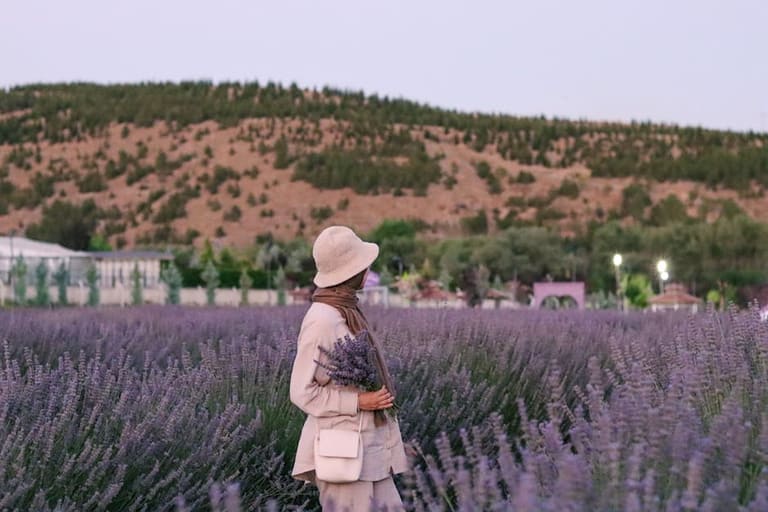
Most issues with lavender and rosemary relate to improper watering and insufficient light. If you notice yellowing leaves, softening at the root collar, or a bad smell from the soil surface, overwatering is likely. In such cases, stop watering, move the pot to a well-ventilated area, and if necessary, transfer the plant to a more porous mix.
- Root rot: Caused by pots without drainage, heavy soil, and frequent watering.
- Powdery mildew: A white coating may appear on leaves in damp and stagnant environments.
- Aphids: Can cluster on young shoots; early removal with water and natural soap applications may be effective.
- Sunburn: If a seedling that has been in the shade for a long time is suddenly exposed to full sun, the leaves may get damaged.
Before resorting to chemical treatments, it's important to address cultural practices. Placing the plant in the correct location, reducing watering, and improving air circulation are the first steps for most home-scale problems. If considering medicinal use, be mindful that any application may carry the risk of residues; legal and expert advice should always be taken into account for consumption and health claims.
Post-Harvest Storage and Simple Product Ideas
Store dried lavender and rosemary in a glass jar in a cool, dry, and dark cupboard. High humidity can lead to mold growth. Make sure the herbs are completely dry before placing them in the jar. Lavender flowers can be used in sachets, decorative bouquets, and natural soap projects. Rosemary is suitable for dried spices, aromatic olive oil experiments, and gift bundles.
If you are considering small-scale sales, avoid exaggerated health claims on product labels. Clearly state essential information like production date, ingredients, storage conditions, and contact information. Once you establish a brand name, acquiring your domain early is a good step to protect your digital assets. At this point, Domain Selection Guide and What is SSL Certificate content can help you establish a trustworthy web presence.
Transforming Home Production into a Blog or Small Business
Sharing your experience in growing medicinal and aromatic herbs at home through regular content not only enhances visibility in search engines but also builds trust. Topics like monthly lavender growth, rosemary cutting trials, balcony arrangements, and post-harvest drying processes are areas where users are looking for real experiences. Supporting these contents with photos, dates, and measurements sends strong signals in terms of E-E-A-T.
If you are setting up a simple website, you can start with the following pages:
- About Us: Describe your production area, experience, and approach.
- Blog: Share care calendars, trial results, and product preparation processes.
- Products: List legal and suitable products like dried bundles, seedlings, or workshops.
- Contact: Provide a reliable channel for orders, inquiries, and collaboration requests.
- Security: Opt for an SSL-secured, fast-loading, and mobile-friendly infrastructure.
A WordPress-based blog offers a quick start for users with limited technical knowledge. For a strong foundation in setup, backup, and performance, you can consider WordPress Hosting options. Using SSL is important for visitor trust and payment pages; therefore, the Buy SSL Certificate link can also be added to the site plan. If you transition to a growing e-commerce structure, exploring VPS Server alternatives for higher resources and control can be beneficial.
Seasonal Care Calendar
Spring
Spring is the best time for planting, repotting, and light feeding. After the risk of frost has passed, acclimatize seedlings to the outdoor environment. Form pruning for lavender and pinching back for rosemary can be done during this period. Gradually acclimatizing new seedlings to direct midday sun in the first week reduces leaf stress.
Summer
The main focus in summer is controlling watering. Check soil moisture early in the morning. In very hot areas, slightly elevating pots from the stone floor during the afternoon can lower root temperature. Lavender flower harvesting and regular shoot trimming for rosemary typically intensify during the summer months.
Autumn
Avoid heavy pruning in autumn. Before the plant enters winter, weak, diseased, and inward-growing branches can be removed. Watering frequency is reduced. Check stocks of dried products; separate any damp bundles.
Winter
Growth slows down in winter. If potting soil remains wet for long periods, extend the watering interval. In areas with a high frost risk, move pots to a sheltered area. If you need to bring them indoors, choose the brightest windowsill and avoid dry, hot spots like those above radiators.
Success Checklist
- Choose a location that receives at least 6 hours of sunlight daily.
- Use a pot with drainage holes, 25-35 cm in diameter.
- Prepare a well-draining mix containing peat, sand, perlite, or pumice.
- Allow lavender's soil to dry completely.
- Water rosemary in its early stages as the top soil dries.
- Avoid letting water sit in the saucer.
- Harvest in the morning when the plant is dry.
- Complete drying in a shady and ventilated area.
- Avoid sales texts containing health claims.
- Document your production notes with photos and dates.
Frequently Asked Questions
Which plant is the easiest to start with for home cultivation of medicinal and aromatic herbs?
For beginners, rosemary is generally easier because it leafs out quickly with the right light and drainage, making it suitable for regular use in the kitchen. Lavender is also resilient but requires more careful handling in terms of watering and shade. The best start is to experiment on a small scale with one lavender and one rosemary seedling.
Can lavender and rosemary be grown indoors?
They can, but they will only thrive in very bright, sunlit windows. These plants are not typical houseplants; if they stay in the shade for extended periods, they will develop weakly, with reduced aroma intensity and an increased risk of diseases. If a balcony or terrace is available, they tend to perform better than indoors.
How often should lavender be watered?
Instead of a specific interval, soil checks should be conducted. Watering is appropriate when the top 4-5 cm of soil in the pot is completely dry. In summer, this could mean watering once or twice a week; during cooler and more humid periods, this can extend to 10-15 days. Water should not be left sitting in the saucer.
How to propagate rosemary from cuttings?
Take an 8-10 cm semi-woody cutting from a healthy plant, clean the lower leaves, and plant it in a moist mixture of perlite and peat. Keep it in a bright location that doesn’t get direct sunlight, and maintain a lightly moist environment. Under suitable temperatures, rooting can occur within 3-6 weeks.
Can home-grown lavender and rosemary be sold?
Small-scale sales are possible; however, labeling, food or cosmetic usage, health claims, and local regulations must be considered. It is important to provide transparent ingredient information in categories like dried bundles, seedlings, or decorative products. If considering online sales, establishing a secure website, acquiring a domain, and ensuring SSL infrastructure are essential.
In summary, growing medicinal and aromatic herbs at home is a productive endeavor that anyone can start with the right light, well-draining soil, measured watering, and regular observation. Lavender thrives with patience and dry conditions, while rosemary benefits from balanced moisture and frequent pinching back. If you wish to share your experience digitally or transform it into a small brand, you can make a solid start with reliable domain registration, hosting, and SSL infrastructure.