 Afrikaans
 Azərbaycan
 Bosanski
 Čeština
 Dansk
Dansk Deutsch
 English
 Español
 Filipino
 Français
 Hrvatski
 Indonesia
 Italiano
 Magyar
 Melayu
 Nederlands
 Norsk
Norsk Oʻzbek
 Polski
 Português
 Română
 Slovenčina
 Slovenščina
 Suomi
Suomi Svenska
 Tiếng Việt
 Türkçe
 Ελληνικά
 Беларуская
 Български
 Русский
 Српски
 Українська
 עברית
עברית اردو
اردو العربية
 پښتو
پښتو فارسی
فارسی አማርኛ
አማርኛ मराठी
मराठी বাংলা
বাংলা தமிழ்
தமிழ் ไทย
ไทย မြန်မာ
 한국어
한국어 中文
中文 日本語
日本語

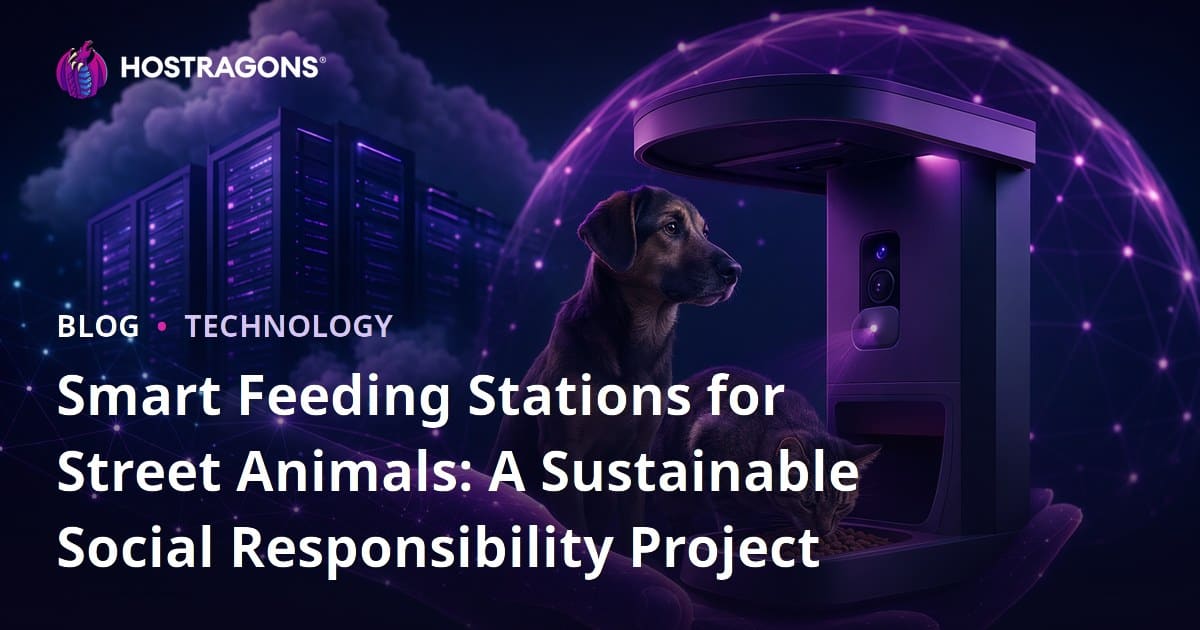
Smart Feeding Stations for Street Animals is a social responsibility initiative that enhances the distribution of food and water through sensors, timers, remote monitoring panels, and location-based data, making it more organized, hygienic, and sustainable. This project is not just about leaving food for animals; it aims to establish a measurable care infrastructure for municipalities, businesses, schools, tech communities, and volunteers. When planned effectively, a smart feeding station does not just reduce daily feeding needs; instead, it prevents waste, highlights critical areas, organizes volunteer efforts, and supports feeding street animals in safer locations.
In this article, we will focus solely on the concept of this project: how to design smart feeding stations, what components are necessary, how to set up the website and digital tracking infrastructure, how to budget, and how to ensure security and sustainability. This guide prepared for the Hostragons blog offers a practical roadmap for organizations and volunteer teams looking to combine technical infrastructure with social benefit.
What is the Purpose of the Social Responsibility Project?
The primary goal of the project is to ensure that street animals have more organized, controlled, and secure access to food and water. In traditional methods, food is often left randomly; factors such as rain, temperature, pests, traffic, and human density reduce the efficiency of feeding. Smart feeding stations, on the other hand, make this process systematic. For example, food levels can be measured with sensors, alerts can be sent for the water reservoir's fullness, location-based volunteer assignments can be made, and the device's operational status can be monitored through an online panel.
This type of social responsibility project impacts not only animal welfare but also the quality of urban life. When designated safe stations are used instead of uncontrolled feeding areas, environmental cleanliness increases, citizen complaints decrease, and municipal or volunteer teams utilize their resources more effectively. It is also crucial for the project to be measurable: metrics such as how many stations were established, how many kilograms of food were used monthly, how many volunteers were actively working, and how many malfunction reports were resolved can demonstrate the project's impact.
What Components Make Up a Smart Feeding Station?
A successful system is not just about a food bowl. Hardware, software, internet connectivity, energy management, data security, and field operations must be considered together. Even in a small-scale pilot project, defining these components from the outset reduces future costs and time loss during growth phases.
1. Physical Feeding Unit
The feeding unit is the main structure where the food and water reservoirs are located. It should be durable against outdoor conditions, easy to clean, sturdy against tipping, and suitable for safe access by animals. Stainless steel, UV-resistant plastic, or composite materials can be preferred. Basic safety criteria include ensuring that the food reservoir does not get wet, that the water section can be easily cleaned to prevent algae formation, and that there are no sharp edges.
2. Sensors and Automation
The most crucial layer that provides the smart structure is the sensors. A weight sensor for food levels, ultrasonic or float sensors for water levels, an accelerometer to understand the device's tipping status, and simple environmental sensors for temperature tracking can be used. A timer or a controlled distribution mechanism prevents food from being dispensed all at once, thus reducing waste. For instance, a reservoir with a capacity of 10 kilograms can dispense portions of 250-400 grams at designated times.
3. Connectivity and Data Transfer
To monitor the data, the device must have a communication method. Options such as Wi-Fi, 4G/LTE, LoRaWAN, or NB-IoT should be evaluated based on the field. In areas with internet access, such as parks, campuses, or business gardens, Wi-Fi may suffice. In dispersed urban locations, LoRaWAN or mobile connections may be more suitable due to low energy consumption and wide coverage. The collected data should be transferred to a secure server and viewable on the web panel. At this point, a reliable hosting infrastructure is needed for the project website, volunteer panel, or data API Web Hosting.
4. Management Panel and Website
The visible face of the project is the website; its operational heart is the management panel. The website should include the project's purpose, an active station map, donation and volunteer information, transparent reports, and communication channels. The management panel should allow monitoring of device status, food and water levels, malfunction reports, maintenance schedules, and volunteer tasks. The domain name should be trustworthy and memorable Domain Lookup. Additionally, if data entry forms, donation pages, and user accounts are utilized, an SSL certificate is mandatory SSL Certificate.
How Should the Project Scope Be Determined?
One of the most common mistakes of well-intentioned projects is to expand too broadly from day one. The correct approach for smart feeding stations is to start with a pilot application. In the initial phase, testing 3-5 stations in selected areas, analyzing the data, and then scaling is healthier. When determining the pilot area, factors such as animal density, traffic risk, volunteer access, vandalism risk, suitability for electricity or solar energy, municipal permission, and environmental cleanliness should be evaluated together.
For example, a starting scenario for a district could be: 5 stations, each with a capacity of 10 kilograms of food and 8 liters of water; 2 field checks per week; daily automatic portioning; level alerts on the web panel; monthly reports. This structure allows understanding whether the system works without requiring a large budget. After the first 60 days, food consumption, malfunction rates, citizen feedback, and volunteer performance can be analyzed to plan the second phase.
Practical Roadmap: Starting in 8 Steps
The following steps provide a feasible structure for a municipality-supported project, a private company’s social responsibility activity, or a volunteer community initiative. Documenting each step increases the project's sustainability, even if the team changes.
Step 1: Conduct a Needs Analysis
Observe the areas where feeding will take place. The number of animals, existing food drop-off points, water sources, traffic hazards, citizen density, and cleanliness should be noted. At least 2 weeks of observation will reduce the risk of selecting the wrong location.
Step 2: Identify Stakeholders
Municipal veterinary services, neighborhood volunteers, local businesses, school clubs, software developers, and sponsors can contribute differently to the project. Role distribution should be clear: who provides food, who performs maintenance, who manages the website, and who prepares reports?
Step 3: Create a Technical Design
The capacity of each station, sensor set, energy source, connection method, and data transmission frequency should be determined. For example, if a device powered by batteries and a solar panel has a data transmission interval selected as 2 hours instead of 15 minutes, energy consumption will decrease.
Step 4: Establish the Digital Infrastructure
A reliable hosting solution should be selected for the project website, monitoring panel, and database. Even if traffic is low at the beginning, performance is important due to report pages, visual content, and map integrations. A management-friendly package may be sufficient for a WordPress-based promotional site WordPress Hosting. If a custom panel or API will be developed, more flexible solutions like VPS should be preferred VPS Server.
Step 5: Set Up Pilot Stations
In the initial installation, photographs of each device, GPS location, serial number, and responsible volunteer should be recorded. After physical assembly, sensor calibration should be performed, food and water tests should be completed, and the device's proper appearance on the web panel should be verified.
Step 6: Create a Maintenance Procedure
It should not be assumed that smart systems do not require maintenance. A weekly cleaning, monthly mechanical check, sensor verification, and software update plan should be prepared. When a malfunction report is received, a maximum intervention time can be set, for example, 24 hours.
Step 7: Implement Transparent Reporting
The collected data should be transformed into a monthly report. Total food consumption, number of water refills, percentage of active devices, volunteer hours, and resolved malfunctions can be shared. This transparency increases the trust of donors and sponsors.
Step 8: Scale According to Data
In the second phase, only locations similar to well-functioning ones should be selected. Areas with high malfunction rates may require different box designs, sturdier installations, or different connection methods. Scaling should be data-driven rather than emotion-driven.
Comparison of Traditional and Smart Feeding
The clearest difference for decision-makers is operational control and sustainability. The table below summarizes the key distinctions between the two approaches.
| Criterion | Traditional Feeding | Smart Feeding Stations |
|---|---|---|
| Tracking | Generally manual and irregular. | Can be monitored via sensors and panels. |
| Waste Control | Food may be left too much or spoiled. | Waste is reduced through portioning and level tracking. |
| Volunteer Management | Operated through WhatsApp groups and personal effort. | A task assignment and notification system can be established. |
| Reporting | Data is limited, and measuring impact is difficult. | Monthly consumption, malfunction, and access reports can be obtained. |
| Cost | Initial cost is low. | Initial cost is higher, but long-term control advantages are greater. |
| Hygiene | More exposed to environmental conditions. | More manageable with enclosed reservoirs and regular maintenance. |
Budget Planning: Realistic Items
The budget is one of the most critical headings determining the project's reliability. It is not enough to calculate only the cost of the devices. Hardware, software, field installation, connectivity expenses, maintenance, spare parts, food-water supply, and communication activities should be considered together. In Turkey, since costs vary depending on suppliers and exchange rates, it is more accurate to create a percentage plan rather than providing fixed prices.
- Hardware and housing: Approximately 35-45% of the total initial budget.
- Sensors, microcontrollers, and connectivity modules: About 15-25%.
- Software, website, and panel: Approximately 15-20%.
- Installation, maintenance, and spare parts: About 10-15%.
- Communication, design, and reporting: Approximately 5-10%.
For example, in a pilot project with 5 stations, the budget should include not only the cost per device but also the website, hosting, domain, SSL, map integration, and volunteer training. If a corporate sponsor will be involved, the project file should separately show one-time installation costs and monthly operating costs. This distinction facilitates the sponsor's long-term support decision.
Why Should the Website Be at the Center of the Project?
While smart feeding stations operate in the field, trust, visibility, and coordination are formed in the digital environment. A social responsibility project without a website, even if well-intentioned, will struggle to scale. Because volunteers want to know where to apply, sponsors want to know what they are supporting, and citizens want to know where to report malfunctions or suggestions.
A well-prepared project site should include the following pages:
- About the Project: Purpose, scope, and working principles.
- Active Station Map: General area display while preserving precise location information.
- Volunteer: Form, task types, and training notes.
- Transparent Reports: Monthly food consumption, maintenance, and donation information.
- Report a Malfunction: A simple form that can include a photo.
- Sponsors: A transparent list of supporting organizations.
From a technical perspective, a website that opens quickly, is mobile-friendly, and secure is important. Since user data will be processed in donation or application forms, SSL and regular backups should not be neglected Website Security. Additionally, as the project grows, more flexible server resources may be needed for API integrations, mapping services, and device data Cloud Server.
Data Security and Ethical Principles
In such projects, data security is not only a technical issue but also an ethical responsibility. If device locations are shared openly, there is a risk of harm by malicious individuals. Therefore, it may be preferable to display approximate areas on the public map instead of exact coordinates. Full location information in the management panel should only be shared with authorized volunteers and project managers.
Personal data should also be handled with care. Volunteer application forms should not request unnecessary information; they should be limited to operationally necessary fields like name, contact information, district, and suitable time intervals. Password policies, two-factor authentication, regular backups, and access logs should become standard, especially in corporate projects. Secure panel access, SSL usage, and up-to-date software versions are fundamental starting points for projects hosted on Hostragons.
How to Measure Success Metrics?
Social responsibility projects should be articulated not just through emotional impact but also through numbers. This approach provides both E-E-A-T confidence and enhances the project's sustainability. Success metrics do not have to be complex; they just need to be regular and consistent.
- Active station rate: Number of operational stations / total number of stations.
- Monthly food consumption: Consumption in kilograms and waste estimates.
- Water refill frequency: Particularly a critical indicator during summer months.
- Malfunction resolution time: Average time from notification to intervention.
- Volunteer participation: Number of active volunteers and task completion rate.
- Citizen feedback: Categories of positive, negative, and suggestions.
An example pilot target could be: keeping at least 90% of the 5 stations active in the first 3 months, intervening in malfunctions within 24 hours, publishing the monthly report in the first week of each month, and involving at least 20 volunteers in the system. These targets are both realistic and measurable.
Practical Tips from Field Experience
When designing a smart feeding station, the desk plan and field reality can differ. Especially outdoor conditions can be more wear-and-tear than expected. Sun, rain, dust, mud, human interference, and animal behaviors directly impact device design. Therefore, it is recommended that the prototype be tested in the field for at least 30 days.
- If the food reservoir will be transparent, consider the risk of food spoilage in sunlight.
- The water section should be easily removable and cleanable; fixed reservoirs can lead to hygiene issues.
- If the device's bottom is slightly elevated off the ground, the effects of flooding and mud will be reduced.
- If a solar panel will be used, installation should not be done without conducting a shadow analysis.
- Adding a QR code can facilitate citizens reporting malfunctions.
- If camera usage is planned, privacy and legal permits should be evaluated separately.
A simple QR code application can significantly contribute to the project. When a citizen scans the QR code, an automatically generated form opens with the device's name; they can select one of the options: malfunction, food out, water out, or cleaning required. If this form is connected to the panel on the website, teams can be directed to the field more quickly.
Model Proposal for Corporate Social Responsibility
If a company wants to undertake this project, it should not only be a donating party but also a stakeholder that establishes a sustainable system. In a corporate model, annual goals can be clarified: installation of 10 smart feeding stations, monthly reporting, volunteer training, maintenance contracts, and a transparent impact dashboard on the website. Thus, the project transforms from a one-time PR effort into a digital infrastructure that generates social benefit.
Brands close to the technology ecosystem like Hostragons can provide the strongest contribution in such projects through digital continuity: secure hosting, domain management, SSL, backups, email infrastructure, and scalable server resources when needed. However, the center of the project should always be the welfare of street animals, the respectful management of volunteer efforts, and the order of public spaces.
Risks and Preventive Solutions
Like any social responsibility project, smart feeding stations also have risks. Accepting these upfront and preparing a preventive plan increases the project's reliability. The most common risks include vandalism, sensor malfunctions, internet outages, food supply issues, hygiene neglect, and incorrect location selection.
- Vandalism: Secure installation, well-lit areas without cameras, local business support, and regular checks.
- Internet outages: The device should be able to operate offline for a limited time and buffer data.
- Hygiene issues: A weekly cleaning schedule and assignment of a responsible person.
- Supply disruptions: Maintaining at least 1 month's food stock and a list of alternative suppliers.
- Incorrect location: Location revisions based on pilot testing and citizen feedback.
A preventive approach also facilitates communication in times of crisis. The announcement area on the website and an email list can be used for transparent notifications in cases of maintenance or temporary outages Corporate Email.
Frequently Asked Questions
What are Smart Feeding Stations for Street Animals?
Smart Feeding Stations for Street Animals is a social responsibility infrastructure that manages the distribution of food and water through sensors, automation, and an online tracking panel. The aim is to ensure that street animals are fed regularly and securely while reducing waste and operational complexity.
Is municipal permission required for this project?
If devices will be placed in public areas, it is necessary to consult with the relevant municipal departments. Setting up without permission and coordination in parks, sidewalks, squares, or public areas may lead to removal, complaints, or security issues in the future.
Can a smart feeding station operate without the internet?
Yes, basic portioning and timing can be designed to work without the internet. However, internet connectivity provides significant advantages for monitoring food levels, malfunction reports, location tracking, and remote management. In case of outages, the device should be able to store data in memory and send it once the connection is restored.
Is a website mandatory for this project?
Technically it is not mandatory; however, it is strongly recommended for volunteer applications, transparent reporting, malfunction reporting, sponsor communication, and public trust. A website enhances the visibility and sustainability of the project.
How many smart feeding stations should be established for the beginning?
A pilot application with 3-5 stations is ideal at the start. This number provides sufficient data to test the technical system, observe maintenance loads, measure volunteer organization, and verify budget assumptions.
Brief Summary and Soft Call to Action
A social responsibility project focused solely on Smart Feeding Stations for Street Animals brings together technology and compassion on the same platform. The key to success lies in starting with a small pilot, choosing the right location, measuring the process with sensors and web panels, ensuring safety, and conducting transparent reporting. If you are planning a reliable website, domain, SSL, or scalable server infrastructure for your project, you can explore Hostragons solutions and establish your socially beneficial digital infrastructure on solid foundations.