 Afrikaans
 Azərbaycan
 Bosanski
 Čeština
 Dansk
 Deutsch
 English
 Español
 Filipino
 Français
 Hrvatski
 Indonesia
 Italiano
 Magyar
 Melayu
 Nederlands
 Norsk
 Oʻzbek
 Polski
 Português
 Română
 Slovenčina
 Slovenščina
 Suomi
 Svenska
 Tiếng Việt
 Türkçe
 Ελληνικά
 Беларуская
 Български
 Русский
 Српски
 Українська
 עברית
 اردو
 العربية
 پښتو
 فارسی
 አማርኛ
 मराठी
 বাংলা
 தமிழ்
 ไทย
 မြန်မာ
 한국어
 中文
 日本語


Smartwatches and location tracking devices for kids are the focus of a niche parent blog designed to help families choose the right products based on criteria like safety, privacy, battery life, GPS accuracy, school mode, SIM support, and ease of use. For those looking to create such a blog, the best approach is to establish a clear testing methodology, produce SEO content that answers real questions from parents, select a reliable hosting infrastructure, and center transparency around sensitive topics like children's data.
This guide will address step-by-step how to position a parent blog focused solely on children's smartwatches and location tracking devices, how to expand it with content clusters, how to conduct product reviews, and how to set up the technical web infrastructure. The goal is not to create a superficial site that gains traffic in the short term but to build a lasting publication model that parents return to, that brands take seriously, and that Google clearly recognizes as trustworthy.
Why Choose Such a Narrow Niche?
Starting a general parent blog may initially seem like a way to reach a broader audience. However, in 2026 SEO standards, a superficial approach to broad topics makes it harder to establish authority, especially in sensitive areas like health, child safety, finance, and personal data. In contrast, a blog dedicated solely to smartwatches and location tracking devices for kids sends a clear signal of expertise to search engines and users.
The advantage of a narrow niche is the ability to systematically cover different search intents within the same target audience. A parent may first search for what a smartwatch for kids is, then move on to more detailed queries like GPS accuracy, the need for a SIM card, rules for school use, data security, and comparisons of the best models. If your blog is visible at every stage of this journey, it not only gains traffic but also builds trust.
- Perceived expertise increases: All content revolves around the same main topic, enhancing topical authority.
- Internal linking becomes more meaningful: Reviews, comparisons, and guide content naturally support each other.
- Conversion potential rises: The visitor is already a parent researching products, making them more receptive to recommendations.
- Brand positioning clarifies: The site can become a go-to reference for child technology safety.
Defining the Target Audience Accurately
The first step to a successful parent blog is knowing exactly who you are writing for. In this niche, the target audience isn't just tech enthusiasts. The primary readers are parents or caregivers who want to ensure that their children are safe on their way to school, at the park, on the bus, or at crowded events.
This audience may not be familiar with technical jargon. Terms like GPS, LBS, Wi-Fi positioning, eSIM, IP67, and encrypted data transfer can be confusing for parents. Therefore, the blog's language should be both explanatory and straightforward. Products should be evaluated not just by technical specifications but through real-life scenarios.
Example Reader Personas
- Elementary School Parent: A parent of a child who has just started school, looking for features like location sharing and calling.
- Divorced or Separated Parent: A user seeking practical solutions for communication and accessibility for their child.
- Cautious Technology Parent: Someone who wants to make careful decisions due to screen time, privacy, and school rules.
- Parent of a Child with Special Needs: A family prioritizing features like emergency buttons, safe zone alerts, and precise tracking capabilities.
Utilizing these personas in content creation makes the titles and examples more realistic. For instance, instead of just creating a list of the best smartwatches for kids, more intent-focused content could be produced, such as the most useful location tracking features for children using school buses.
Domain Name, Hosting, and Technical Foundation
For your niche blog to appear credible, the technical infrastructure must be solid from the start. A site that loads slowly, experiences frequent outages, or lacks a security certificate makes it difficult for parents to trust you on sensitive topics. Therefore, decisions around the domain name, hosting, SSL, and backups are as crucial as the content strategy.
When choosing a domain name, opt for something short, memorable, and relevant to the topic. Associations with child safety, smartwatches, tracking, and parenting guides can be beneficial; however, avoid overly long names or those that risk trademark infringement. After selecting your domain, you can evaluate suitable options for a reliable registration and management infrastructure via Domain Lookup and Domain Registration.
On the hosting side, it’s essential to start with fast SSD storage, regular backups, scalable resources, and easy WordPress setup. Since product reviews will be visually oriented, visual optimization, caching, and CDN support should also be considered. For a new niche blog, WordPress hosting packages offers a practical start, while more robust Web Hosting Solutions or managed server options can be evaluated as traffic increases.
Why is SSL Critical?
On a site focused on child and family safety, SSL is not just a technical SEO factor; it is a fundamental part of building trust. A site that does not use HTTPS may display security warnings in browsers, preventing users from leaving comments, subscribing to newsletters, or downloading guides. Therefore, before launching, SSL Certificate Installation should be completed, and all pages must operate over HTTPS.
Content Strategy: It's Not Enough to Just Review Products
Many niche sites try to grow by merely publishing product lists. However, in the 2026 SEO approach, search engines assess topic coherence and user satisfaction much more than individual reviews. Therefore, a blog focused on smartwatches and location tracking devices for kids should feature four main types of content.
1. Informative Guides
These pieces target parents at the start of the buying journey. Example titles include: What is a smartwatch for kids, How does GPS tracking work for children, Is using a smartwatch in school allowed, How is data security ensured in child location tracking devices? These guides form the foundational authority of the blog.
2. Comparison Content
For readers who are undecided, content comparing two or more products based on criteria should be prepared. Topics like Which is better, a smartwatch or a GPS tracking device? or Should I choose a SIM-enabled watch or a Bluetooth tracking tag? indicate high purchase intent. Tables, scoring systems, and clear decision recommendations should be included in these pieces.
3. Real Product Reviews
Review articles are one of the strongest areas for demonstrating E-E-A-T signals. Whenever possible, share tangible observations like unboxing, setup time, app interfaces, battery tests, and accuracy in indoor and outdoor locations. You should provide your test results instead of merely copying the manufacturer's specifications.
4. Problem-Solving Content
One of the most searched topics for users is troubleshooting and setup issues. Content addressing problems like location not updating, watch not recognizing the SIM card, app not sending notifications, battery draining quickly, and safe zone alerts not functioning brings regular traffic. Such articles can be inspired by the Error Solutions and Technical Guides category.
How Should the Product Review Methodology Be?
The key difference for a trustworthy parent blog is evaluating each product with the same standards. Readers should clearly see why you recommend or do not recommend a model. To achieve this, establish a fixed testing protocol to be used in every review.
- Setup Test: How long does unboxing, app setup, SIM activation, and initial pairing take?
- Location Accuracy: How many meters of deviation can be measured in open areas, indoors, around schools, and in vehicles?
- Battery Performance: What percentage of battery remains after 24, 48, and 72 hours of normal use?
- Communication Quality: Is voice calling, video calling, and messaging practical?
- Security Settings: Are there restrictions on contacts, unknown number blocks, safe zones, and an SOS button?
- Child Experience: Is the watch comfortable on the wrist, are the menus understandable, and is the screen brightness adequate?
- Parent App: Is the app available in English, do notifications arrive on time, and are data permissions clear?
For example, when reviewing a product, instead of stating that the battery life is three days, it is far more valuable to provide concrete information like, with six location queries a day, two short calls, and school mode on, 12% battery remained after 46 hours of use. Such numerical data not only simplifies the reader's decision-making but also enhances the originality of the content.
Comparison Table: What Criteria Should Be Included in Content?
The following table shows an example evaluation framework that can be used for reviews of children’s smartwatches and location tracking devices in a parent blog. Using the same table for each product allows readers to quickly compare different models.
| Criterion | Why It’s Important? | How Is It Measured? | Example Rating |
|---|---|---|---|
| Location Accuracy | Provides results close to the child's actual location | Measured in three different environments for meter deviation | 1-10 |
| Battery Life | Reduces the risk of shutdown during the day | Tested based on normal usage scenarios | 1-10 |
| Privacy and Data Permissions | Affects the protection of child data | Evaluated based on app permissions and privacy policy | Pass/Fail |
| School Mode | Reduces distractions during lessons | Tested based on timing, locking, and notification behavior | 1-5 |
| Emergency SOS Feature | Provides quick communication in emergencies | Time measured from pressing the button to call and notification | Seconds |
| Durability | Important for child use against drops and water exposure | Evaluated based on IP certification, strap quality, and casing structure | 1-10 |
Keeping this table consistent in every review and supporting it with brief notes specific to the product distinguishes your blog from amateur review sites. Additionally, Google tends to view actual experiences, comparative analysis, and measurable criteria as more reliable signals in their product review systems.
SEO Plan: Focus on Search Intent, Not Just Keywords
In 2026, successful SEO is not just about sprinkling keywords throughout the text. Especially on sensitive topics like smartwatches and location tracking devices for kids, it’s essential to accurately interpret search intent. When a user searches for the best smartwatch for kids, they expect a product list, while searching for whether kids' smartwatches are harmful indicates a need for balanced information about safety, privacy, and screen time.
You can plan content clusters as follows:
- Core Guide Cluster: What is a smartwatch for kids, how does it work, what age is it suitable for?
- Safety Cluster: Is GPS tracking safe, how is child data protected, how to check app permissions?
- Buying Cluster: Best models, age-based recommendations, budget comparisons.
- Usage Cluster: Setup, SIM card selection, battery optimization, school mode settings.
- Legal and Ethical Cluster: Child privacy, school rules, parent-child communication balance.
Each cluster should contain a main guide and supporting sub-articles. Main guides should be more comprehensive, while sub-articles should focus on specific questions. For example, the main guide might be a smartwatch buying guide, while sub-articles could cover smartwatch recommendations for 7-year-olds, the advantages of SIM-enabled kids' watches, and the correct use of school mode.
Internal Linking and Site Architecture
Well-planned internal linking not only keeps users on the site longer but also signals to search engines which pages are more important. Your niche blog should have a simple category structure: Guides, Reviews, Comparisons, Safety, and Setup are sufficient as main sections.
Linking from a product review to the relevant buying guide, then to a safety article and a setup guide creates a natural flow. In technical infrastructure articles, you can reference Hostragons’ resources: for blog setup, WordPress site setup guide, for speed and performance, Methods for Website Acceleration, for secure connections, What is SSL Certificate, and for branded email, Corporate Email Services.
In the URL structure, prefer short and clear addresses. For instance, structures like /kids-smartwatch-review/ or /gps-tracking-device-setup/ are clear for both users and search engines. Avoid unnecessary dates, lengthy parameters, or meaningless numbers.
Trust Signals for E-E-A-T
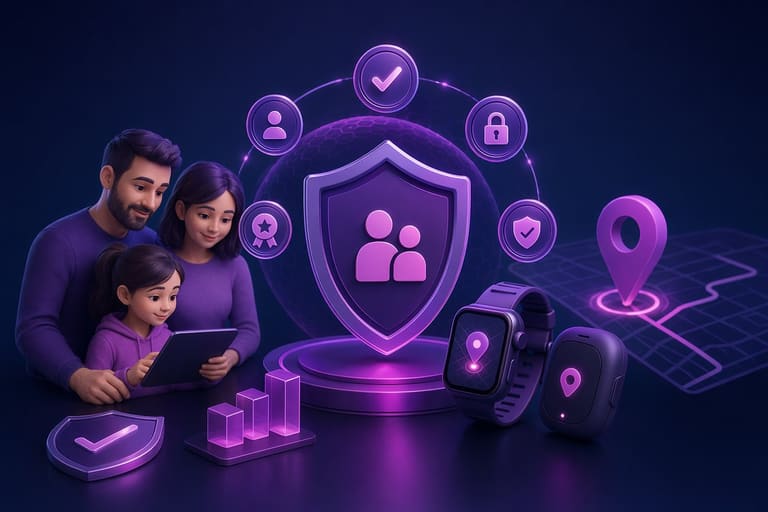
In content related to child safety, if trust signals are weak, well-written texts may not perform as expected. Therefore, elements of experience, expertise, authority, and trust should be visible throughout the site.
- Author Profile: Clearly state who wrote the content, their experience, and how they tested the products.
- Testing Policy: Indicate whether products were purchased, sent by the brand, or if the content is sponsored.
- Update Date: Since information on technological products changes rapidly, the last update date of the content should be visible.
- Source Citations: Reference reliable sources for privacy, child safety, and technical standards.
- Comment Moderation: While parent comments can be valuable, sharing personal data should be prevented.
For example, at the start of a review, stating that this product was tested for 10 days by an 8-year-old child during school commutes, park visits, and home use provides real experience to the reader. However, it’s essential not to disclose the child's identity, school information, or exact location data. Privacy is an integral part of editorial quality in this niche.
Privacy, Ethics, and Child Data
When publishing in this area, the most sensitive topic is child data. Since location tracking devices directly relate to a child's movement information, your blog should not act merely as a product recommendation site. It should guide parents on conscious usage, open communication, and minimal data sharing.
It is beneficial to emphasize the following principles in each guide: The purpose of the device should be explained to the child in age-appropriate language, tracking should not be used as a punishment or pressure tool, app passwords should be strong, if the device is second-hand, previous account connections should be completely erased, and unnecessary app permissions should be disabled.
Moreover, your blog should adopt a minimum data collection approach in its own privacy policy, cookie notice, and contact forms. If you plan to launch an email newsletter, request only necessary information and keep the unsubscribe option visible. For security, you can benefit from Website Security Guide content for regular backups and malware scanning.
Performance, Speed, and Mobile Experience
Most parents conduct product research on their phones. Therefore, your blog needs to be fast, readable, and straightforward on mobile. Heavy visuals, unnecessary ad spaces, and complicated menus can diminish user experience. Especially, product comparison tables should be easily readable on mobile without overflowing.
Here’s a practical performance checklist for starters:
- Upload images in WebP format and at the correct size.
- Use the same visual template in each review to keep the page layout simple.
- Install a caching plugin and conduct regular tests.
- Remove unnecessary plugins; use only the tools you need.
- Monitor Core Web Vitals monthly.
- If your hosting package cannot handle increased traffic, plan for an upgrade.
Page speed is essential not only for SEO but also for trust. A parent quickly exits a slowly loading page when urgently searching for setup issues. Therefore, technical performance is a foundational aspect that ensures the visibility of content quality.
Revenue Model: Earning Without Losing Trust
A niche parent blog can become sustainable through various revenue models; however, trust comes first in this area. Affiliate links, sponsored reviews, brand partnerships, ad spaces, and downloadable purchase checklists can be evaluated. However, the reader should clearly see which content is an independent review and which is sponsored work.
If you are using affiliate marketing, rank your recommendations not only by commission rate but also by test results and audience needs. In some cases, the most expensive product may not be the best recommendation. For instance, a family only wanting to track their child’s journey from school to home might find a basic GPS device with essential features sufficient, while a child with special needs may prioritize more precise location tracking and a robust SOS feature.
Publishing Schedule: A Practical 90-Day Plan
After launching the blog, it is better to proceed with a clear plan for the first 90 days rather than producing content randomly. In the first month, focus on core guides, in the second month on comparisons, and in the third month on product reviews and problem-solving content.
First 30 Days
- Site setup, theme, SSL, basic pages, and privacy policy are completed.
- Five core content pieces like What is a smartwatch for kids, How does a GPS tracking device work, Buying guide are published.
- About us, testing methodology, and contact pages are prepared.
Days 31-60
- Comparison articles are created based on age, budget, and usage scenarios.
- The first product tests are conducted, and photos and measurement notes are collected.
- The internal linking map is updated, and category pages are optimized.
Days 61-90
- At least four detailed product reviews are published.
- Content focused on setup and troubleshooting is added.
- Titles, descriptions, and content gaps are improved based on Google Search Console data.
At the end of this plan, your site will not just be a weak structure consisting of a few product promotions but a comprehensive resource answering parents' various questions.
Final Checklist Before Launching
Checking the following items before going live helps reduce potential technical and editorial issues:
- Is the domain name relevant to the topic and easy to remember?
- Is the hosting package fast, reliable, and backed up?
- Is SSL active and do all pages load with HTTPS?
- Is the privacy policy, cookie notice, and contact page ready?
- Is the author profile and testing methodology visible?
- Are the first 10 pieces of content interconnected with internal links?
- Is the sponsored content declaration clear in product reviews?
- Is the mobile view, tables, and visuals functioning smoothly?
This checklist covers seemingly minor details that can directly affect trust and SEO performance. Especially on a site targeting parents, transparency, speed, and data security are as crucial as content quality.
Frequently Asked Questions
Is a blog reviewing smartwatches and location tracking devices for kids a profitable niche?
Yes, it can be profitable with the right strategy. The target audience is clear, the purchase intent is high, and products are regularly updated. However, reliable testing, a transparent revenue model, and regular content updates are essential for long-term success.
Is WordPress sufficient for such a blog?
Yes. WordPress offers sufficient flexibility in terms of review templates, comparison tables, SEO plugins, and content management. The key is to have fast hosting, secure theme selections, and avoid unnecessary plugins.
What should be particularly considered in product reviews?
Location accuracy, battery life, SOS feature, school mode, data security, app permissions, and ease of use for the child are primary criteria. Evaluating each product with the same testing protocol boosts reader trust.
How should ethical boundaries be maintained regarding child location tracking?
The purpose of tracking should be clearly explained to the child, and the device should not be used as a tool for pressure or punishment. Blog content should also avoid sharing children's identities, school information, or exact location data; privacy must be a fundamental principle.
What technical security steps are needed when launching a blog?
Basic steps include SSL installation, strong admin passwords, regular backups, updated themes and plugins, security plugins, spam protection, and a minimum data collection policy. Additionally, choosing reliable hosting contributes to the site's uninterrupted and secure operation.
Short Summary and Next Steps
A parent blog that exclusively reviews smartwatches and location tracking devices for kids, when set up correctly, can transform into a strong niche project that provides real value to users and is also robust from an SEO perspective. Success requires a narrow focus, measurable testing methodology, ethical publishing, fast technical infrastructure, and a regular content plan to be considered together.
If you plan to set up your blog in this niche, start by clarifying your domain name, selecting a reliable hosting infrastructure, and preparing your content roadmap for the first 90 days. For the technical foundation, you can explore Hostragons' Domain, Hosting, and SSL solutions to make a solid and secure start to your project.