 Afrikaans
 Azərbaycan
 Bosanski
 Čeština
 Dansk
 Deutsch
 English
 Español
 Filipino
 Français
 Hrvatski
 Indonesia
 Italiano
 Magyar
 Melayu
 Nederlands
 Norsk
 Oʻzbek
 Polski
 Português
 Română
 Slovenčina
 Slovenščina
 Suomi
 Svenska
 Tiếng Việt
 Türkçe
 Ελληνικά
 Беларуская
 Български
 Русский
 Српски
 Українська
 עברית
 اردو
 العربية
 پښتو
 فارسی
 አማርኛ
 मराठी
 বাংলা
 தமிழ்
 ไทย
 မြန်မာ
 한국어
 中文
 日本語


Hydroponic nutrient solution preparation and EC measurement is the process of delivering the right amount of water, macronutrients, micronutrients, and appropriate electrical conductivity values to the plant's root zone. The practical goal is as follows: the initial EC value of clean water is measured, fertilizers are dissolved in a controlled manner according to the plant type and growth stage, the pH is typically adjusted to a range of 5.5–6.5, and the salinity/ion concentration of the solution is verified using an EC meter. A properly prepared nutrient solution is a fundamental management element that prevents root burn, nutrient deficiencies, yield loss, and uneven growth in hydroponic systems.
This guide is a technical application text focused solely on the preparation of nutrient solutions and EC measurement in hydroponics. The methods described here can be used in NFT, DWC, drip systems with cocopeat, perlite, rock wool, and closed-loop hydroponic systems. The objective is to explain the steps of water analysis, stock solution logic, the EC-pH relationship, calibration of measurement devices, daily record-keeping, and correcting erroneous values at a practical level, rather than offering superficial advice like “add this much fertilizer.”
Success in hydroponic production is not solely dependent on the selection of quality seeds or seedlings. The nutrient solution provided to the root zone is the true growth environment for the plant. Since there is no soil, buffering capacity is limited; even a small dosage error can manifest within hours as leaf tip burn, root browning, growth stunting, or a decline in fruit quality. Therefore, measuring, recording, and making controlled corrections are integral parts of professional production.
What is a Nutrient Solution and Why is it Monitored with EC?
A nutrient solution is a balanced solution consisting of dissolved nitrogen, phosphorus, potassium, calcium, magnesium, sulfur, and micronutrients such as iron, manganese, zinc, copper, boron, and molybdenum in water. The plant absorbs these ions through its roots. EC, or electrical conductivity, is a practical indicator that shows the total ion concentration in the solution. Its units are typically read as mS/cm or µS/cm, where 1 mS/cm is equal to 1000 µS/cm.
EC measurement does not indicate the exact quantity of each individual element; therefore, it cannot replace a complete water and leaf analysis. However, it serves as a very rapid alert mechanism in daily management. If the EC falls below the target, the plant may not find sufficient ions. Conversely, if the EC exceeds the target, osmotic stress can occur in the root zone; the plant may struggle to absorb water, leaf tips can burn, and the quality of sensitive crops like lettuce can decline. For this reason, EC should be thought of as a pulse measurement of hydroponics.
Before Starting Preparation: Water Quality and Initial Values
The foundation of the nutrient solution is water. The EC value of the water used, its pH value, bicarbonate level, and sodium and chloride content directly affect the success of the fertilizer program. Rainwater or reverse osmosis water often has low EC; well waters, on the other hand, can vary in calcium, magnesium, bicarbonate, sodium, and chloride content. If the initial water EC value is 0.2 mS/cm, the prepared solution will be more predictable. If the initial EC is high, around 0.8–1.2 mS/cm, the space allocated for beneficial nutrient ions for the plant decreases as you strive to reach the target EC.
For a professional start, at least the following values should be known: water EC, pH, alkalinity or bicarbonate, calcium, magnesium, sodium, and chloride. If production is on a commercial scale, conducting laboratory water analysis several times a year will reduce fertilizer costs and the risk of errors in the long term. Even in small-scale hobby systems, initial EC and pH measurements should not be overlooked.
Required Equipment List
- EC meter or combined EC/pH measurement device
- pH meter and calibration solutions for pH 4.01 and pH 7.00
- EC calibration solution: 1413 µS/cm or 12.88 mS/cm for high EC
- Clean mixing tank or reservoir
- Precision scale, measuring container, and mixer
- A and B stock tanks or separate concentrate containers
- Nitric acid, phosphoric acid, or an appropriate pH reducer; potassium hydroxide or similar for pH raising
- Protective goggles, gloves, and a well-ventilated workspace
The accuracy of measurement devices is more critical than the fertilizer recipe. A poorly calibrated EC meter can lead the grower to incorrect corrections. For example, if the device shows your actual 2.2 mS/cm solution as 1.7 mS/cm, you may add excessive fertilizer and create a toxic buildup in the root zone within a few days.
Target EC Ranges Based on Plant Type and Growth Stage
The EC target is not fixed; it varies depending on the plant type, climatic conditions, growth stage, cultivation environment, and irrigation drainage rate. Young seedlings require low EC, while tomatoes or peppers in the fruiting stage can be managed with higher EC. However, using very high EC in hot weather can hinder the plant's water uptake. In cooler weather, the same plant may tolerate slightly higher EC.
| Plant / Stage | Recommended EC Range | pH Range | Technical Note |
|---|---|---|---|
| Lettuce Seedling Stage | 0.6–1.0 mS/cm | 5.8–6.3 | It is sensitive; high EC can increase tip burn. |
| Lettuce Growth Stage | 1.2–1.8 mS/cm | 5.8–6.4 | Operates near the lower limit in hot weather. |
| Basil and Aromatics | 1.2–2.0 mS/cm | 5.8–6.5 | Avoid sudden increases for aroma and growth balance. |
| Strawberry Vegetative Stage | 1.0–1.5 mS/cm | 5.5–6.2 | Sensitive to root zone salinity. |
| Tomato Seedling Stage | 1.2–1.8 mS/cm | 5.5–6.3 | Start low after transplanting seedlings. |
| Tomato Fruiting Stage | 2.2–3.5 mS/cm | 5.5–6.3 | Adjust based on light, temperature, and drainage conditions. |
| Cucumber Production Stage | 1.8–2.5 mS/cm | 5.6–6.3 | Requires daily monitoring due to rapid water consumption. |
This table serves as a starting reference; it is not a definitive recipe. The most accurate target is determined by the plant's response in your production conditions, the drainage EC value, and water analysis. Especially in closed-loop systems, EC can fluctuate throughout the day; the plant sometimes absorbs water faster than nutrients and vice versa.
Steps for Preparing Hydroponic Nutrient Solutions
1. Clean the Tank and Fill it with Water
The tank must be free of algae, sediment, and old fertilizer residues. If possible, use light-proof containers; light-exposed tanks can accelerate algae growth and lead to pH fluctuations. Fill the tank with approximately 70–80% of the target volume of water. Leaving space for mixing ensures more homogeneous dissolution of fertilizers. Ideally, the water temperature should be in the range of 18–22 °C. In very cold water, some salts dissolve more slowly; in very hot water, dissolved oxygen decreases.
2. Record Initial EC and pH Values
Measure the water's EC and pH values before adding any fertilizers. For example, in a 500-liter tank, if the initial water EC is 0.35 mS/cm and pH is 7.6, and you choose a target EC of 1.5 mS/cm for the lettuce growth stage, the net increase provided by the nutrients will be approximately 1.15 mS/cm. This record will make it easier to repeat the same recipe in subsequent preparations.
3. Keep A and B Fertilizers Separate
In hydroponics, calcium nitrate is typically kept in tank A, while fertilizers containing phosphates and sulfates are held in tank B. This is because calcium can precipitate when concentrated with phosphate or sulfate. If precipitation occurs, nutrients will not reach the plant, emitters may clog, and the measured EC can become misleading. The most critical rule is: never mix A and B concentrates directly in undiluted form.
4. Add Fertilizers Sequentially and Completely Dissolve
While the mixer is operating, first add solution A to the water and wait a few minutes for it to homogenize. Then add solution B. Measuring the EC after each addition allows you to see how quickly you are approaching the target. If you are using powdered fertilizers, do not move on to the next one until each fertilizer is completely dissolved. Residual crystals at the bottom can lead to sudden EC spikes when the system starts operating.
5. Bring EC Closer to the Target
When adjusting EC, it is safer to proceed gradually rather than adding a large amount of fertilizer at once. For example, if the target is 1.8 mS/cm and the measurement is 1.55 mS/cm, increase with small doses. Exceeding the target by 0.1–0.2 mS/cm can create problems for sensitive plants. In large tanks, it can take several minutes for the mixture to become completely homogeneous; measure not immediately after mixing but after the solution stabilizes.
6. Make pH Adjustment as the Final Step
Typically, pH is adjusted after reaching the EC target because fertilizers can alter the water's pH value. If acid is used to lower pH, the safety rule is clear: the acid is added to the water, never the other way around. Proceed with small doses, mix, wait a few minutes, and measure again. For most hydroponic crops, a pH range of 5.5–6.5 is suitable; for iron, manganese, and phosphorus uptake, a practical target is 5.8–6.2 for most systems.
How to Measure EC Correctly?
For accurate EC measurement, the probe must be clean, calibrated, and temperature-balanced. Rinse the probe gently with distilled or low-mineral water before taking measurements. Take a small sample from the solution to be measured; while it is possible to insert the probe directly into the main tank, measuring in a sample container protects the device and reduces contamination risk. Ensure that the probe does not trap air bubbles. Wait for the value to stabilize and record the result.
Most modern EC meters have automatic temperature compensation. Still, having calibration and measurement solutions at similar temperatures increases accuracy. EC devices may also show ppm or TDS values; however, ppm conversion factors can vary from device to device. Therefore, using mS/cm for professional records is more consistent.
EC Meter Calibration
The frequency of calibration depends on usage intensity. In commercial production, calibration is recommended at least once a week, and more frequently with heavy use. For hobby systems, checking every two weeks is acceptable. Immerse the device in 1413 µS/cm calibration solution, calibrate according to the manufacturer's instructions, and then rinse the probe. If you are working with high EC ranges, a second check with 12.88 mS/cm solution provides more reliable results.
Calibration solutions should be kept clean. The probe should not be inserted directly into the main bottle; a small amount should be taken into a separate container and discarded after use. Contaminated calibration solution can make your entire measurement system faulty. The probe should not be left dry; it should be stored in a suitable storage solution if recommended by the manufacturer.
Example Calculation: Target EC Setting in a 500-Liter Tank
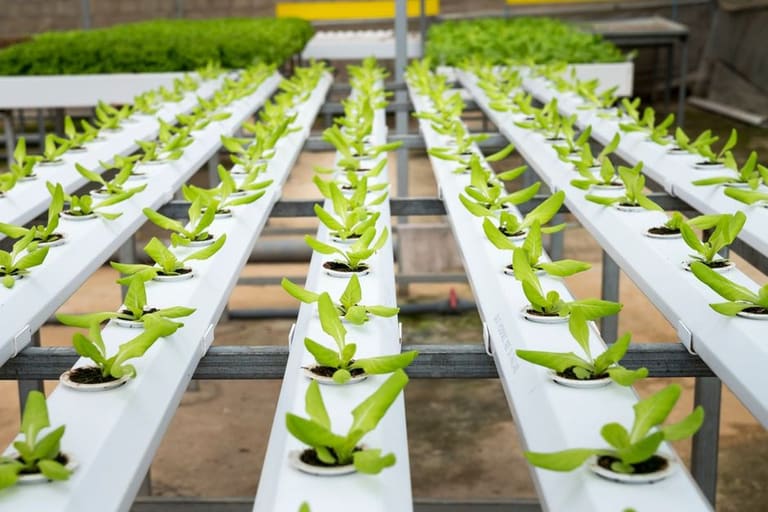
Let’s say you have a 500-liter NFT lettuce system. The initial water EC is 0.30 mS/cm, and pH is 7.4. The target EC is 1.50 mS/cm, and the target pH is 6.0. First, fill the tank with 400 liters of water. Prepare A and B stocks separately. While the mixer is running, add 70% of the recommended dose and measure the EC. If the measurement is 1.20 mS/cm, gradually add the remaining dose. When you reach the 1.47–1.52 mS/cm range, complete the tank to its final volume, measure again, and proceed to pH adjustment.
If pH is measured at 6.8, the pH reducer is added in very small doses. After each dose, mixing is done for 3-5 minutes. When the pH reaches 6.05, the process is stopped, as in some systems, pH can continue to drop slightly over the next few hours. The final record can be kept as follows: date, water EC, final EC, final pH, water temperature, amount of A/B used, and observations. This simple record significantly reduces the margin of error for the next preparation.
Drainage EC and Root Zone Monitoring
Just as important as preparing the nutrient solution is monitoring what happens in the plant's root zone. In drip cocopeat or rock wool systems, drainage EC indicates whether there is salt buildup in the root zone. As a general practice, if the drainage EC is consistently much higher than the inlet EC, salt may be accumulating in the environment. In this case, the frequency of irrigation, drainage rate, or nutrient EC should be reviewed.
For example, if the inlet EC in tomato production is 2.6 mS/cm and the drainage EC is 4.2 mS/cm, and leaf edge burn is observed in the plant, root zone stress may have increased. The solution is not always just to water; sudden and excessive flushing can cause instability in the root environment. A more controlled approach is to temporarily lower the inlet EC, increase the drainage percentage, and monitor trends over several measurements.
Common Mistakes and Technical Solutions
Mistake 1: Not Fully Dissolving Fertilizer Before pH Adjustment
If undissolved fertilizer remains at the bottom, the initial measurement may be low, and as the system operates, the EC may rise. The solution is to fully dissolve each fertilizer separately and ensure adequate mixing time.
Mistake 2: Combining Concentrate A and B
This mistake can lead to calcium phosphate or calcium sulfate precipitates. The solution is to keep stock tanks separate and always add by diluting into water.
Mistake 3: Only Monitoring EC and Neglecting pH
Even if EC is correct, if pH is inappropriate, the plant may be unable to absorb certain elements. Iron deficiency may appear as yellowing in young leaves. The solution is to monitor EC and pH together.
Mistake 4: Skipping Device Calibration
Adjustments made with an uncalibrated device are akin to flying blind. The solution is to record calibration dates and keep measurement devices clean.
Mistake 5: Not Monitoring Daily Variations
Especially in closed-loop systems, water consumption may increase during sunny hours, leading to higher EC. The solution is to understand system behavior through morning and afternoon measurements.
Data Recording, Automation, and Digital Monitoring
In hydroponics, measurement data serves as the memory of the producer's decisions. Even a simple spreadsheet can be sufficient to record date, tank volume, EC, pH, water temperature, air temperature, fertilizers used, and observations. In more advanced systems, sensor data can be aggregated on a panel, alarm thresholds can be defined, and historical trends can be analyzed graphically. For instance, receiving notifications if EC exceeds 15% above the target for two hours can help prevent product loss, especially in remotely managed greenhouses.
At this point, having a reliable digital infrastructure becomes important. If you are setting up a technical blog, production panel, or consulting page to share measurement records for your greenhouse, choosing a quick infrastructure improves user experience Hostragons Web Hosting Packages. If you want to publish production reports under your own brand domain, you can consider Domain Lookup and Domain Registration page. It is also important to use SSL for secure connections in areas where data is entered, such as sensor panels, customer portals, or training content SSL Certificate Solutions. In more technical projects, using API and Integration Guides can be helpful for transferring greenhouse automation data to a web panel.
EC Management in Different Systems
In NFT systems, roots come into contact with a thin film of nutrient, so EC fluctuations are quickly felt. If the tank volume is small, the plant's water consumption can change EC in a short time. Therefore, it is essential to keep the tank volume sufficient for the number of plants. In DWC systems, large water volumes slow down fluctuations; however, dissolved oxygen and water temperature become more critical. In cocopeat and rock wool systems, both inlet EC and drainage EC should be monitored.
In closed-loop systems, since the returning water is reused, managing pathogens, organic residues, and salt balance is crucial. In open-loop systems, since drainage is discarded, control is easier; however, water and fertilizer consumption increases. In both models, the fundamental principle is the same: set target values, measure accurately, make small corrections, and observe plant responses.
Safety and Chemical Usage Notes
When preparing nutrient solutions, acids, bases, and concentrated fertilizers should be used with care. Wearing gloves and goggles is a simple but critical precaution. Work should not be done in closed, unventilated areas to avoid inhaling acid fumes. Chemicals should be kept in labeled containers and out of reach of children and animals. Metal containers can react with some acids; therefore, appropriate plastic tanks should be preferred.
The dosages provided on fertilizer labels are general recommendations. They should not be applied blindly without considering water quality, plant stage, and climatic conditions. If trying a new recipe, it is safer to test in a small tank first, and then move to the main system by observing plant responses. Especially in sensitive leafy vegetables, EC increases should be done gradually.
Practical Checklist
- Measure the initial water EC and pH values.
- Clean the tank and reduce light exposure.
- Keep A and B stocks separate; do not mix concentrates.
- Add fertilizers gradually while the mixer is running.
- Don’t rush when approaching the EC target; wait for the measurement to stabilize.
- Make the pH adjustment last and in small doses.
- Regularly calibrate the EC meter.
- Record inlet and drainage EC values.
- Interpret plant symptoms in conjunction with measurement data.
Conclusion
Preparing hydroponic nutrient solutions and measuring EC is a technical yet manageable process essential for healthy root development and sustainable yield. The key to success is clean water, correct fertilizer sequencing, separate A/B stock logic, regular EC-pH measurement, calibration, and record discipline. Small corrections are safer than sudden interventions. If you wish to keep your production data organized and digitized, a reliable web infrastructure can make your measurement records more accessible Hostragons Hosting Solutions.
Frequently Asked Questions
What should the ideal EC value be in hydroponics?
There is no single ideal EC value. Lettuce is generally manageable in the range of 1.2–1.8 mS/cm, tomatoes in the fruiting stage between 2.2–3.5 mS/cm, and cucumbers from 1.8–2.5 mS/cm. The plant stage, temperature, water quality, and system type should be considered.
What to do if EC is high?
First, ensure that the measuring device is functioning correctly. Then, gradually dilute the nutrient solution with low EC water. In drip environments, monitor drainage EC and adjust irrigation and drainage rates if salt accumulation is detected.
Should fertilizer be added immediately if EC is low?
If EC is low, fertilizers can be added, but it should be done gradually. First, ensure the tank is well-mixed, and then approach the target value by adding A and B solutions separately in small doses.
Which should be adjusted first, pH or EC?
Typically, fertilizers are added first to bring EC to the target, and then pH adjustment is made because the fertilizers themselves can alter the water's pH. pH adjustment should be made with small doses and careful mixing.
How often should the EC meter be calibrated?
In commercial production, calibration is recommended at least once a week, and more frequently with heavy use. In hobby systems, checking every two weeks may be sufficient. Clean and fresh EC standard solutions should be used for calibration.