 Afrikaans
 Azərbaycan
 Bosanski
 Čeština
 Dansk
 Deutsch
 English
 Español
 Filipino
 Français
 Hrvatski
 Indonesia
 Italiano
 Magyar
 Melayu
 Nederlands
 Norsk
 Oʻzbek
 Polski
 Português
 Română
 Slovenčina
 Slovenščina
 Suomi
 Svenska
 Tiếng Việt
 Türkçe
 Ελληνικά
 Беларуская
 Български
 Русский
 Српски
 Українська
 עברית
 اردو
 العربية
 پښتو
 فارسی
 አማርኛ
 मराठी
 বাংলা
 தமிழ்
 ไทย
 မြန်မာ
 한국어
 中文
 日本語


Non-Alcoholic Cocktail (Mocktail) Recipes and Equipment is a practical home guide for those who want to create bar-quality beverages without alcohol, bringing together shakers, measuring cups, strainers, fresh fruits, herbs, syrups, and the right use of ice. The mocktail trend is expanding in 2026, not just with a focus on healthy living but also through home experience design, social media presentation, entertaining guests, and niche content sites. In this guide, you can find step-by-step instructions for starter equipment, 8 practical recipes, cost considerations, and presentation tips.
A non-alcoholic cocktail is a balanced drink category that applies the principles of classic cocktails without alcohol. A good mocktail is not just a mixture of fruit juices; it is created by balancing sweetness, acidity, aroma, texture, chill, and visual presentation. For instance, lemon juice adds acidity, honey or syrup contributes sweetness, mint provides freshness, and soda adds volume and liveliness. Therefore, to achieve successful results at home, you need the right proportions, fresh ingredients, and a few basic tools rather than expensive bar materials.
This micro-trend topic is particularly valuable for the Hostragons blog; mocktail recipes can create strong content clusters for niche blogs, local café sites, event menus, recipe archives, and Instagram-focused brand pages. If you want to publish your recipe archive, you can first choose a memorable domain name and then quickly set up a WordPress infrastructure Domain. Performance-driven hosting is crucial for recipe visuals, video shortcodes, and menu pages web-hosting.
Why is the Mocktail Micro Trend Growing in 2026?
In 2026, three main motivations are emerging in beverage trends: more conscious consumption, the search for quality experiences at home, and shareable visual content. Younger users are looking for not only flavor but also aesthetically pleasing glasses, natural ingredients, low-sugar options, and personalized recipes. As a result, non-alcoholic cocktails are finding more places at dinner tables, brunch settings, baby showers, wedding preparations, and office events.
The term micro-trend here refers to a narrow area that appeals to a specific audience, grows quickly, and creates opportunities for content production. The topic of making mocktails at home fits this definition perfectly. The search intention is usually clear: users want to learn what ingredients to buy, how to mix them, which glass to use, and how to serve them to their guests. Therefore, recipe content becomes stronger from an SEO perspective when supported by step lists, ratios, preparation time, calorie estimates, alternative ingredients, and visual suggestions.
If you are setting up a food or drink blog, you can make the mocktail category your main topic cluster and break it down into subheadings: summer mocktail recipes, sugar-free mocktails, kid-friendly party drinks, coffee mocktails, herbal tea non-alcoholic cocktails, low-calorie beverages, and café menu ideas. This structure enhances both user experience and search engines' perception of topic authority. An SSL certificate is a basic necessity for such content sites to ensure user trust and form security ssl-certificate.
The Basic Logic of Making Mocktails at Home
The basic formula for a successful mocktail is simple: 2 parts main base, 1 part acidity, 1 part sweetener or aromatic support, and 2 to 4 parts carbonated or volume-giving liquid. The main base can be fruit puree, cold tea, coffee, coconut water, or grape juice. For acidity, lemon, lime, grapefruit, or pomegranate molasses can be used. For sweeteners, options include honey syrup, agave, date syrup, homemade syrup, or jam.
The frequently used balance rule in bars is: the first sip should be refreshing, the second sip balanced, and the last sip should finish cleanly without becoming heavy. To achieve this at home, taste the recipe after preparing it with a small spoon. If it’s too sour, add 5 ml of syrup. If it’s too sweet, add 10 ml of lemon juice or soda. If the aroma is weak, enhance it with mint, basil, cucumber peel, ginger, or cinnamon. These small adjustments ensure consistent results even with different fruit ripeness in the same recipe.
Essential Equipment for Making Non-Alcoholic Cocktails at Home
You don't need to invest in a professional set initially to make bar-quality mocktails at home. However, working with precise measurements, chilling, and straining can significantly improve the outcome. A basic budget can cover 6 essential tools.
- Shaker: Quickly chills citrus, syrup, fruit puree, and ice. You can choose a Boston shaker or a three-piece shaker.
- Jigger or measuring cup: Measuring 15 ml, 30 ml, and 45 ml is critical for recipe consistency.
- Bar spoon: Used for mixing without flattening carbonated drinks and achieving layered appearances.
- Strainer: Separates ice chunks, fruit pulp, and herb remnants for a smoother drinking experience.
- Muddler: Extracts aroma from ingredients like mint, basil, blackberries, strawberries, and cucumber.
- Ice tray: Larger ice cubes melt slower, cooling the drink without diluting it.
In the next phase, you can add a citrus juicer, fine grater, syrup bottle, straw, garnish stick, and different types of glasses. Glass selection is important: Highball is suitable for refreshing and carbonated drinks, coupe is ideal for sparkling and elegant presentations, and rocks glasses are great for dense, aromatic short drinks.
Equipment and Ingredient Comparison Table
| Need | Starter Option | Professional Option | When is it Necessary? |
|---|---|---|---|
| Mixing | Jar and lid | Boston shaker | If you're trying more than 2 recipes a week |
| Measuring | Table spoon | Jigger | When you want consistent flavor |
| Straining | Tea strainer | Hawthorne strainer | If using pulpy fruit and herbs |
| Ice | Standard ice tray | Large cube or sphere ice | If presentation and slow melting are important |
| Flavoring | Honey or jam | Homemade flavored syrup | If for café menus or mass production |
This table clarifies where to start when preparing non-alcoholic cocktails at home. Initially, you can achieve great results with a jar, tea strainer, and measuring spoon. However, if you are regularly publishing recipes on your blog, adding a jigger and shaker will save time. For content creators, photos of the equipment also create trust signals; step-by-step photos showcasing your experience enhance the E-E-A-T quality of recipe pages.
8 Non-Alcoholic Cocktail Recipes to Try at Home
The following recipes are designed for 1 serving. Measurements are in ml and the average preparation time is between 3 to 7 minutes. If you want to reduce the sugar level, you can halve the syrup amount and top off the volume with soda or cold tea.
1. Cucumber Mint Refreshment
Ingredients: 5 thin cucumber slices, 8 mint leaves, 25 ml lemon juice, 15 ml honey syrup, 120 ml soda, plenty of ice. Instructions: Gently press the cucumber and mint in a muddler; do not crush them, just release the aroma. Add lemon juice and honey syrup and mix with ice. Strain into a glass and top with soda. Serve with a long cucumber ribbon and a sprig of mint. Especially suitable for summer evenings and light meals.
2. Strawberry Lime Spritz
Ingredients: 4 strawberries, 20 ml lime juice, 15 ml sugar syrup, 40 ml apple juice, 100 ml sparkling water. Instructions: Muddle the strawberries in a shaker. Add lime, syrup, and apple juice and shake with ice for 10 seconds. Strain into a glass and complete with sparkling water. For a more premium presentation, wet the rim of the glass with lime and dip it in fine sugar.
3. Ginger Pomegranate Mocktail
Ingredients: 80 ml pomegranate juice, 20 ml lemon juice, 10 ml pomegranate molasses, 80 ml ginger ale or ginger soda, ice. Instructions: Mix pomegranate juice, lemon, and pomegranate molasses. Pour into a rocks glass filled with ice and top with ginger ale. Serve with pomegranate seeds. Due to its strong sweet-sour balance, it can also be a non-alcoholic accompaniment to red meat dishes.
4. Tropical Pineapple Coconut
Ingredients: 90 ml pineapple juice, 50 ml coconut milk, 15 ml lime juice, 10 ml agave, crushed ice. Instructions: Shake all ingredients vigorously in a shaker. Pour into a glass filled with crushed ice. Top with a thin slice of pineapple and grated lime peel. For a lighter version, you can replace half of the coconut milk with coconut water.
5. Iced Tea Peach Mocktail
Ingredients: 100 ml cold brewed black tea, 60 ml peach puree or nectar, 15 ml lemon juice, 80 ml soda. Instructions: Mix tea, peach, and lemon with ice. Pour into a glass and add soda. Serve with a peach slice and fresh thyme. For cold brewing, steep 1 black tea bag in 250 ml of cold water for 6 hours; this reduces bitterness and softens the flavor.
6. Coffee Tonic Mocktail
Ingredients: 60 ml cold espresso or cold brew concentrate, 120 ml tonic water, 10 ml orange syrup, ice. Instructions: Fill a glass with large ice cubes. Add tonic water and mix in the orange syrup. Slowly pour the coffee over the back of a bar spoon. This recipe offers an afternoon alternative for coffee lovers; it pairs well with sweets.
7. Basil Lemonade Fizz
Ingredients: 30 ml lemon juice, 20 ml basil syrup, 120 ml soda, 4 basil leaves, ice. Instructions: Gently clap basil leaves in your hands to release the aroma. Add lemon and syrup to the glass, add ice, and top with soda. For basil syrup, you can steep 1 part sugar, 1 part water, and a handful of basil for 5 minutes and strain.
8. Spiced Apple Cinnamon Mocktail
Ingredients: 100 ml apple juice, 20 ml lemon juice, 10 ml maple syrup or honey, a pinch of cinnamon, 80 ml soda. Instructions: Shake apple juice, lemon, honey, and cinnamon with ice. Strain into a glass and add soda. Serve with an apple slice and a cinnamon stick. It gives a warm spice feeling for fall and winter tables; if desired, a hot version can be made with warm herbal tea instead of soda.
Homemade Syrups and Flavor Bases
The most practical step to elevate mocktail quality is to prepare homemade syrup. For a standard simple syrup, mix 1 part sugar and 1 part water over low heat until the sugar dissolves, without boiling. After cooling, transfer to a clean bottle and store in the refrigerator for 7 to 10 days. For a thicker consistency, you can use a 2:1 ratio of sugar to water; however, if you want a lighter drink in a mocktail, the 1:1 ratio is safer.
For flavored syrups, the basic rule is to steep strong ingredients for a short time, while delicate herbs should be added after removing from heat. Ginger, cinnamon, cloves, and rosemary can withstand 5 to 8 minutes of heat. Mint, basil, lavender, and cucumber should be added when the syrup starts to cool, as they can become bitter with heat. If using orange peel, try to avoid the white part, as it adds bitterness.
Presentation, Ice, and Glass Selection: The Big Impact of Small Details
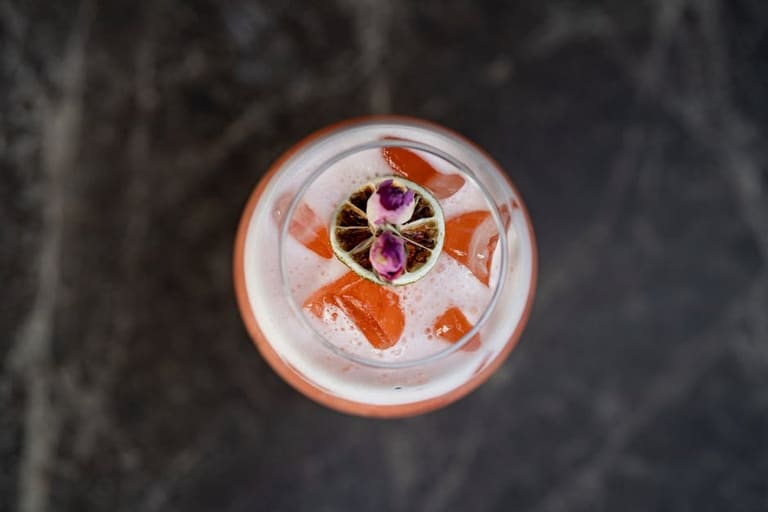
About 30% of the perception of a good non-alcoholic cocktail comes from presentation. If the ice is clear, the glass is cold, and the garnish is thoughtfully chosen, the user feels a sense of quality before the first sip. A simple yet effective method is to chill the glasses in the fridge for 10 minutes before serving. If possible, prepare the ice with boiled and cooled water; while this method doesn't guarantee complete crystal clarity, it reduces cloudiness.
When choosing garnishes, don’t randomly add aromas that are not present in the drink. Strawberries are suitable for strawberry drinks, citrus peels for citrus drinks, mint for cucumber drinks, and cinnamon sticks for spiced drinks. Edible flowers create a strong impact in social media visuals, but their sourcing must be safe. Store-bought decorative flowers should not be considered edible.
Practical Adjustments for Sugar-Free and Low-Calorie Mocktails
The most common mistake when preparing mocktails at home is trying to cover the absence of alcohol with excessive sugar. However, sugar is not the only solution for depth of flavor. Brewed tea, spices, citrus peels, fresh herbs, cucumber, ginger, and fermented notes can give character to the drink. For sugar-free versions, you can use 30 ml of fruit puree instead of 15 ml of syrup, 1 teaspoon of lemon peel essence, or a few drops of natural vanilla.
- Soda and sparkling water provide lower-calorie volume compared to fruit juice.
- Grapefruit, lime, and lemon acidity reduce the need for sweetness.
- Cold-brewed green tea results in a light and aromatic base.
- Using ripe fruit decreases the need for additional sugar.
- Using large ice cubes prevents the drink from diluting quickly and losing flavor.
SEO Tips for Those Looking to Transform Mocktail Content into a Blog
The topic of Non-Alcoholic Cocktail (Mocktail) Recipes and Equipment is a powerful niche not only in the kitchen but also in digital content. When establishing a recipe site, use a standard template for each recipe: a brief description, preparation time, serving size, ingredient list, steps, alternatives, storage suggestions, and a presentation photo. This way, users get quick answers, and search engines better understand the content.
On the technical side, fast-loading pages, compressed images, and secure connections are critical. Recipe images are often large files; therefore, CDN, caching, and optimized hosting performance directly impact user experience wordpress-hosting. If you plan to publish a recipe archive with your brand, choose a domain name that is short, easy to pronounce, and related to the category. Words like mocktail, refreshing, glass, recipe, and snack can enhance brand recall.
A content plan with a monthly calendar of 12 posts is sufficient: 4 recipes, 2 equipment guides, 2 seasonal lists, 2 low-calorie content, 1 café menu example, and 1 shopping guide. Providing internal links to related recipes from each post creates a topic cluster. If you are using an email newsletter or comment form on your site, don’t neglect security plugins and SSL configuration website-security.
Common Mistakes Made When Preparing Mocktails at Home
The first mistake is working without measurements. Even if a drink prepared by eye yields good results once, it is difficult to achieve the same flavor consistently. The second mistake is shaking carbonated drinks in the shaker; this can lead to overflow and loss of carbonation. Carbonated components should always be added last and gently stirred with a bar spoon.
The third mistake is over-muddling mint. When mint is crushed too much, it releases bitter and grassy flavors along with the refreshing aroma. The fourth mistake is using small, quickly melting ice. This dilutes the drink. The fifth mistake is adding too much garnish to every recipe. Minimal, complementary, and edible decorations look more professional.
Shopping List: Flexible Menu with the Top 10 Ingredients
To start, you can prepare dozens of mocktails with the following 10 ingredients: lemon, lime, mint, cucumber, strawberries or mixed berries, pomegranate juice, apple juice, soda, honey or agave, ginger. This list allows for refreshing, fruity, and spiced recipes. It is better to buy small amounts of each fruit for weekly use; fresh ingredients make a noticeable difference in mocktails. While squeezing citrus juice in advance saves time, the best aroma is obtained within the first 4 hours.
If you are hosting guests, plan for an average of 250 to 350 ml of drink per person. For a dinner with 6 people, typically, 1 liter of soda, 500 ml of fruit-based liquid, 8 to 10 lemons or limes, 1 bunch of mint, and 1 large bag of ice will be sufficient. In recipes suitable for children, keep caffeinated tea or coffee bases separate and indicate any potential allergens in the menu.
Conclusion: Small Equipment, Right Proportions, Big Experiences
What you need to prepare non-alcoholic cocktails at home is not a complex bar setup but the right measurements, fresh ingredients, quality ice, and a balanced recipe logic. The mocktail micro-trend offers a strong opportunity for those who want to create enjoyable presentations at home as well as for those looking to produce niche content. If you plan to share your recipes digitally, you can start by setting up a fast, secure, and manageable web infrastructure. You can turn your recipe ideas into a sustainable content project by exploring Hostragons’ domain, hosting, and SSL solutions hosting-packages.
Frequently Asked Questions
Is a mocktail the same as a non-alcoholic cocktail?
Yes. Mocktail means a cocktail without alcohol. It uses classic cocktail techniques; however, the flavor balance is created using fruit, herbs, spices, tea, coffee, soda, and syrups.
Is a shaker necessary to make mocktails at home?
It is not necessary. Initially, a glass jar with a lid can be used instead of a shaker. However, if you are preparing regular recipes, a shaker offers better chilling, mixing, and practicality.
How can sugar be reduced in non-alcoholic cocktails?
You can reduce the amount of syrup and enhance flavor depth with soda, cold tea, citrus, cucumber, ginger, and fresh herbs. Using ripe fruit also decreases the need for additional sweeteners.
What is the best ice for a mocktail?
Large cubes or spheres of ice are the best option as they melt more slowly. They do not dilute the drink quickly, maintain coldness longer, and look more elegant in the glass.
Is it sensible to start a blog with mocktail recipes?
Yes. Mocktail recipes represent a niche area with clear visual appeal and search intent. With the right category structure, fast hosting, SSL, and regular recipe templates, a sustainable food and drink blog can be created.