 Afrikaans
 Azərbaycan
 Bosanski
 Čeština
 Dansk
Dansk Deutsch
 English
 Español
 Filipino
 Français
 Hrvatski
 Indonesia
 Italiano
 Magyar
 Melayu
 Nederlands
 Norsk
Norsk Oʻzbek
 Polski
 Português
 Română
 Slovenčina
 Slovenščina
 Suomi
Suomi Svenska
 Tiếng Việt
 Türkçe
 Ελληνικά
 Беларуская
 Български
 Русский
 Српски
 Українська
 עברית
עברית اردو
اردو العربية
 پښتو
پښتو فارسی
فارسی አማርኛ
አማርኛ मराठी
मराठी বাংলা
বাংলা தமிழ்
தமிழ் ไทย
ไทย မြန်မာ
 한국어
한국어 中文
中文 日本語
日本語

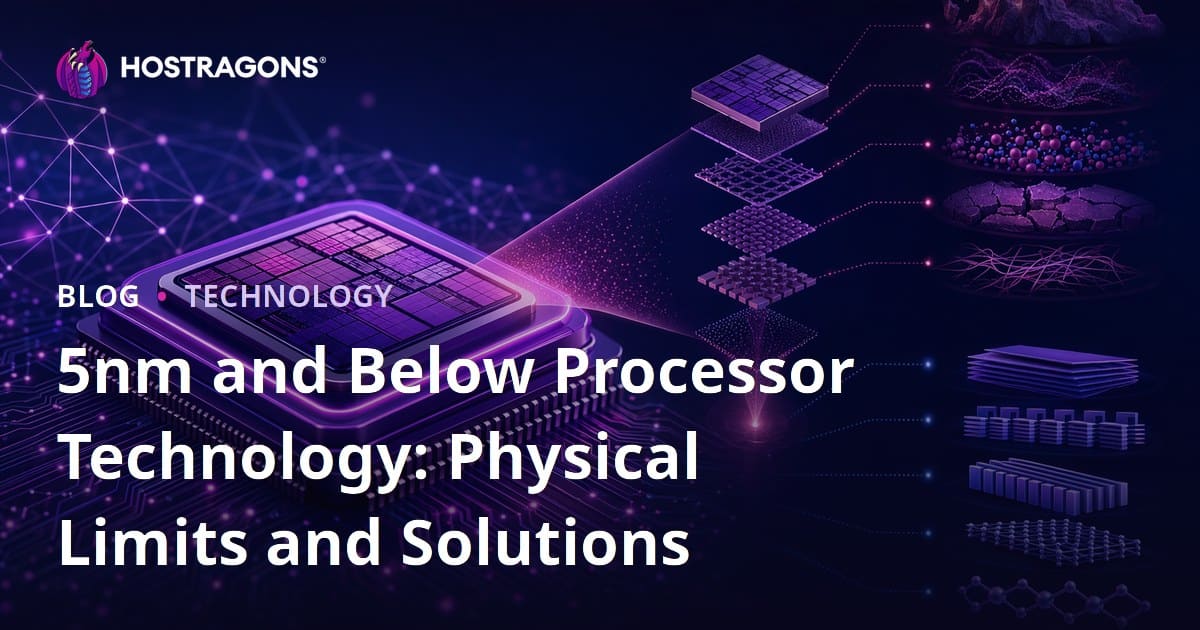
This blog post delves into one of today’s most advanced processor technologies: 5nm and below processors. Starting from its historical development, it focuses on the physical limits of this technology, the various processor architectures used, and the new materials involved in chip production. As the performance increase advantages of 5nm and below processors are detailed, the discussion also sheds light on the future of 2nm processor technologies. The article evaluates what this technology means for users, its pros and cons, and its overall impact on the future. Ultimately, it provides actionable steps for making informed decisions in the realm of 5nm and below processors.
Introduction: The History of 5nm and Below Processor Technology
The semiconductor industry has consistently pursued the production of smaller, faster, and more efficient processors. One of the most notable milestones in this quest is the development of 5nm and below processor technology. This evolution significantly enhances chip performance and energy efficiency by shrinking transistor sizes to the nanometer scale. However, this process is fraught with physical limitations and engineering challenges.
| Year | Technology | Features |
|---|---|---|
| 2018 | 7nm | Initial commercial applications, improved performance |
| 2020 | 5nm | Higher transistor density, lower power consumption |
| 2022 | 4nm/3nm | Enhanced performance and energy efficiency |
| Future | 2nm and below | Research and development phase, quantum effects |
Examining the history of 5nm and below processor technology reveals that advancements in this field result from a gradual and continuous innovation process. Following the release of the first 7nm processors, 5nm technology established a new standard with its higher transistor density and lower power consumption. In this process, advancements in lithography techniques, innovations in materials science, and architectural optimizations played a critical role.
Key Historical Developments
- 1950s: Invention of the first transistor and development of integrated circuits.
- 1965: Emergence of Moore's Law predicting transistor density growth.
- 2000s: Transition to smaller manufacturing processes like 90nm, 65nm, and 45nm.
- 2010s: Introduction of FinFET transistors and development of 22nm, 14nm, and 10nm technologies.
- 2018: Launch of 7nm processors into commercial use.
- 2020: Introduction and widespread adoption of 5nm technology.
However, the development of this technology has also brought various challenges. As transistor sizes shrink, quantum mechanical effects become more pronounced, making it difficult to predict the behavior of transistors. Additionally, issues such as thermal management and power distribution become increasingly complex. Despite these challenges, engineers and scientists strive to overcome these barriers using new materials, innovative designs, and advanced manufacturing techniques.
The 5nm and below processor technology has transformed numerous fields, from mobile devices to supercomputers. Their smaller sizes, lower power consumption, and higher performance pave the way for new possibilities in areas such as artificial intelligence, machine learning, and high-performance computing. The future developments of this technology hold substantial significance for the electronics industry and society as a whole.
5nm and Below: What Are the Physical Limits?
The physical limits faced in 5nm and below processor technologies pose significant challenges in engineering and materials science. These nanometer-scale sizes not only present the potential for enhanced transistor performance and energy efficiency but also bring a series of challenges, such as the more pronounced effects of quantum mechanics. Approaching the limits of traditional silicon-based solutions necessitates a focus on alternative materials and architectures.
In this context, chip designers and manufacturers are developing innovative approaches to overcome the issues encountered in 5nm and below technologies. These approaches include shortening the channel lengths of transistors, utilizing new dielectric materials, and designing alternative transistor structures (e.g., GAAFET – Gate-All-Around Field-Effect Transistors). These innovations are critical for ensuring the continuity of Moore's Law and for producing more powerful, efficient processors.
Key Challenges in 5nm and Below Technologies
| Challenge | Description | Possible Solutions |
|---|---|---|
| Quantum Tunneling | Electrons passing through insulation barriers | New dielectric materials, transistor structure optimization |
| Increased Power Density | More transistors in smaller areas | 3D chip architectures, advanced thermal management systems |
| Manufacturing Errors | Challenges in production precision at the nanometer scale | EUV lithography, error correction techniques |
| Material Limitations | Reaching the physical limits of silicon | New semiconductor materials (e.g., gallium nitride) |
The list below examines the fundamental limitations encountered in 5nm and below technologies and potential solutions to overcome these limits. The future of these technologies hinges on how effectively these challenges can be addressed.
5nm and Below Limitations
- Quantum tunneling effects
- Increased power consumption and heat generation
- Variability and errors in the manufacturing process
- Material limitations (silicon's constraints)
- Reliability and longevity of transistors
- High-cost production technologies
Micro Structures
Micro structures play a critical role in 5nm and below processor technologies. The geometry and arrangement of transistors have a direct impact on performance, power consumption, and reliability. Traditional 2D transistor structures fall short at these scales, making 3D transistor designs (e.g., FinFET and GAAFET) increasingly important. These architectures help reduce quantum tunneling effects by providing better channel control and more efficient switching.
Moreover, the placement and interconnections of various components on a chip are vital. Shorter interconnection paths reduce signal delay and enhance performance. As a result, advanced placement algorithms and chip architectures play a critical role in the designs of 5nm and below technologies. The following quote emphasizes the importance of this topic:
In 5nm and below technologies, optimizing not only the transistors themselves but also the connections and overall architecture on the chip is of great importance. More efficient and compact designs translate to increased performance and reduced power consumption.
Thermal Management
Thermal management is one of the significant challenges encountered in 5nm and below processor technologies. Smaller transistors and higher integration densities lead to increased heat generation. This heat can degrade processor performance, reduce reliability, and even cause permanent damage. Therefore, effective thermal management solutions are critical for the success of 5nm and below processors.
These solutions include advanced heat sinks, liquid cooling systems, and integrated thermal sensors on the chip. Techniques such as dynamic frequency scaling and voltage adjustment are also utilized to reduce power consumption. Innovations in thermal management help maintain the high performance of 5nm and below processors and extend their lifespan.
Processor Architectures: An Overview of Different Approaches
Processor architecture is the fundamental design that defines how a processor is structured and operates. In 5nm and below technologies, the choice of architecture significantly impacts performance, power consumption, and cost. From traditional architectures to innovative designs, various approaches shape the capabilities of modern processors. In this section, we will closely examine some key processor architectures used today and their characteristics.
Different processor architectures vary in terms of parallel processing capabilities, energy efficiency, and applications. For example, multicore processors allow multiple tasks to be performed simultaneously, while GPUs excel particularly in graphics processing and parallel computing tasks. This diversity enables the development of optimized solutions tailored to different needs.
Prominent Processor Architectures
- x86: A complex instruction set (CISC) architecture commonly used in desktop and laptop computers.
- ARM: A low-power and simplified instruction set (RISC) architecture often preferred in mobile devices and embedded systems.
- GPU (Graphics Processing Unit): An architecture known for parallel processing capabilities, particularly used in graphics and AI applications.
- FPGA (Field-Programmable Gate Array): A flexible and reprogrammable architecture that can be customized at the hardware level.
- ASIC (Application-Specific Integrated Circuit): A high-performance and energy-efficient architecture designed for specific applications.
Architectural designs are not limited to hardware characteristics but also include factors such as software compatibility and ease of development. As transistor physical limits are approached in 5nm and below technologies, architectural optimizations gain further significance. In this context, chip designers focus on developing new architectural approaches to boost performance and reduce energy consumption.
| Architecture | Key Features | Typical Use Cases |
|---|---|---|
| x86 | High performance, extensive software support | Desktop computers, servers |
| ARM | Low power consumption, high efficiency | Mobile devices, embedded systems |
| GPU | Parallel processing, high graphic performance | Gaming, AI, data analysis |
| FPGA | Reprogrammability, flexibility | Prototyping, custom hardware solutions |
In the future, more heterogeneity and specialized designs in processor architectures are expected to emerge. New technologies such as AI accelerators, neuromorphic processors, and quantum computers have the potential to revolutionize processor design. These advancements will push the limits of 5nm and below technologies, enabling the development of smarter, more efficient, and stronger systems.
New Materials Used in Chip Production
At this stage in 5nm and below processor technology, the physical limitations of traditional silicon-based materials are becoming apparent. Therefore, chip manufacturers are increasingly turning to new materials to achieve higher performance and energy efficiency. These materials play a critical role in enhancing processor performance by allowing transistors to be packed into smaller sizes and higher densities.
New Chip Materials
- Graphene: Offers high electron mobility.
- Carbon Nanotubes: Provides excellent conductivity and durability.
- Germanium: Delivers higher electron mobility compared to silicon.
- III-V Compounds (e.g., Gallium Arsenide): Ideal for high-frequency applications.
- High-k Dielectrics (e.g., Hafnium Oxide): Provides better insulation and lower power consumption.
- 2D Materials (e.g., Molybdenum Disulfide): Offers potential for ultra-thin transistors.
The utilization of new materials is particularly important in the insulating layers and channel materials of transistors. Using high-k dielectric materials instead of traditional silicon dioxide reduces leakage currents, thereby increasing energy efficiency. Furthermore, employing compounds like gallium arsenide as channel materials in place of silicon allows electrons to move faster, enhancing processor speeds.
| Material | Features | Applications |
|---|---|---|
| Graphene | High electron mobility, excellent conductivity | Transistors, interconnects |
| Germanium | Higher electron mobility than silicon | Channel material, photonic devices |
| Hafnium Oxide (HfO2) | High dielectric constant, low leakage current | Insulation layers (gate dielectric) |
| Gallium Arsenide (GaAs) | High electron mobility, semiconductor | High-frequency devices, power amplifiers |
The integration of these materials poses significant challenges in manufacturing processes. However, new production techniques and nanotechnology aim to address these challenges. Methods such as atomic layer epitaxy (ALE) and molecular beam epitaxy (MBE) allow precise control of the placement of new materials on chips.
The use of new materials in 5nm and below processor technologies offers significant advantages in performance and energy efficiency. The development and integration of these materials into manufacturing processes will enable the production of stronger and more efficient processors in the future. Ongoing research and development in this area represents crucial steps in shaping the future of the technology world.
Performance Gains: Advantages of 5nm Processors
5nm and below processor technologies offer significant benefits across various domains, from mobile devices to high-performance computers. Thanks to smaller transistor sizes, chips can accommodate more transistors in the same area, enhancing processing power and energy efficiency. This improvement leads to better user experiences and longer battery life for devices.
One of the most critical gains from this technology is faster processing times. Applications load quicker, games run smoother, and complex tasks are completed in shorter timeframes. Particularly in applications requiring intensive processing power such as artificial intelligence, machine learning, and augmented reality, 5nm and below processors make a noticeable difference.
| Feature | 5nm Processor | 7nm Processor |
|---|---|---|
| Transistor Density | Higher | Lower |
| Energy Efficiency | Better | Less Effective |
| Performance | Faster | Slower |
| Application Areas | High-Performance Devices | Wider Applications |
Advantages of 5nm Processors
- Higher processing power
- Lower energy consumption
- Smaller size
- Better thermal performance
- Advanced AI and machine learning capabilities
- Faster data processing
Energy efficiency is another critical advantage of 5nm and below processors. Their ability to deliver the same performance while consuming less energy significantly extends battery life, especially for mobile devices and laptops. This ultimately allows users to use their devices for longer periods without frequent recharging. Additionally, reduced energy consumption contributes to less heat generation in devices, enhancing overall system stability.
Future: Development Process of 2nm Processors

Advancements in 5nm and below processor technologies continue to push the boundaries of future generations of processors. Currently in development are 2nm processors, aiming to offer higher performance, lower power consumption, and smaller sizes. The technical challenges and development strategies encountered in this process are of great importance to the entire sector.
| Technology | Transistor Density (Transistors/mm²) | Estimated Release Date | Key Features |
|---|---|---|---|
| 5nm | 171.3 million | 2020-2022 | High performance, low power consumption |
| 3nm | 291 million | 2022-2023 | Further improved energy efficiency |
| 2nm | Estimated 450 million+ | 2024+ (Estimated) | Exceptional performance and energy efficiency |
| 1.4nm (Angstrom) | Unknown | 2027+ (Target) | Next-generation high-performance processors |
The development of 2nm processors requires innovation in many areas, ranging from materials science to manufacturing technologies. Enhancements in EUV (Extreme Ultraviolet) lithography, new transistor architectures (e.g., Gate-All-Around (GAA) FETs), and the integration of different materials are among the core elements of this process. These technological breakthroughs aim to not only enhance processor performance but also optimize costs.
Phases of 2nm Processor Development
- Research and Development: Investigating new materials and transistor structures.
- EUV Lithography Optimization: Advancing EUV technology for more precise and efficient manufacturing.
- Design and Simulation: Detailed design of 2nm architecture and performance simulations.
- Prototype Manufacturing: Producing and testing the first prototypes.
- Optimization and Improvement: Enhancing the design based on performance and efficiency tests.
- Transition to Mass Production: Initiating mass production of chips that successfully pass testing phases.
The 2nm technology will enable applications across a wide range, from mobile devices to data centers. Smarter smartphones, faster computers, and more efficient cloud services are just a few of the potential benefits of this technology. However, reaching this level necessitates overcoming engineering and scientific challenges.
The advancements in 5nm and below processor technologies represent not just a technical achievement but also a significant milestone in shaping future technologies. The development of 2nm processors will pave the way for stronger, more efficient, and smarter devices, substantially improving user experience.
5nm Processors: Implications for Users
The 5nm processor technology has emerged in many devices, from smartphones to laptops in recent years. The advantages offered by this technology significantly influence user experience. Thanks to smaller transistors, more processing power can fit into the same area, translating to faster and more efficient devices. For users, this means quicker application launches, smoother gaming experiences, and an overall more responsive system.
Another key advantage of 5nm processors is their energy efficiency. Reduced energy consumption leads to extended battery life, which creates a substantial difference for mobile device users. They can use their devices throughout the day without worrying about charging, staying active for longer periods in travel or environments without access to power outlets. Energy efficiency also contributes to less heat generation in devices, enhancing performance and extending device lifespan.
| Feature | 5nm Processors | Previous Generation Processors |
|---|---|---|
| Processing Power | Higher | Lower |
| Energy Consumption | Less | More |
| Battery Life | Longer | Shorter |
| Heat Generation | Less | More |
User Benefits
- Faster application launches and overall system performance
- Smoother and higher-resolution gaming experiences
- Longer battery life for all-day usage
- More stable and longer-lasting devices due to less heat generation
- Enhanced AI and machine learning capabilities
- Improved photo and video processing performance
5nm processors also offer significant advantages for artificial intelligence (AI) and machine learning (ML) applications. These types of applications require processing large volumes of data, and 5nm technology facilitates these processes more quickly and efficiently. For users, this translates into smarter assistants, advanced photo editing tools, and more personalized experiences. 5nm processors are poised to continue laying the groundwork for future technological innovations that enhance users' lives.
Pros and Cons of 5nm Technology
5nm and below processor technologies have revolutionized many areas, from mobile devices to high-performance computers. The advantages these technologies provide can be summarized as being able to fit more transistors in smaller sizes, leading to enhanced processing power and energy efficiency. However, certain disadvantages accompany this technology. High production costs, design complexities, and thermal issues are the main challenges faced by 5nm and below processors. This section will thoroughly examine the mutual advantages and disadvantages presented by this technology.
- Pros and Cons of 5nm Processors
- Pros:
- Higher processing power
- Lower energy consumption
- Smaller size
- Faster data processing
- Improved performance in AI and machine learning
- Cons:
- High production costs
- Design and manufacturing complexity
- Heating issues
- Quantum tunneling effects
- More precise production processes required
The greatest advantage of the 5nm and below technologies is undoubtedly the performance increase. With smaller transistors, a higher number of transistors can be placed in the same area, enabling processors to carry out more complex tasks more quickly. However, this also complicates the manufacturing process. Production costs rise, and the risks of defective production increase. Furthermore, the proximity of transistors to each other can lead to heating problems and electrical interference. Thus, 5nm and below processor technologies require a careful balance from both engineering and economic perspectives.
| Feature | Advantage | Disadvantage |
|---|---|---|
| Transistor Density | Higher performance, more features | Increased complexity, manufacturing challenges |
| Energy Consumption | Lower power consumption, longer battery life | Heating issues, thermal management requirements |
| Cost | Value for high-performance devices | High production costs, higher device prices |
| Reliability | Improved fault tolerance with advanced algorithms | Potential reliability issues due to quantum effects |
Nonetheless, the disadvantages of 5nm and below technologies are being addressed through continuously evolving new materials and manufacturing techniques. For instance, next-generation cooling systems and more efficient power management algorithms may help overcome heating issues. Additionally, advanced manufacturing techniques such as EUV (Extreme Ultraviolet) lithography could enhance efficiency by reducing production errors. Consequently, it is envisaged that 5nm and below processor technologies will proliferate and continue to enhance performance across various domains, from mobile devices to data centers.
5nm and below processor technologies provide significant advantages with their high performance and energy efficiency while also coming with challenges such as high costs and manufacturing complexity. However, ongoing R&D efforts and the development of new technologies indicate that these challenges will be overcome, enabling further proliferation of 5nm and below processors that will push the boundaries of technology.
Conclusion: Effects of 5nm and Below Technologies on the Future
5nm and below processor technologies are critical for today's and tomorrow's technological devices. These technologies significantly enhance processor performance by allowing a higher concentration of transistors in a smaller area. This enables devices ranging from smartphones to supercomputers to operate faster, more efficiently, and more powerfully. However, the development and widespread adoption of this technology come with certain challenges.
| Technology | Advantages | Disadvantages |
|---|---|---|
| 5nm Processors | High performance, low power consumption | High production costs, complex design |
| 3nm Processors (Future) | Even higher performance, even lower power consumption | Manufacturing challenges, new material requirements |
| 2nm and Below (Research Phase) | Exceptional performance potential, energy efficiency | Physical limitations, unresolved technical issues |
The future impacts of these technologies will not be limited to consumer electronics. They hold the potential to revolutionize sectors such as artificial intelligence, autonomous vehicles, and healthcare. For instance, more powerful and efficient processors could enable AI algorithms to run faster, aiding in making autonomous vehicles safer and smarter. Similarly, they may facilitate the development of more precise and faster medical devices in healthcare.
Recommendations for 5nm Technology
- Increase Investments in Research and Development: More resources should be allocated to developing 5nm and below technologies.
- Focus on New Material Research: Discovering new materials that could replace or work alongside silicon is crucial.
- Improve Manufacturing Techniques: More precise and cost-effective production methods need to be developed.
- Strengthen International Collaboration: Collaboration between scientists and engineers across different countries should be encouraged.
- Education and Skilled Workforce Development: The number of engineers and scientists specializing in this field should be increased.
However, to fully leverage the potential of these technologies, certain challenges must be addressed. Topics such as reducing production costs, overcoming physical limitations, and discovering new materials are significant issues to be resolved in the coming years. By focusing on these challenges, 5nm and below processor technologies will play an essential role in shaping the technological world of the future.
5nm technology is not just a next step; it is a cornerstone of technological advancement.
5nm and below processor technologies form the foundation of future technological innovations. Progress in this field will lead to the development of smarter, faster, and more efficient devices, resulting in significant changes in all areas of our lives. Therefore, investments and research in these technologies will play a critical role in determining our future technological leadership.
Following your request, you can find the content below in the specified structure with SEO-friendly details:
Action Items: What to Do About 5nm and Below Processors?
If you're considering investing in or utilizing 5nm and below processor technology, there are several key factors you should take into account. Firstly, you should clearly define the power consumption and performance requirements for your application or product. This will help you decide which processor architecture and features are most suitable for you. For example, while energy efficiency is prioritized for mobile devices, different optimizations may be necessary for high-performance servers.
To fully exploit the advantages offered by next-generation processors, it's essential to optimize your software and algorithms. Utilizing parallel processing capabilities can significantly enhance performance in applications related to artificial intelligence and machine learning. Moreover, compiler optimizations and low-level code adjustments can help you use processor resources more efficiently.
| Step | Description | Recommended Actions |
|---|---|---|
| 1 | Needs Analysis | Define criteria such as power consumption, performance, and costs. |
| 2 | Architecture Selection | Select the most suitable processor architecture for your application (ARM, RISC-V, etc.). |
| 3 | Software Optimization | Implement parallel processing, compiler optimizations, and low-level code adjustments. |
| 4 | Cooling Solutions | Use appropriate cooling solutions for high-performance processors. |
The high transistor density of 5nm and below processors may mean increased heat production. Therefore, it’s crucial to have an effective cooling solution in your devices. You can ensure that the processor operates at optimal temperatures with advanced heat sinks, liquid cooling systems, or smart power management techniques. Overheating can hamper performance and shorten the lifespan of the device.
Application Tips
- Use the latest development tools and libraries.
- Identify performance bottlenecks with profiling tools.
- Utilize dynamic frequency scaling (DFS) for energy efficiency.
- Optimize memory management to reduce data access times.
- Consider hardware acceleration in AI applications.
Remember that 5nm and below processor technologies are continuously evolving. New architectures, materials, and manufacturing techniques will offer even higher performance and energy efficiency in the future. Therefore, it's important to closely monitor technological advancements and update your strategies accordingly. Keep in mind that with the right strategy and optimizations, you can fully realize the potential of 5nm and below processors.
Frequently Asked Questions
What concrete benefits do 5nm and below processor technologies provide in daily use?
5nm and below processors allow for more transistors to fit into the same chip because of their smaller size. This results in higher processing power, lower power consumption, and longer battery life. In daily use, this leads to faster application launches, smoother game performance, and an overall more responsive user experience.
What is the significance of using new materials in chip production, and what issues do these materials address?
As the physical limitations of traditional silicon are reached, the use of new materials becomes critically important. These materials help enhance processor performance and improve energy efficiency by offering higher electron mobility, better thermal conductivity, and reduced power consumption. Additionally, they play a key role in overcoming challenges such as quantum tunneling.