 Afrikaans
 Azərbaycan
 Bosanski
 Čeština
 Dansk
Dansk Deutsch
 English
 Español
 Filipino
 Français
 Hrvatski
 Indonesia
 Italiano
 Magyar
 Melayu
 Nederlands
 Norsk
Norsk Oʻzbek
 Polski
 Português
 Română
 Slovenčina
 Slovenščina
 Suomi
Suomi Svenska
 Tiếng Việt
 Türkçe
 Ελληνικά
 Беларуская
 Български
 Русский
 Српски
 Українська
 עברית
עברית اردو
اردو العربية
 پښتو
پښتو فارسی
فارسی አማርኛ
አማርኛ मराठी
मराठी বাংলা
বাংলা தமிழ்
தமிழ் ไทย
ไทย မြန်မာ
 한국어
한국어 中文
中文 日本語
日本語

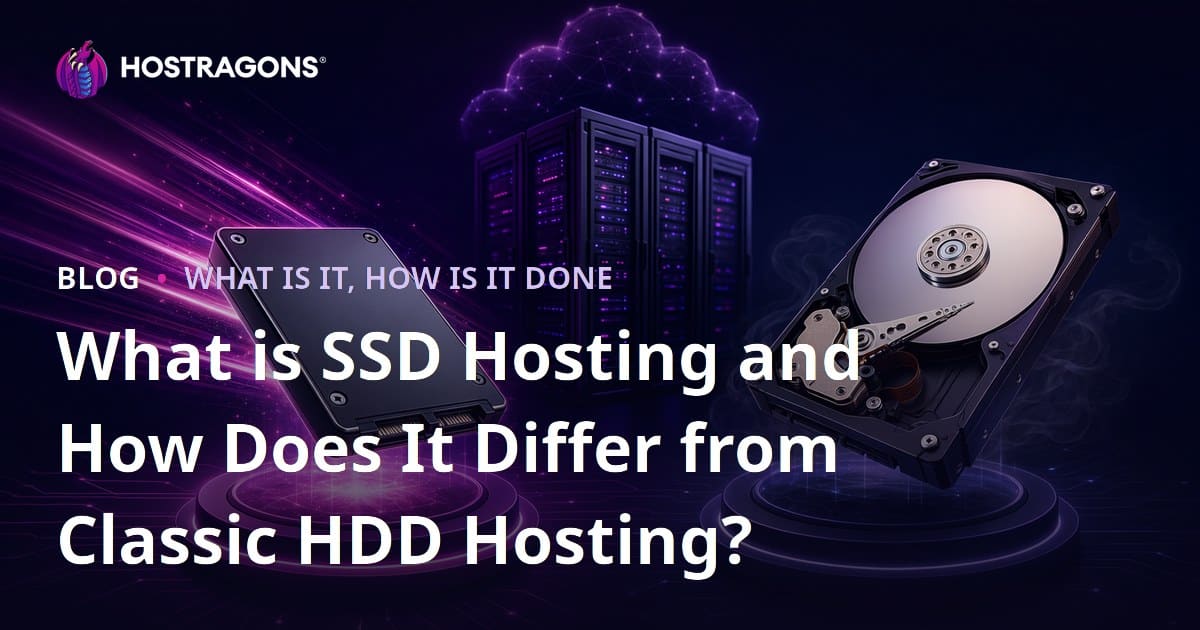
What is SSD Hosting and how does it differ from traditional HDD hosting? In this blog post, we examine in detail the advantages of SSD Hosting, its fundamental differences from HDDs, and speed performance. We discuss how data transfer speeds up with SSD Hosting, what you need for the transition, the security benefits, and a cost analysis. By learning which applications are suitable for SSD Hosting, how you can boost your performance, and the lessons to be learned from this technology, you can make the best decision for your website. SSD Hosting offers a significant alternative for those seeking high performance and speed.
What is SSD Hosting and What are its Advantages?
SSD Hosting is a type of hosting that uses Solid State Drive (SSD) technology to store files for websites and applications. Compared to traditional HDD (Hard Disk Drive) hosting, SSDs offer much faster data access and transfer because they contain no moving parts. This allows your website to load faster, perform better, and deliver a superior experience to your visitors. SSD hosting is an ideal solution especially for high-traffic websites, e-commerce sites, and performance-focused applications.
One of the most notable advantages of SSD hosting is the significant increase in read and write speeds. This means the server can access data much faster and serve your website content quickly. In addition, SSDs are more resistant to physical impacts and shocks, reducing the risk of data loss and increasing server stability. This ensures your website is continuously accessible.
| Feature | HDD Hosting | SSD Hosting |
|---|---|---|
| Data Access Speed | Slower | Much Faster |
| Durability | Lower | Higher |
| Energy Consumption | Higher | Lower |
| Price | More Affordable | Slightly Higher |
Using SSD hosting not only provides advantages in speed and performance but is also important from an SEO (Search Engine Optimization) perspective. Search engines like Google consider website speed and user experience as ranking factors. A website that loads faster has the potential to achieve higher positions in search results. This means more organic traffic and potential customers.
Advantages of SSD Hosting
- Faster Website Loading Times
- Enhanced Server Performance
- Better SEO Rankings
- Increased Visitor Satisfaction
- Greater Reliability and Stability
- Lower Energy Consumption
SSD hosting is an excellent solution to boost the performance of your website and applications, improve user experience, and gain an SEO advantage. With the speed, reliability, and durability it offers compared to traditional HDD hosting, SSD hosting has become indispensable in today's competitive digital world. Especially for performance-oriented and high-traffic websites, SSD hosting will be the right choice.
Key Differences Between HDD and SSD
Understanding the main differences between SSD Hosting and traditional HDD hosting will help you choose the right hosting solution for your website or application. HDD (Hard Disk Drive) and SSD (Solid State Drive) technologies differ significantly in how they store and access data. These differences can directly affect hosting performance.
HDDs store and access data through moving read/write heads on magnetic disks. This mechanical process limits data access speed. SSDs, on the other hand, store data in flash memory and, since they have no moving parts, offer much faster data access. This enables your website or application to load faster and provide a better user experience.
| Feature | HDD (Hard Disk Drive) | SSD (Solid State Drive) |
|---|---|---|
| Data Storage Method | Mechanical read/write on magnetic disks | Electronic storage on flash memory |
| Speed | Slower | Much faster |
| Durability | Less durable due to moving parts | More durable due to no moving parts |
| Power Consumption | Higher | Lower |
In terms of performance, reliability, and energy efficiency, SSD Hosting solutions offer clear advantages compared to HDD hosting. SSD hosting is an ideal option especially for websites and applications that receive heavy traffic and require fast response times.
Features of HDD
HDDs are a storage technology that have been used for many years and are still preferred in various sectors. The most significant feature of HDDs is their cost advantage. They offer high storage capacity at lower prices. However, due to their mechanical structure, they are more prone to impact and their data access speeds are lower compared to SSDs.
Features of SSD
SSDs are an excellent choice, especially for applications that require speed and durability. Their high read/write speeds provide faster boot times and a smoother user experience. Furthermore, since they have no moving parts, they consume less power and operate more quietly. The main features of SSDs include:
- High Speed: Allows much faster access to data.
- Durability: More resistant to shocks as it contains no moving parts.
- Low Power Consumption: Uses less energy compared to HDDs.
- Quiet Operation: No noise during operation.
The choice between HDD and SSD depends on your needs and budget. If high performance and fast data access are your priorities, SSD Hosting will be a more suitable option for you.
How is the Speed Performance of SSD Hosting?
SSD hosting delivers significantly higher speed and performance compared to traditional HDD hosting. The main reason is that SSDs do not have moving parts and can access data much faster. This reduces your website's loading times, improves the visitor experience, and helps increase your rankings in search engines. A fast website encourages users to stay longer and interact more, which can boost your conversion rates.
| Feature | HDD Hosting | SSD Hosting |
|---|---|---|
| Data Access Speed | Low | High |
| Website Load Time | High | Low |
| Input/Output Operations (IOPS) | Low | High |
| Reliability | Medium | High |
The speed advantages provided by SSD hosting are critical for high-traffic websites, e-commerce platforms, and database-intensive applications. SSDs can handle far more simultaneous requests than HDDs, improving server response times and ensuring your website runs smoothly even during peak periods. This not only enhances user satisfaction but also secures business continuity.
Some factors to consider for boosting SSD hosting speed performance include:
- Server Location: Choosing a server location closest to your visitors increases data transfer speed.
- Caching: Using an effective caching system allows static content to load faster.
- Optimized Code: Clean and optimized code helps your website operate faster.
- Image Optimization: Optimizing high-resolution images shortens page load times.
SSD hosting is a significant investment for the speed and performance of your website. By providing faster data access, lower load times, and improved overall performance, it not only enhances user experience but also helps you climb search engine rankings. Especially in highly competitive online environments, the speed advantages you gain with SSD hosting can provide you with a major competitive edge.
How Is Fast Data Transfer Achieved with SSD Hosting?
SSD hosting provides considerably faster data transfer speeds compared to traditional HDD hosting. This speed difference significantly impacts your website's performance, improves user experience, and positively contributes to your SEO rankings. Because SSDs lack moving parts, they allow quicker access to data. This is especially critical for high-traffic websites and applications with large databases.
So, how is fast data transfer achieved with SSD hosting? First of all, the read and write speeds of SSDs are multiple times higher than those of HDDs. As a result, your website files and database queries are processed much faster. Additionally, SSD hosting servers typically come with more powerful processors and greater RAM, further enhancing overall system performance.
Step-by-Step Data Transfer Process
- Choose the Right Hosting Plan: Selecting an SSD hosting plan that meets your needs is the first step to optimizing your performance.
- Database Optimization: Regular optimization of your database ensures that queries run faster.
- Use Caching: By utilizing server and browser caching mechanisms, you can ensure static content loads faster.
- Use a Content Delivery Network (CDN): Using a CDN delivers your website’s content more quickly to users in various geographic regions.
- Avoid Unnecessary Plugins: Remove unnecessary plugins that slow down your website’s speed.
- Optimize Images: Compress large images to boost your page loading speed.
The table below compares the key differences between HDD and SSD hosting, and their impact on data transfer speeds:
| Feature | HDD Hosting | SSD Hosting |
|---|---|---|
| Data Transfer Speed | Low | High |
| Access Time | Slow | Fast |
| Reliability | Lower | Higher |
| Performance | Average | High |
The fast data transfer offered by SSD hosting provides major advantages for various applications such as e-commerce sites, blogs, and corporate websites. Users navigate your website more quickly and complete their actions in a shorter time, increasing customer satisfaction. Remember, a fast website is the foundation of a successful online presence.
Requirements for Switching to SSD Hosting
Transitioning to SSD hosting can significantly boost your website’s performance and speed. There are a few important steps that must be observed during this transition process. To avoid data loss and ensure a smooth transition, it is important to carefully follow these steps. Before switching, fully understanding your current hosting package and your website’s requirements will help you select the right SSD hosting plan.
An essential part of the migration process is to back up your existing website and databases. These backups allow you to restore your data in case any issues arise. Once the backup process is completed, you’ll need to configure your new SSD hosting account. This involves updating your domain settings and installing the necessary software.
| Step | Description | Importance Level |
|---|---|---|
| Backup | Take backups of your website and databases. | High |
| Account Setup | Create your new SSD hosting account. | High |
| Domain Settings | Point your domain to the new server. | High |
| Data Transfer | Upload your backups to the new server. | High |
After the data transfer is completed, it’s important to test that your website functions correctly on the new server. Check that all links, forms, and other functionalities work smoothly. If you encounter any issues, take the time to fix them before reverting to the old server.
Steps Required for Migration
- Back up your existing hosting account.
- Create a new SSD hosting account.
- Point your domain to the new server.
- Transfer your website and databases to the new server.
- Test that your website functions correctly.
- Cancel your old hosting account (if tests are successful).
Once you’ve confirmed that everything works properly, you can cancel your old hosting account. By following these steps, you can smoothly migrate to SSD hosting and significantly improve your website’s performance. Remember, careful planning and following the correct steps are the keys to a successful transition.
Security Benefits of SSD Hosting
SSD hosting offers significant advantages in security compared to traditional HDD hosting. These advantages stem from both the hardware architecture and the speed of data processing. Especially in today’s world, where the security of websites and applications is of critical importance, these extra security layers provided by SSD hosting have made it a preferred choice.
The absence of moving parts in SSDs makes them more resilient to physical shocks and malfunctions. This reduces the risk of data loss and increases server reliability. Additionally, the faster data processing capacity of SSDs allows security software and processes to operate more efficiently. For example, an intrusion detection system (IDS) or firewall can function faster on SSDs, enabling threats to be detected and blocked more quickly.
Security Advantages
- Higher Durability: Since there are no moving parts, it is more resistant to physical malfunctions.
- Fast Data Encryption: Faster encryption and decryption of data provides protection against unauthorized access.
- Advanced Attack Detection: Thanks to the speed of SSDs, security software works more effectively and detects attacks earlier.
- Ease of Data Recovery: In case of failure, data recovery operations can be easier and quicker compared to HDDs.
- Less Heat Generation: Less heat generation ensures server components operate more stably and reduces the risk of hardware failure.
The table below provides a comparison of the security features of SSD and HDD hosting:
| Feature | SSD Hosting | HDD Hosting |
|---|---|---|
| Physical Durability | High | Low |
| Data Encryption Speed | Very High | Medium |
| Attack Detection | Advanced | Standard |
| Data Recovery | Easier | More Difficult |
SSD hosting provides a more secure environment for websites and applications thanks to its security benefits. Physical durability, fast data encryption, and advanced detection capabilities make SSD hosting a reliable choice. Therefore, if you have sensitive data or high security requirements, it is important to consider SSD hosting.
Security is a fundamental element for the success of any website or application. SSD hosting can be a significant step towards ensuring that security.
SSD Hosting and Cost Analysis
When performing a cost analysis of SSD hosting solutions, the higher initial cost compared to classic HDD hosting may be immediately noticeable. However, it’s essential to consider long-term benefits and potential returns as well. The superior speed and performance provided by SSD hosting can attract more visitors to your website or application, improve the user experience, and ultimately boost conversion rates. This allows you to offset the higher initial cost over time.
| Feature | HDD Hosting | SSD Hosting |
|---|---|---|
| Cost | Lower | Higher |
| Speed | Slower | Faster |
| Performance | Lower | Higher |
| Reliability | Lower | Higher |
Another crucial factor to consider in the cost analysis is the time savings you gain with SSD hosting. Faster load times and a more stable infrastructure reduce the time you need to spend dealing with technical issues. This lets you focus more on your business and increase your productivity. Furthermore, if your website or application is faster, it can help you achieve higher rankings in search engines, which in turn can lower your organic traffic acquisition costs.
Additionally, SSD hosting providers generally offer various packages tailored to different needs. These packages differ in terms of storage space, bandwidth, and other features. By accurately analyzing your needs, you can avoid unnecessary costs and choose the SSD hosting solution best suited to your budget. Here are some factors you should consider:
- The traffic volume of your website or application
- Required storage space
- Expected growth rate
- Your technical support needs
Although the cost of SSD hosting may seem high at first, considering its long-term benefits and potential returns makes it a wise investment. If speed, performance, and reliability are critical for the success of your website or application, SSD hosting is definitely an option you should consider.
For Which Applications Should You Prefer SSD Hosting?
SSD hosting is an ideal solution, especially for applications that require high performance. By offering much faster data read and write speeds compared to traditional HDD hosting, it can significantly increase the overall performance of your website and applications. Therefore, switching to SSD hosting for certain types of applications can be a strategic decision to improve user experience and gain an edge in the competition.
It is particularly recommended to use SSD hosting for the following high-performance demanding applications:
- E-commerce Sites: Fast loading times are critical due to high traffic and constantly changing inventory information.
- Database-Intensive Applications: Websites and applications with large databases benefit greatly from the speed of SSDs.
- Media Content Websites: Sites containing high-resolution images and videos require SSD hosting to offer visitors a fast experience.
- Blogs and News Sites: Constantly updated content and increasing numbers of visitors demand the performance provided by SSD hosting.
- Corporate Websites: To present a professional image and impress potential customers, a fast and reliable hosting solution is essential.
The following table shows the advantages offered by SSD hosting for different types of applications, compared side by side:
| Application Type | HDD Hosting Performance | SSD Hosting Performance | Recommended Hosting Type |
|---|---|---|---|
| E-commerce Sites | Slow loading times, low conversion rates | Fast loading times, high conversion rates | SSD Hosting |
| Database-Intensive Applications | Delays in database queries, slow response times | Faster database queries, quick response times | SSD Hosting |
| Media Content Websites | Slow loading of high-resolution content | Fast loading of high-resolution content | SSD Hosting |
| Blogs and News Sites | Slowdowns during heavy traffic, performance issues | Stable performance during heavy traffic, seamless experience | SSD Hosting |
Especially for websites with high traffic and dynamic content, SSD hosting will greatly repay your investment. Thanks to SSD hosting, your users will enjoy a smoother and faster experience on your site, which will increase your conversion rates and customer satisfaction.
If your website or application falls into one of the categories mentioned above and performance is a priority for you, switching to SSD hosting is inevitable. Remember, a fast and reliable website is the cornerstone of a successful online presence.
How Can You Boost Your Performance with SSD Hosting?
SSD hosting is a powerful tool to enhance the performance of your website and applications. However, it is important to carry out certain optimizations in order to fully harness the potential of SSD hosting. These optimizations not only increase your website’s speed, but also improve user experience and help you rank higher in search engines.
| Optimization Area | Description | Benefits |
|---|---|---|
| Caching | By caching your website’s static content, the server load is reduced. | Faster page load times, less server resource usage. |
| Content Delivery Network (CDN) | By storing your website’s content on servers in different geographic locations, users can access it faster. | Increased speed for global access, better user experience. |
| Image Optimization | By optimizing the size and format of the images on your website, page load times are shortened. | Faster page load times, reduced bandwidth usage. |
| Database Optimization | Regularly optimizing your database ensures queries run faster. | Improved application performance, reduced server load. |
To maximize the advantages offered by SSD hosting, it’s important to optimize your website’s code. Cleaning unnecessary code, using compression techniques, and enabling browser caching can greatly enhance performance. Additionally, simplifying your website’s design and avoiding unnecessary plugins will also positively impact performance.
Performance Improvement Tips
- Use Caching: Utilize a suitable caching solution (e.g., Varnish, Memcached) for your website to cache static content.
- CDN Integration: Distribute your website’s content across various geographic locations using a content delivery network (CDN).
- Image Optimization: Optimize images on your website by reducing their size and using suitable formats (e.g., WebP).
- Database Optimization: Regularly clean and optimize your database. Delete unnecessary tables and data.
- Code Optimization: Optimize your website’s code (HTML, CSS, JavaScript) by removing unnecessary code and compressing it.
- Plugin Management: Regularly update the plugins on your website and avoid unnecessary plugins.
It’s also important to evaluate the tools and features offered by your SSD hosting provider. Many SSD hosting providers offer additional features such as performance monitoring tools, automatic backup, and security measures. These features can help you continuously monitor and optimize the performance of your website. By regularly conducting performance tests and analyzing the results, you can identify areas for improvement and take the necessary steps.
Remember, the performance of SSD hosting alone is not sufficient. The overall optimization of your website and applications will ensure you fully benefit from the potential of SSD hosting.
Conclusion and Lessons to Be Learned from SSD Hosting
SSD hosting has become an indispensable solution for websites in today’s competitive digital world. Thanks to its superior speed, performance, and reliability compared to traditional HDD hosting, it is the ideal choice for anyone looking to improve user experience, boost search engine rankings, and enhance overall website success. As discussed in this article, the technical details, advantages, and fields of use of SSD hosting clearly demonstrate why this technology is so important.
| Criteria | SSD Hosting | HDD Hosting |
|---|---|---|
| Speed | Very High | Low |
| Performance | Superior | Average |
| Reliability | High | Lower |
| Cost | Somewhat Higher | More Affordable |
There are some important points to consider when transitioning to SSD hosting. First of all, it is essential to accurately analyze your website’s needs and select a hosting plan that matches those requirements. Managing the data migration process in a planned manner will minimize potential interruptions. Also, regularly backing up your website is crucial to eliminate the risk of data loss. To fully benefit from the advantages offered by SSD hosting, it is worthwhile to review your website’s optimization as well.
Recommended Steps
- Analyze your website’s current performance.
- Select your SSD hosting provider carefully.
- Create and implement your data migration plan.
- Monitor your website’s performance regularly.
- Upgrade or downgrade your hosting plan as needed.
SSD hosting is a critical investment for modern websites. In today’s internet, where speed, reliability, and performance are paramount, you can get ahead of your competitors and provide your users with the best experience by choosing SSD hosting. Remember, choosing the right hosting plays a significant role in the success of your website, and SSD hosting is a powerful tool to help you achieve that success.
Speed is the most valuable currency in today’s digital world. SSD hosting increases the value of your website by allowing you to use this currency as efficiently as possible.
Frequently Asked Questions
What are the most significant benefits SSD Hosting provides for my website?
SSD Hosting offers faster data access, better performance, and shorter loading times compared to traditional HDD hosting. This improves your website’s user experience, boosts search engine rankings, and generally ensures a smoother internet experience.
What are the fundamental technological differences between HDD and SSD, and how do these differences impact hosting performance?
HDDs use mechanical parts to read and write data, while SSDs utilize flash memory technology. This makes SSDs significantly faster, quieter, and more durable. From a hosting perspective, SSDs provide quicker data access, so websites load faster and can handle more traffic.
How can I decide whether I need to migrate my website to SSD Hosting? What factors should I consider?
If you're not satisfied with your website’s performance, receive high traffic, run an e-commerce site, or need fast loading times, you may consider switching to SSD Hosting. Also, if you run applications that heavily utilize server resources, SSD Hosting may be a better option.
How does the SSD Hosting migration process work, and will my website experience any downtime during this transition?
The migration to SSD Hosting is carried out based on the tools and instructions provided by your hosting provider. Typically, you need to transfer your website files and database from the old server to the new SSD server. A professional hosting provider will manage this process to minimize downtime, and in some cases can even ensure a seamless migration.
What are the security advantages of SSD Hosting over traditional HDD hosting?
Since SSDs do not contain mechanical components, they are more resilient against shocks and vibrations, reducing the risk of data loss. Additionally, the faster data access of SSDs can make it easier to detect and block malware and attacks.
Is SSD Hosting more expensive than HDD hosting in terms of cost, and is this price difference proportional to the performance increase?
Generally, SSD Hosting is a bit more expensive than HDD hosting. However, the performance improvements and advantages it brings (faster loading times, better SEO, enhanced user experience) can justify this price difference. It’s important to assess according to your website’s needs and budget.
What types of websites or applications benefit the most from SSD Hosting?
High-traffic websites, e-commerce sites, database-intensive applications, websites that host large files, and any application requiring fast response times benefit the most from SSD Hosting.
What can I do to further boost my website's performance while using SSD Hosting?
To fully leverage the advantages of SSD Hosting, you can optimize your website, remove unnecessary plugins, compress images, use caching, and employ a CDN (Content Delivery Network) to deliver your content even faster.