 Afrikaans
 Azərbaycan
 Bosanski
 Čeština
 Dansk
Dansk Deutsch
 English
 Español
 Filipino
 Français
 Hrvatski
 Indonesia
 Italiano
 Magyar
 Melayu
 Nederlands
 Norsk
Norsk Oʻzbek
 Polski
 Português
 Română
 Slovenčina
 Slovenščina
 Suomi
Suomi Svenska
 Tiếng Việt
 Türkçe
 Ελληνικά
 Беларуская
 Български
 Русский
 Српски
 Українська
 עברית
עברית اردو
اردو العربية
 پښتو
پښتو فارسی
فارسی አማርኛ
አማርኛ मराठी
मराठी বাংলা
বাংলা தமிழ்
தமிழ் ไทย
ไทย မြန်မာ
 한국어
한국어 中文
中文 日本語
日本語

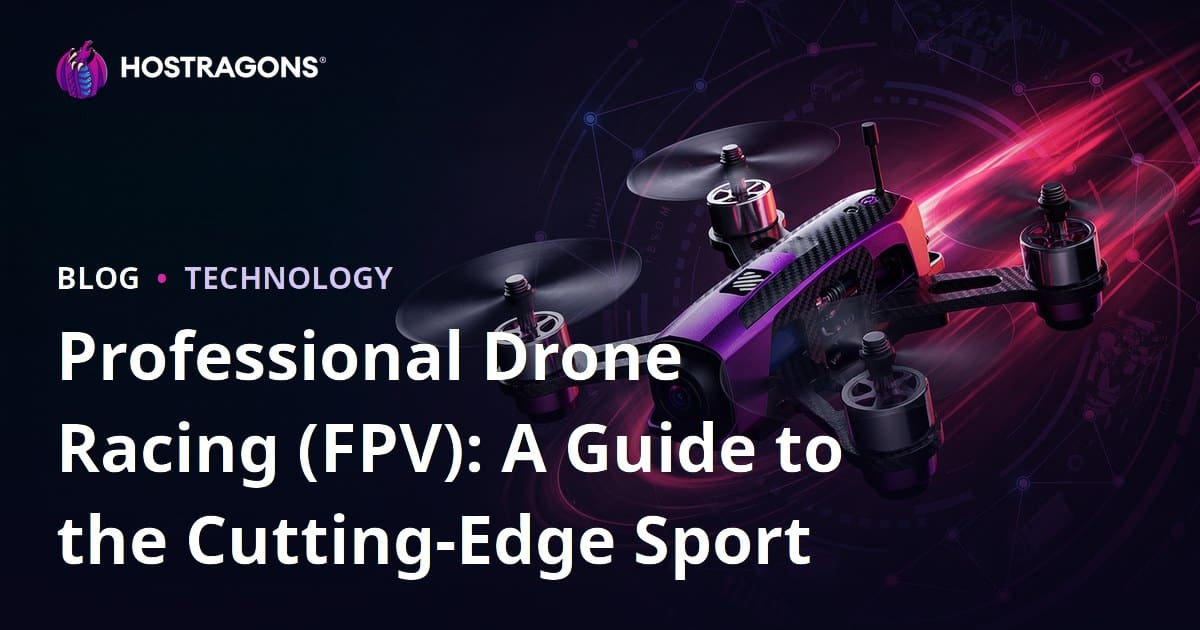
Professional Drone Racing (FPV) is a competitive technology sport where pilots race high-speed drones on predetermined tracks, viewing live footage from the drone's camera through goggles or screens. Success in this field requires more than just a fast drone; it involves low-latency video transmission, precise motor-propeller balance, battery management, simulation training, safety protocols, and digital visibility.
FPV, or first-person view, differentiates itself from traditional aerial imaging approaches. The camera feed is transmitted to the pilot’s goggles within milliseconds, allowing the pilot to control the drone as if they were onboard. At a professional level, it’s not just about flying; it’s about reducing lap times, navigating gates flawlessly, adhering to race regulations, anticipating equipment failures, and analyzing data post-race.
This micro-technology blog is designed for those curious about Professional Drone Racing (FPV), amateur pilots looking to transition to the professional league, tech entrepreneurs, and those planning to form an FPV team. It also addresses the digital needs of racers, such as personal branding, sponsorship proposals, live streaming pages, and team websites, highlighting natural solutions available within the Hostragons ecosystem.
What is Professional Drone Racing (FPV)?
Professional Drone Racing (FPV) is a competitive discipline aimed at completing laps on a designated track in the shortest time possible with minimal errors. The track includes LED gates, flags, tunnels, turning points, and elevation changes. Races can take place outdoors, indoors, in stadiums, or on specially designed micro-tracks.
FPV racing drones differ significantly from cinematic drones used for filming. The priority is not on stable cinematic footage but on acceleration, maneuverability, low weight, quick repairs, and control precision. The 5-inch class racing drones are prevalent in most professional organizations; there are also 3-inch micro classes, tiny whoop categories, and specialized long-range racing formats.
Why is FPV Racing Considered a Micro Technology Field?
In the world of FPV, millimeters, grams, and milliseconds matter significantly. Parameters like propeller angle, ESC current capacity, antenna placement, camera latency, battery internal resistance, and flight controller software directly affect lap times. For instance, the difference between a 20 ms latency video system and a 35 ms system can drastically change a pilot's reaction during narrow gate passages.
Therefore, FPV is a field where micro-scale engineering decisions yield macro-level outcomes. Professional pilots do not just fly; they solder, update firmware, analyze log files, test props, and adjust flight profiles according to the race type.
Key Components of Professional FPV Drones
The performance of a racing drone is not dependent on a single component. The frame, motors, ESC, flight controller, camera, video transmitter, receiver, antennas, batteries, and propellers all work together as a system. Purchasing the most expensive parts doesn’t always guarantee the best results; what matters is that the components are compatible and consistent with the racing objectives.
Frame and Weight Balance
In professional races, carbon fiber frames are preferred. The bare frame weight in the 5-inch class typically ranges from 65 to 130 grams. A 5 mm arm thickness is common for durability; however, 4 mm arms can provide a speed advantage in lighter track races. The center of gravity must be balanced with the battery, camera, and electronics arrangement. A front-heavy drone tends to nosedive during sharp turns, while a rear-heavy drone is more prone to wobbling on takeoff.
Motor, ESC, and Propeller Compatibility
The choice of motor defines the drone's character. In 5-inch racing drones using a 6S battery, the range of 1700-2100KV is common. Higher KV can provide aggressive acceleration but increases battery consumption and motor temperature. A capacity of 45A-60A for the ESC offers a safe range for professional use. Propeller selection varies depending on the track layout: controlled props are preferred for tight and technical tracks, while higher pitch values are favored for long straights.
Camera, Video System, and Latency
In FPV, the image seen by the pilot directly impacts decision-making speed. Analog systems offer the advantage of low latency and simplicity, while digital systems provide clearer images and easier recording. In professional racing, both clarity and latency are critical. While 720p or 1080p digital images may seem attractive, a consistent latency of 20-30 ms can be more important for a racing pilot than visual resolution.
Battery Management
4S and 6S LiPo batteries are common in racing drones. In the 5-inch professional class, 6S 1050-1300mAh batteries are frequently used. A higher capacity can provide longer flight times, but increased weight may reduce acceleration and turning capabilities. Balancing cell voltages before races, measuring internal resistance, and using a safe charging bag are essential safety practices.
FPV Racing Drone Component Comparison Table
| Component | Professional Preference | Critical Criteria | Impact on Racing |
|---|---|---|---|
| Frame | Carbon fiber 5-inch | Weight and arm durability | Turning stability and post-crash repair |
| Motor | 1700-2100KV for 6S | Torque, temperature, efficiency | Acceleration and gate exit |
| ESC | 45A-60A | Current tolerance | Reliable power transfer |
| Camera | Low latency FPV camera | Dynamic range and latency | Gate perception and reflexes |
| Video System | Analog or low-latency digital | Image stability | Reducing error rates |
| Battery | 6S 1050-1300mAh | Internal resistance and weight | Lap time and acceleration |
Training Plan to Transition to Professional Level
In FPV, disciplined training is as important as skill. For a novice pilot, attempting aggressive flights directly with a real drone can be costly and risky. Pilots aiming to transition to a professional level should strategically progress through simulator training, micro drones, and full-size racing drones.
1. Basic Reflex Acquisition with a Simulator
The first 30-60 hours of simulator training build muscle memory without the cost of crashes. The objective during this phase is not just to fly fast. In acro mode, pilots should practice directional control, throttle sensitivity, roll-pitch coordination, gate alignment, and reading the track in reverse. Short but consistent sessions of 30-45 minutes five days a week are more effective than long, erratic sessions.
2. Adapting to Real Environments with a Micro Drone
Tiny whoop or 2-3 inch micro FPV drones provide low-risk practice in real environments. Mini tracks can be set up indoors using chairs, table legs, soft doors, and foam obstacles. This phase teaches the behavior of video signals, battery drop, and the psychology of real collisions.
3. Transitioning to Full-Size Racing Drones
When transitioning to a 5-inch racing drone, the initial goal should not be maximum speed but consistent lap times. For example, on a simple track with 8 gates, the goal on the first day might be to complete a flawless lap in 60 seconds. In the following weeks, targets of 55, 50, and 45 seconds can be set. Professional pilots record their lap times, analyze where they lost time at each gate, and repeat specific maneuvers.
Race Strategy: It's Not Just About Speed
In FPV races, the fastest drone does not always win. Reading the track accurately, managing energy, and making decisions during risky transitions often determine outcomes. Especially in elimination rounds, stable flying is more valuable than a single aggressive lap.
Reading the Track
Walking the track before a race is crucial for visualizing the angle of the gates and the exit lines. Experienced pilots identify the entry point, apex, and exit line for each gate. Thus, during flight, the drone is guided not towards the gate but towards the line beyond it.
Throttle Management
A common mistake among new pilots is flying at full throttle all the time. However, in technical tracks, reducing throttle does not mean slowing down the drone; it prepares it for turns. Particularly in split-S, power loops, and sharp slalom transitions, throttle control directly affects lap times.
Choosing Risk Levels
If the positions of competitors are known in the final lap, strategies can change. If you are in the lead, you may prefer a safe line; if you're behind, a shorter but riskier line might be better. A professional racer makes this decision based on measured error rates during practice, not emotions.
Safety, Regulations, and Ethical Flight
Professional Drone Racing (FPV) is a sustainable sport when safety rules are followed. Choosing flight areas, spectator distances, propeller safety, frequency planning, and emergency procedures must be clear for every event.
- Before flights, check for cracks in the propellers and tighten motor screws.
- Batteries should be stored in fireproof LiPo bags, and cell voltages should be monitored.
- There should be a safe barrier between the spectator area and the track.
- Video transmitter frequencies should be coordinated before the race.
- Failsafe settings should be tested before heading to the track.
- Local Civil Aviation regulations and area permissions should be verified.
Ethically, FPV pilots must respect the environment, people, and other radio users. Unauthorized flights in crowded areas, privacy violations, and uncontrolled frequency use can harm the community and lead to legal issues.
Software Settings and Data Analysis
In modern FPV drones, the flight controller software is as crucial as the hardware. PID settings, rate profiles, filters, and OSD information on platforms like Betaflight or INAV affect race performance. Professional pilots typically use separate rate profiles for different tracks.
Rate Settings
Rate determines how stick movements translate to rotational speed on the drone. An overly aggressive rate setting provides quick flips and rolls but may reduce precision in narrow gates. For newly professional pilots, it is advisable to use a medium sensitivity profile first and measure lap times over 10-15 flights before making small adjustments.
Blackbox and Log Review
Blackbox recordings allow analysis of motor vibrations, gyro behavior, and command responses. For instance, if oscillations are observed during hard throttle openings, filter settings, propeller balance, or frame resonance may be examined. This approach provides data-driven improvements rather than guesswork.
FPV Team, Personal Branding, and Digital Infrastructure
Professional racing is not just about the standings earned on the track. A strong digital presence is required to find sponsors, share training data, announce race schedules, live stream, and build portfolios. A website for an FPV pilot or team should include a biography, equipment list, race results, media kit, and a contact form.
Using a personal domain provides a more permanent brand identity than social media links. For example, a domain like firstname.lastnamefpv.com or one that features the team name creates a professional perception in sponsorship discussions. At this stage, Hostragons Domain Lookup and Domain Registration Service can be considered for suitable domain selection.
A fast-loading website is crucial for race videos, blog posts, media files, and sponsorship PDFs. Mobile users, in particular, quickly leave slow-loading pages. When setting up an FPV team website, Hostragons Web Hosting Packages can be chosen for performance-oriented infrastructure, or Hostragons VPS Server Solutions can be considered for higher resource needs.
If live race results, team data panels, or special training logs are to be published, a secure connection is essential. SSL certificates should be used for user forms, sponsor applications, and membership panels. Hostragons SSL Certificate Solutions provide a natural layer of security for this need.
FPV Content Creation and Streaming
For FPV racers, content production is as valuable as performance. Videos prepared with a helmet camera, DVR recording, off-track cameras, and telemetry overlays grow the community and attract sponsors' interest. However, if the content strategy is unplanned, high-quality flights may get lost in the archives.
Types of Content to Publish
- Weekly training lap analysis
- Drone build list and part costs
- Pre-race equipment check video
- Post-crash repairs and lessons learned
- Track reading guides
- Simulator workout routines
- Season report for sponsors
When categorized under a blog, these contents can attract organic traffic from search engines. For example, topics like how to set up a professional FPV drone, FPV battery selection, or racing drone settings can provide long-term visibility. For teams looking to establish a blog infrastructure, Creating a Tech Blog with WordPress Hosting could be a good starting point.
Example Roadmap from Beginner to Professional
The following roadmap offers a practical framework for a pilot looking to seriously start FPV. Timelines may vary based on personal ability, budget, and training frequency; however, progressive advancement reduces both cost and crash risks.
0-1 Month: Simulator and Theory
During this period, a controller is purchased, acro flying is learned in the simulator, and basic terms are understood. The goal is to complete a simple 10-gate track for 5 consecutive laps without crashing.
2-3 Months: Micro Drone and Maintenance
The transition to real flying begins with a micro drone. Propeller changes, battery safety, minor soldering tasks, and video signal issues are learned. The goal is controlled flying and regular landings indoors.
4-6 Months: 5-Inch Racing Drone
A 5-inch drone close to professional standards is built or purchased. The pilot now measures lap times, keeps an equipment log, and follows race formats. The goal is to reach a level where they can safely race in local events.
6-12 Months: Racing, Branding, and Sponsorship
The pilot participates in local races, publishes a video portfolio, and updates social media and the website. Race results, equipment lists, and media kits are kept organized. At this stage, a team site, professional email, and secure contact form provide a competitive advantage. Hostragons Corporate Hosting Solutions can be considered for corporate email and site management.
Common Mistakes and Professional Solutions
Many mistakes made by newcomers to FPV are predictable. A professional approach is not to eliminate errors entirely but to create a system that prevents them from recurring.
- Mistake: Continuously changing equipment. Solution: Fly at least 30 flights with the same setup and make decisions based on the data.
- Mistake: Over-discharging the battery. Solution: Monitor the safe minimum voltage per cell.
- Mistake: Focusing solely on speed. Solution: Conduct at least two sessions per week of technical gate and slalom training.
- Mistake: Not carrying spare parts. Solution: Have propellers, arms, motors, screws, soldering kits, and antennas in the race bag.
- Mistake: Neglecting digital presence. Solution: Establish a simple website that regularly publishes race results and videos.
Minimum Equipment Checklist for Professional FPV
Before participating in the first serious race, a pilot must have not only a drone but also all field equipment ready. The following list is a practical starter kit:
- At least 1 main racing drone and preferably 1 backup drone
- 6-10 robust racing batteries
- Spare propellers and various pitch options
- Controller, FPV goggles, antenna, and charging cables
- Soldering station, spare wires, connectors, and heat shrink tubing
- LiPo safety bag and voltmeter
- Laptop and firmware adjustment cable
- Memory card and backup storage for race recordings
This list prevents a small malfunction in the field from ruining the entire day. Professional pilots' bags are often organized like a mini repair shop.
The Future: AI and Cloud Systems in FPV Racing
The future of FPV racing will see increased use of AI-driven lap analysis, automatic video tagging, cloud-based training logs, and real-time scoreboards. Pilots will be able to analyze lap lines with AI, monitor battery performance throughout the season, and compare data across different tracks.
This transformation also makes the technical infrastructure of FPV teams essential. Reliable server infrastructure is needed for those wishing to store telemetry data, stream live scores, or develop internal team panels. Developers and tech teams can plan scalable structures for special projects with Hostragons Cloud Server and API-Oriented Infrastructure Solutions.
Summary
Professional Drone Racing (FPV) is much more than speed: micro hardware decisions, low-latency video systems, disciplined training, safety culture, data analysis, and digital brand management all contribute to success. The healthiest path to start is to first develop basic reflexes in the simulator, then transition to real flying with a micro drone, and subsequently progress with measurable goals in the 5-inch racing class.
If you wish to strengthen your digital presence as an FPV pilot, team manager, or technology content creator; you can calmly and strategically consider domain names, fast hosting, SSL, and scalable server infrastructure. Hostragons offers practical options to establish the technical foundation for this journey.
Frequently Asked Questions
What should the initial budget be for Professional Drone Racing (FPV)?
The initial budget varies according to the chosen equipment. A controlled start can be made with a controller, simulator, micro drone, FPV goggles, and basic spare parts. In a professional 5-inch racing setup, drones, batteries, chargers, goggles, controllers, and spare parts should be considered together. The best approach is to first develop skills with a simulator and micro class before transitioning to more expensive equipment.
Is analog or digital video system better in FPV racing?
Analog systems offer advantages of low latency, affordability, and simplicity. Digital systems provide clearer images, recording quality, and a modern user experience. The choice in professional racing depends on the type of track, organizational rules, and pilot habits. The critical criterion is not just resolution but stable low latency.
Is the simulator sufficient for real FPV flight?
Simulators are very valuable for basic reflexes, acro control, and track reading; however, they cannot completely replicate the effects of real flight, such as battery drop, wind, video signal issues, and crash psychology. Therefore, the best method is to use simulators, micro drones, and real racing drones progressively together.
What is the difference between an FPV racing drone and a cinematic drone?
Racing drones are designed for speed, agility, low weight, and quick repairs. Cinematic drones, on the other hand, focus on stable footage, long flight times, and camera quality. In racing drones, pilot control and low latency are prioritized; in cinematic drones, composition and stabilization take precedence.
Is a website necessary for an FPV team?
It is not mandatory, but it provides a significant advantage in professional perception and sponsorship. A team website centralizes race results, pilot profiles, videos, media kits, and contact information. A secure site built with a domain name, fast hosting, and SSL creates a lasting digital showcase that complements social media accounts.