 Afrikaans
 Azərbaycan
 Bosanski
 Čeština
 Dansk
Dansk Deutsch
 English
 Español
 Filipino
 Français
 Hrvatski
 Indonesia
 Italiano
 Magyar
 Melayu
 Nederlands
 Norsk
Norsk Oʻzbek
 Polski
 Português
 Română
 Slovenčina
 Slovenščina
 Suomi
Suomi Svenska
 Tiếng Việt
 Türkçe
 Ελληνικά
 Беларуская
 Български
 Русский
 Српски
 Українська
 עברית
עברית اردو
اردو العربية
 پښتو
پښتو فارسی
فارسی አማርኛ
አማርኛ मराठी
मराठी বাংলা
বাংলা தமிழ்
தமிழ் ไทย
ไทย မြန်မာ
 한국어
한국어 中文
中文 日本語
日本語

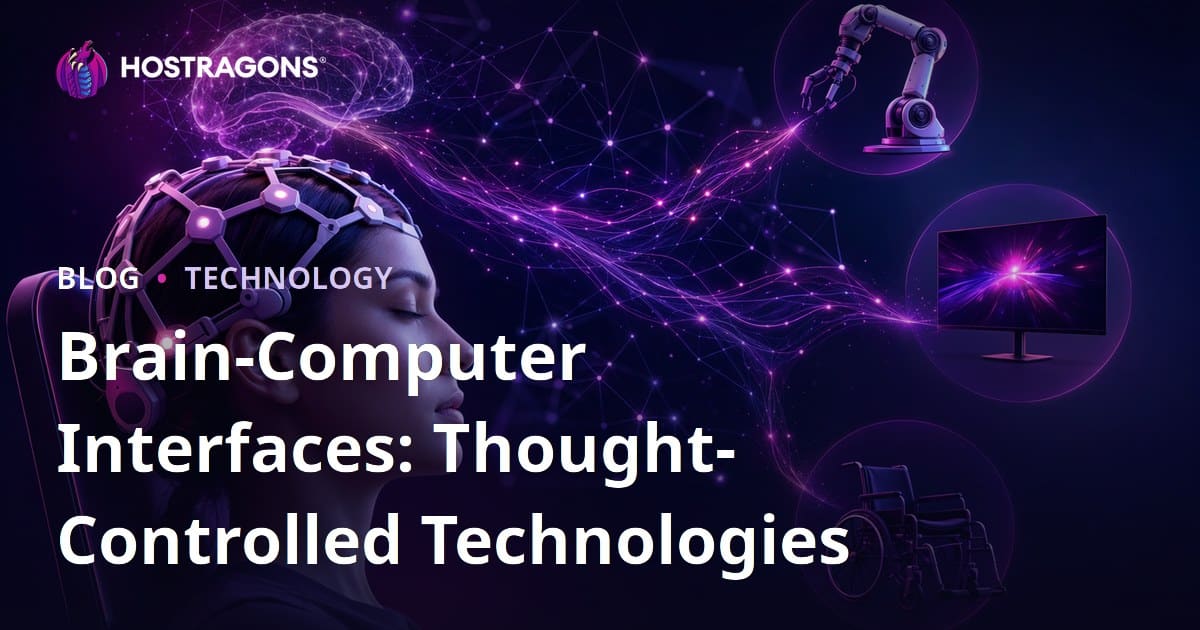
Brain-Computer Interfaces (BCIs) are groundbreaking technologies that enable control of devices through the power of thought. This blog post explores the history, fundamental operating principles, and various applications of BCIs in detail. It evaluates the advantages and disadvantages of BCIs, which offer potential in a wide array of fields from medicine to the gaming industry. The article also discusses the different types of BCIs, design challenges, future potential applications, and the equipment required to utilize this technology. Don't miss this comprehensive guide to prepare for the promising benefits of Brain-Computer Interfaces.
History of Brain-Computer Interfaces
Brain-Computer Interfaces (BCIs) aim to establish direct communication channels between the nervous system and the external world. The origins of this technology date back to the 19th century when electrical activity in the human brain was first discovered. However, the development and application of BCIs in their modern sense occurred towards the end of the 20th century. Early research was primarily conducted on animals, focusing on the conversion of brain signals into simple commands.
Early investigations into BCIs advanced parallel to developments in neurophysiology and computer science. Advancements in computer technology have enabled faster and more accurate processing of complex brain signals. Simultaneously, developments in brain imaging techniques have provided deeper insights into the functions of different brain regions and their interactions, contributing to the more effective design of BCI systems.
| Year | Development | Importance |
|---|---|---|
| 1875 | Richard Caton discovered electrical activity in animal brains. | The first evidence showing that brain activity is measurable. |
| 1924 | Hans Berger recorded human EEG. | Enabled non-invasive measurement of human brain electrical activity. |
| 1960s | First BCI experiments conducted on animals. | Showed that simple brain signals could be used to control external devices. |
| 1990s | First invasive BCI applications on humans commenced. | Allowed paralyzed patients to control computers and prosthetics through thought. |
A significant milestone in the development of BCI technologies was the advancement of invasive (surgical intervention required) and non-invasive (no surgical intervention required) methods. Invasive methods offer higher signal quality but come with important disadvantages such as the risk of infection. Non-invasive methods, while safer and more user-friendly, tend to be more limited in terms of signal quality compared to invasive methods. The list below summarizes the developmental stages of BCIs:
- Basic Research: Understanding and modeling brain signals.
- Development of Signal Processing Algorithms: Extracting meaningful information from brain signals.
- Hardware Development: Designing devices that detect and process brain signals.
- Clinical Applications: Using BCIs for paralyzed patients and other disabled individuals.
- Commercial Product Development: Broader dissemination of BCI technologies to the general public.
Fundamental Principles of Brain-Computer Interfaces
Brain-Computer Interfaces (BCIs) allow for direct communication between the human brain and external devices. These interfaces work by capturing brain signals, interpreting them, and using this interpretation to control external devices or provide feedback. Essentially, BCIs convert the thoughts and intentions of the brain into computer commands, enabling paralyzed patients to control prosthetic limbs, communicate, or manage environmental devices.
- Main Operating Principles
- Detection of brain signals (EEG, ECoG, etc.)
- Signal processing and feature extraction
- Classification using machine learning algorithms
- Device control or feedback mechanisms
- User adaptation and learning
The underlying principles of BCIs involve measuring brain activity, processing this data, and transforming it into meaningful commands. Methods such as electroencephalography (EEG) can record brain waves from the surface, while more invasive methods like electrocorticography (ECoG) can capture more detailed signals directly from the brain cortex. After filtering out noise, these signals are analyzed to identify specific patterns and features.
| Stage | Description | Techniques Used |
|---|---|---|
| Signal Detection | Electrical measurement of brain activity. | EEG, ECoG, fMRI, NIRS |
| Signal Processing | Cleaning raw data and extracting meaningful features. | Filtering, noise reduction, wavelet transform |
| Classification | Interpreting features using machine learning algorithms. | Support vector machines (SVM), neural networks |
| Device Control | Transferring interpreted commands to external devices. | Prosthetic control, computer interfaces, environmental control |
Machine learning algorithms come into play at this stage, learning patterns in the brain signals and associating them with specific commands. For instance, brain waves associated with the thought of moving right can be transformed into a command that causes a prosthetic arm to move right. This process is continuously improved with user feedback, making BCIs more accurate and effective over time.
Electrical Activity
The brain is in a constant state of activity through electrical and chemical communication between neurons. This electrical activity can be measured via electroencephalography (EEG) on the scalp. EEG detects brain waves of different frequencies (alpha, beta, theta, delta) and provides information about various mental states such as wakefulness, sleep, and focus. BCIs attempt to discern the user's intentions and commands by detecting changes in these brain waves.
Neural Communication
Communication between neurons occurs at connection points known as synapses. At these synapses, information is transmitted through chemical substances called neurotransmitters. Brain-computer interfaces aim to directly or indirectly influence this neural communication. For instance, some BCIs record the electrical activity of neurons through electrodes implanted in brain tissue, while others attempt to modulate neural activity using magnetic or optical methods.
Through these complex interactions, brain-computer interfaces open new doors for various applications by harnessing the potential of the human brain.
Applications of Brain-Computer Interfaces
Brain-Computer Interfaces (BCIs) present a revolutionary potential across numerous fields today. From healthcare to entertainment, and education to everyday life, BCIs are facilitating significant advancements in making human life easier and better. In this section, we will focus on the most notable applications of BCIs.
BCA technologies offer promising solutions, particularly for individuals with neurological disorders. Significant developments are being made in various areas, from allowing paralyzed patients to regain movement capabilities to enabling those with speech difficulties to communicate. Additionally, BCIs hold great potential in controlling prosthetic limbs and managing devices used in treating muscle diseases.
| Application Area | Description | Examples |
|---|---|---|
| Healthcare | Treatment and rehabilitation of neurological disorders | Movement control for paralyzed patients, managing prosthetic limbs |
| Entertainment | Enhancing gaming experience, increasing virtual reality interaction | Mind-controlled games, virtual environments that change based on emotional responses |
| Education | Personalizing learning processes, addressing attention deficits | Educational software that adapts to individual learning speeds, attention-enhancing games |
| Everyday Life | Controlling household appliances, communication, perceiving the environment | Mind-controlled smart home systems, applications that allow writing through thought |
The applications of BCIs are not limited to these areas alone. With advancing technology, the potential of these interfaces continues to increase. Particularly, advancements in artificial intelligence and machine learning enable BCIs to perform more complex and precise tasks. For instance, scenarios where a person guides a robot with their thoughts or conducts a complex surgery remotely may well become reality in the future.
Healthcare
In the healthcare sector, brain-computer interfaces are groundbreaking, especially in the treatment and rehabilitation of neurological disorders. Controlling prosthetic limbs to aid paralyzed patients in regaining their movement capabilities is one of the most recognized applications of this technology. Additionally, BCI-based communication systems developed for individuals who have lost the ability to speak allow for their thoughts to be transcribed into written form, thereby facilitating communication with others.
Gaming
The gaming industry is one of the fields most influenced by the innovations offered by brain-computer interfaces. The ability for players to control games directly through their thoughts, rather than just using a keyboard and mouse, elevates the gaming experience to a whole new level. This technology not only facilitates access to games for disabled individuals but also offers more immersive and personalized gaming experiences.
To understand the potential of BCI technologies, we can look at the following examples:
Brain-computer interfaces could become tools that not only enhance life for disabled individuals but also enrich experiences for everyone. Devices controlled by thought, educational systems that personalize learning processes, and many innovations demonstrate the potential of this technology.
In the future, brain-computer interfaces are expected to be utilized much more widely. The development of this technology will fundamentally change human-machine interaction, leading to significant transformations in many areas of our lives.
Advantages and Disadvantages of Brain-Computer Interfaces
Brain-computer interfaces (BCIs) provide a wide range of promising applications across various fields, from healthcare to entertainment, but they also bring significant advantages and disadvantages. When evaluating the potential offered by this technology, various ethical, practical, and technical challenges must be addressed.
One of the greatest advantages of BCIs is their potential to enhance the quality of life for individuals with neurological disorders. The ability for paralyzed patients to control prosthetic limbs with their thoughts and for individuals who struggle to communicate to transcribe their thoughts into writing are revolutionary possibilities offered by this technology. Additionally, BCIs can be utilized to enrich virtual reality experiences, improve game control, and introduce new learning methods in education.
| Advantages | Disadvantages | Ethical Concerns |
|---|---|---|
| Improving quality of life for individuals with neurological disorders | Infection risks associated with invasive methods requiring surgical intervention | Data privacy and security |
| Enabling paralyzed patients to control prosthetic limbs | Insufficient knowledge about the effects of long-term usage on the brain | Potential for misuse of BCI technology |
| Allowing individuals struggling to communicate to transcribe their thoughts | High costs and accessibility challenges associated with BCI systems | Fair distribution of technology and risk of discrimination |
| Enhancing virtual reality and gaming experiences | Challenges of signal processing and interpretation | Impact on users' autonomy and free will |
However, the disadvantages of BCIs cannot be overlooked. Invasive BCI methods carry risks such as infection and tissue damage due to the need for surgical intervention. Non-invasive methods, on the other hand, are often limited in terms of signal quality and resolution. Additionally, the complexity and high costs of BCI systems may hinder the widespread adoption of this technology. There is also a significant concern regarding the lack of sufficient research on the long-term effects of BCI use.
The ethical dimensions of BCI technology must also be considered. Issues like data privacy, security risks, and potential for abuse must be carefully addressed during the development and application of this technology. To maximize the potential benefits of BCIs while minimizing possible risks, a multidisciplinary approach and stringent regulations are required. In this context, the following considerations are of utmost importance:
- Protection of personal data
- Prevention of technology misuse
- Ensuring equal access opportunities
- Preservation of users’ autonomy
Specific Types and Features of Brain-Computer Interfaces
Brain-Computer Interfaces (BCIs) establish direct communication channels between the nervous system and an external device, transforming thoughts into actions. These interfaces vary based on the type of neural signals obtained, the methods of acquisition, and the field of application. Each type of BCI possesses its own unique advantages and disadvantages, making them more suitable for specific use scenarios. This section will examine commonly used types of BCIs and their features.
| Type of BCI | Signal Source | Application Areas | Advantages |
|---|---|---|---|
| EEG-Based BCI | Electroencephalography (EEG) | Neurorehabilitation, game control, communication | Non-invasive, portable, cost-effective |
| ECoG-Based BCI | Electrocorticography (ECoG) | Motor prosthetic control, epilepsy detection | Higher signal resolution, long-term use |
| Implantable BCI | Microelectrode arrays, neural dust | Control for paralyzed patients, neuroprosthetics | High signal quality, direct neural access |
| fMRI-Based BCI | Functional Magnetic Resonance Imaging (fMRI) | Research, studying cognitive processes | High spatial resolution, non-invasive |
EEG-based BCIs measure brain activity through electrodes placed on the skull. This method is widely used due to being non-invasive and easily applicable. EEG signals reflect brain activity across different frequency bands (alpha, beta, theta, delta), and various algorithms process these signals to determine the user's intentions. EEG-based BCIs are particularly effective in areas like neurorehabilitation, game control, and communication.
ECoG-based BCIs directly measure cortical activity through electrodes placed on the surface of the brain. They offer higher signal resolution compared to EEG but are a more invasive method because they require surgical intervention. ECoG is preferred for applications like controlling motor prosthetics and detecting epilepsy. Implantable BCIs aim to receive signals directly from neurons using technologies such as microelectrode arrays or neural dust. These types of BCIs offer high signal quality and direct access to neural activity, but they present challenges related to long-term use and biocompatibility. These systems play a crucial role in helping paralyzed patients regain mobility and control neuroprosthetics.
Functional Magnetic Resonance Imaging (fMRI)-based BCIs measure brain activity through changes in blood flow. fMRI offers high spatial resolution but has low temporal resolution and requires large, costly equipment. It is commonly used in research contexts and for examining cognitive processes. Each type of BCI has its unique advantages and disadvantages that influence its area of use and effectiveness. Future advancements are expected to emerge through the combination of these technologies and the development of new materials, leading to more advanced and personalized BCI systems.
Different types of BCIs offer the following characteristics:
- EEG: Non-invasive, portable, low-cost, low signal resolution
- ECoG: Higher signal resolution, invasive
- Implantable BCI: High signal quality, direct neural access, invasive, long-term use challenges
- fMRI: High spatial resolution, low temporal resolution, research-focused
Design Challenges of Brain-Computer Interfaces
Brain-Computer Interfaces (BCIs) create a direct communication bridge between the human brain and the external world, enabling thoughts to be transformed into actions. However, the development and widespread adoption of this technology face various design challenges. These challenges focus on both hardware and software and require a multidisciplinary approach.
One of the biggest barriers encountered in the design of BCIs is the complexity and variability of brain signals. Since each individual's brain structure and neural activity differ, a universal BCI design is not possible. This necessitates personalized calibration and adaptation processes. Moreover, the temporal changes in brain signals require that BCI systems continuously learn and adapt over time.
- Challenges Encountered
- Signal noise and artifacts
- Individual differences and adaptation
- Long-term use and reliability
- Energy consumption and portability
- Ethical and security issues
From a hardware perspective, electrode technologies are of great importance. Electrodes must be compatible with brain tissue, enhance signal quality, and be suitable for long-term use. Furthermore, the placement and positioning of electrodes is a precise process, and developing methods that minimize surgical interventions is crucial. Wireless communication technologies and energy efficiency are also key factors that need consideration in hardware design.
On the software side, signal processing algorithms and machine learning techniques come to the forefront. Extracting meaningful information from brain signals, filtering out noise, and correctly interpreting user intentions necessitate the development of complex algorithms. Additionally, the design of user interfaces is also important. BCI systems must be user-friendly, intuitive, and easy to learn, significantly affecting the user experience. Hence, the collaboration of experts in both engineering and psychology is critical for successful BCI designs. Software security is another significant issue that should not be ignored.
Future: Applications of Brain-Computer Interfaces
Brain-computer interfaces (BCIs) are currently undergoing an exciting development process, with the potential to revolutionize many areas of our lives in the future. Applications across different sectors, such as healthcare, engineering, education, and entertainment, offer insights into how BCIs can transform human life. This technology, particularly promising for individuals with neurological disorders, can enable paralyzed patients to regain their mobility, communicate, and lead independent lives.
| Application Area | Current Status | Future Expectations |
|---|---|---|
| Healthcare | Rehabilitation of motor function losses, prosthetic control | New approaches in treating diseases like Parkinson's and Alzheimer's, personalized medication treatments |
| Engineering | Drone control, virtual reality applications | Revolutionizing human-machine interaction, easier control of complex systems |
| Entertainment | Game control, enhancement of virtual reality experiences | More immersive and personalized entertainment experiences, enhancing mental abilities |
| Education | Optimizing learning processes, supporting treatment of attention deficit | Creating personalized learning programs to suit individual learning styles, developing support systems for students with learning difficulties |
When evaluating the future potential of BCI technology, it is essential to consider not just technological advancements but also the ethical and social impacts. Issues such as data privacy, security, and accessibility will become even more important as this technology becomes more widespread. Therefore, research in the field of BCIs must be conducted in accordance with ethical principles and social values.
AI Integration
The integration of artificial intelligence (AI) will play a critical role in the future development of brain-computer interfaces. AI algorithms possess the capability to analyze brain signals more accurately, interpret complex commands, and predict users' intentions. As a result, BCI systems can become more user-friendly, adaptive, and effective.
With the integration of AI into BCIs, we can expect significant progress, especially in the medical field. For example, AI-supported BCI systems can assist paralyzed patients in controlling their movements in a more natural and fluid manner. Additionally, AI algorithms can detect anomalies in brain signals, offering opportunities for early diagnosis and treatment.
- Expected Developments in the Future
- More advanced signal processing algorithms
- Wireless and portable BCI systems
- Biocompatible and long-lasting implants
- AI-assisted learning and adaptation capabilities
- Personalized treatment and rehabilitation programs
- Development of ethical and social regulations
Brain-computer interface technology has the potential to offer solutions to many of the challenges humanity faces in the future. However, to fully realize this potential, collaboration between scientists, engineers, ethicists, and policymakers, as well as a multidisciplinary approach, is necessary.
Equipment Needed for Brain-Computer Interfaces
Developing and utilizing brain-computer interfaces (BCIs) requires various specialized equipment. This equipment is critical for accurately capturing, processing, and transmitting brain signals to the external world. The choice of equipment may vary depending on the type of BCI (invasive or non-invasive), the area of application, and the targeted performance.
Key tools used to capture brain signals include electroencephalography (EEG) devices, magnetoencephalography (MEG) systems, and invasive electrodes. EEG measures brain activity through electrodes placed on the scalp, while MEG detects more precise changes in the magnetic fields. Invasive electrodes generate higher resolution data by being placed directly into brain tissue. The selection of this equipment must be conducted carefully, based on the research or application requirements.
- Equipment List
- EEG (Electroencephalography) device and electrodes
- MEG (Magnetoencephalography) system
- Invasive electrodes and implantation equipment (if necessary)
- Signal processing software and hardware
- Computer and data analysis tools
- Feedback interfaces (screens, speakers, robotic devices, etc.)
- EMG (Electromyography) device (optional, to validate control signals)
Signal processing software and hardware are used to transform raw brain data into meaningful information. These applications perform tasks such as filtering noise, eliminating artifacts, and categorizing brain signals. Additionally, machine learning algorithms are implemented to learn the relationship between brain activity and specific commands or intentions, enhancing the accuracy of the BCI system. High-performance computers and specialized data analysis tools enable these complex processes to be performed quickly and effectively.
| Type of Equipment | Description | Application Areas |
|---|---|---|
| EEG Device | Measures the electrical activity of the brain from the scalp. | Research, diagnostics, BCI control |
| MEG System | Determines activity by measuring the brain's magnetic fields. | Neurological research, epilepsy detection |
| Invasive Electrodes | Electrodes placed directly into brain tissue. | High-resolution BCI, neuroprosthetics |
| Signal Processing Software | Analyzes and classifies brain signals. | All BCI applications |
Feedback interfaces allow users to interact with devices controlled by their brain activity. These interfaces could include a cursor moving on a screen, a robotic arm, or a virtual reality environment. Feedback helps users better learn and control the BCI system. For a successful brain-computer interface application, all this equipment must work together harmoniously and be designed to meet the user's needs.
Benefits of Using Brain-Computer Interfaces
Brain-Computer Interfaces (BCIs) not only offer promising solutions for individuals with neurological disorders but also have the potential to enhance the capabilities of healthy individuals. The benefits provided by this technology manifest across a broad spectrum from healthcare to the entertainment industry. These diverse advantages hold significant promise for BCIs, establishing them as essential technologies of the future.
BCIs can help paralyzed patients regain control over prosthetic limbs through their thoughts, restoring their independence. They also enable individuals who have lost their ability to speak to communicate through a computer. Such applications support not only an improvement in quality of life but also promote active participation in society.
- Benefits of Use
- Regaining mobility for paralyzed patients
- Facilitating communication for those with speech difficulties
- Enabling individuals with muscle diseases to control devices
- Enhancing learning and memory skills
- Enriching gaming and entertainment experiences
- Increasing productivity in working environments
The potential of BCIs extends beyond just medical applications. In education, they can be utilized to personalize and optimize learning processes. For instance, by analyzing a student’s brain waves, they can determine which topics they should focus on more and adapt educational materials accordingly. Moreover, in the gaming sector, BCIs can enable players to control game characters directly with their thoughts, providing more immersive and interactive experiences.
| Benefit Area | Description | Example Application |
|---|---|---|
| Healthcare | Treatment and rehabilitation of neurological disorders | Control of prosthetic arms by paralyzed patients |
| Education | Personalization and optimization of learning processes | Adjusting course content according to student’s attention level |
| Entertainment | Enhancement of gaming experiences and increase in virtual reality interaction | Directing game characters with thoughts |
| Communication | Facilitating communication for individuals with speech impairments | A BCI system that transcribes thoughts into text |
Brain-Computer Interfaces have the potential to revolutionize various fields, from improving quality of life to enriching educational and entertainment experiences. The development and dissemination of this technology could significantly contribute to the overall welfare of individuals and society. In the future, BCIs are expected to evolve and become an indispensable part of our lives.
Conclusion: Preparing for the Future with Brain-Computer Interfaces
Brain-Computer Interfaces (BCIs) are opening the doors to a new era for humanity. With the potential to control devices through thought, restore the independence of paralyzed individuals, and revolutionize the treatment of neurological diseases, BCI technology is set to become one of the most significant innovations of the future. The advancements in this field are not only bringing to life scenarios we once saw only in science fiction films but also redefining the limits of being human.
To make the most of the opportunities presented by this technology, individuals and institutions need to adopt a proactive approach and closely follow developments in this area. Understanding the potential impacts of BCIs across various sectors—from education to health, production to communication—and developing strategies accordingly will not only provide a competitive advantage but also enhance societal benefits.
- Steps to Adapt to Rapidly Developing Technologies
- Stay updated with the latest scientific publications and research in the BCI field.
- Attend conferences, seminars, and webinars to gain insights from experts.
- Participate in training programs and courses related to BCI technology.
- Network with other professionals and researchers in the field.
- Look for opportunities to experience BCI applications (such as demos, workshops).
- Engage in BCI projects that align with your interests and expertise.
The ethical, social, and legal dimensions of BCI technology should not be overlooked. Raising awareness about issues such as data privacy, security vulnerabilities, and potential for discrimination, and developing suitable regulations are crucial for ensuring the responsible use of this technology. With the widespread adoption of BCIs, necessary measures must be taken to protect individuals' privacy rights and prevent misuse of technology. Otherwise, it’s important to remember that alongside the potential benefits of this powerful technology, it also carries serious risks.
| Field | Current Status | Future Expectations |
|---|---|---|
| Health | Enhancing mobility for paralyzed patients, experimental applications in treating neurological diseases. | Development of personalized treatment methods through BCIs, more effective management of mental health issues. |
| Education | Development of BCI-based tools for improving learning processes, support systems for students with attention deficit hyperactivity disorder (ADHD). | Creation of personalized education programs tailored to learning styles, development of special support systems for students facing learning difficulties. |
| Gaming and Entertainment | More immersive and interactive gaming experiences, development of virtual reality (VR) and augmented reality (AR) applications. | Games and virtual worlds that can be controlled by thought, providing more accessible entertainment options for individuals with disabilities. |
Brain-Computer Interface technology presents immense potential for humanity. To best leverage this potential and minimize possible risks, collaboration among scientists, engineers, policymakers, and all segments of society is essential. It is of great importance to closely monitor developments in the field of BCIs to prepare for the future, take advantage of the opportunities that this technology presents, and be equipped for potential challenges.