 Afrikaans
 Azərbaycan
 Bosanski
 Čeština
 Dansk
Dansk Deutsch
 English
 Español
 Filipino
 Français
 Hrvatski
 Indonesia
 Italiano
 Magyar
 Melayu
 Nederlands
 Norsk
Norsk Oʻzbek
 Polski
 Português
 Română
 Slovenčina
 Slovenščina
 Suomi
Suomi Svenska
 Tiếng Việt
 Türkçe
 Ελληνικά
 Беларуская
 Български
 Русский
 Српски
 Українська
 עברית
עברית اردو
اردو العربية
 پښتو
پښتو فارسی
فارسی አማርኛ
አማርኛ मराठी
मराठी বাংলা
বাংলা தமிழ்
தமிழ் ไทย
ไทย မြန်မာ
 한국어
한국어 中文
中文 日本語
日本語

This blog post comprehensively examines the critical topic of evaluation metrics for businesses and projects. It explains the fundamental concepts of evaluation metrics, highlights what KPIs (Key Performance Indicators) are and why they matter, and provides detailed steps for determining success measures. By exploring appropriate measurement methods and tools, offering best practices, and addressing common mistakes and solutions, this guide delves into how KPIs impact success. Finally, it emphasizes practical strategies to leverage evaluation metrics effectively, providing readers with an actionable framework.
What Are Evaluation Metrics? Fundamentals
Evaluation metrics are quantitative or qualitative standards used to measure and assess the success of an organization, project, process, or individual performance. These metrics help determine how close one is to achieving set goals, identify areas in need of improvement, and evaluate the overall success level. Effective evaluation systems involve selecting the right metrics and tracking them continuously. This approach supports decision-making processes and increases the likelihood of achieving strategic goals.
Evaluation metrics are indispensable tools for monitoring, improving, and managing the performance of businesses and organizations. These metrics are often also referred to as KPIs (Key Performance Indicators) and are critically important in helping an organization achieve its strategic goals. Metrics can be expressed with numerical data and can also be supported by qualitative assessments. What matters is that the chosen metrics are measurable, trackable, and meaningful.
What You Need to Know About Evaluation Metrics
- Metrics should be aligned with the organization's strategic goals.
- They should be measurable and trackable.
- They should be evaluated within a specific time frame.
- They should clearly reflect performance.
- They should help identify areas for improvement.
- They should be understandable to relevant stakeholders.
Correctly defining evaluation metrics is vital for an organization's success. Choosing incorrect or irrelevant metrics can lead to wrong decisions and wasted resources. For this reason, you should be careful when selecting metrics and take the organization's overall goals and priorities into account. In addition, regularly reviewing metrics and updating them when necessary is important for continuous improvement.
Examples of Evaluation Metrics in Different Areas
| Area | Metric | Description |
|---|---|---|
| Sales | Sales Revenue | The total amount of sales in a given period. |
| Marketing | Customer Acquisition Cost (CAC) | The average amount spent to acquire a new customer. |
| Human Resources | Employee Turnover Rate | The proportion of employees who leave in a given period. |
| Customer Service | Customer Satisfaction Score (CSAT) | A rate that shows customers' level of satisfaction with a product or service. |
It is important to remember that evaluation metrics do not consist solely of numerical data. Qualitative assessments, customer feedback, employee opinions, and market research are also an important part of the evaluation process. Bringing this data together and performing a comprehensive analysis allows us to better understand the organization's strengths and weaknesses and to develop more effective strategies. This makes it possible to achieve sustainable success.
What Is a KPI, and Why Is It Important?
A KPI (Key Performance Indicator), which holds an important place among evaluation metrics, is a measurable value used to measure and monitor the performance of an organization, a department, a project, or an individual. KPIs reveal the progress made toward achieving strategic goals with concrete data and thereby support decision-making processes. A successful KPI should be aligned with the organization's overall goals and should be specific, measurable, achievable, relevant, and time-bound (SMART).
KPIs play a critical role in evaluating the performance of businesses. When the right KPIs are defined, companies can clearly see in which areas they are successful and in which areas they need to make improvements. This allows them to use their resources more efficiently and increases their chances of achieving their strategic goals. For example, while KPIs such as website traffic, conversion rate, and customer satisfaction are of great importance for an e-commerce company, production costs, product quality, and delivery times may be more critical for a manufacturing company.
Benefits of KPIs
- Measuring and monitoring performance concretely
- Clarifying the process of achieving strategic goals
- Supporting decision-making processes
- Ensuring the efficient use of resources
- Increasing employee motivation
- Identifying areas for improvement
The importance of KPIs is not limited to measuring current performance; they also provide guidance in developing future-oriented strategies. By analyzing past performance data, future trends can be predicted, and preventive or corrective steps can be taken accordingly. This helps businesses gain a competitive advantage and achieve sustainable growth. For example, observing a decline in customer satisfaction KPIs may indicate that improvements need to be made in customer service processes.
KPI Examples for Different Departments
| Department | KPI | Description |
|---|---|---|
| Sales | Monthly Sales Revenue | The total sales revenue earned within a given month. |
| Marketing | Website Traffic | The total number of users who visit the website. |
| Customer Service | Customer Satisfaction Rate | The average score obtained from customer satisfaction surveys. |
| Production | Production Cost | The total cost spent on producing a product. |
KPIs are indispensable tools within evaluation metrics that allow businesses to make sense of and improve their performance. Defining the right KPIs and regularly monitoring and analyzing them allows businesses to concretely see the steps they take on the road to success. This, in turn, helps them make more informed decisions and use their resources more effectively.
Steps to Defining Success Measures
The process of defining evaluation metrics is critically important for measuring how successful an organization is on the road to achieving its goals. This process is closely related to strategic planning and requires careful analysis. Success measures are used to evaluate performance, identify areas for improvement, and shape future strategies. Well-defined success measures ensure that all stakeholders focus on the same goals and increase transparency.
When defining success measures, the organization's overall vision and mission should first be taken into account. The goals of each department or team should be aligned with this vision and mission. Then, specific, measurable, achievable, relevant, and time-bound (SMART) criteria should be defined to show whether these goals have been achieved. These criteria should be based on concrete data and monitored regularly.
Stages of Defining Success Measures
- Clarifying Goals: Identify the organization's overall goals and the steps needed to achieve those goals.
- Creating SMART Criteria: Define specific, measurable, achievable, relevant, and time-bound (SMART) criteria for each goal.
- Identifying Data Sources: Determine the data sources needed to monitor success measures and plan how this data will be accessed.
- Setting Up Monitoring and Reporting Mechanisms: Create systems that ensure the defined success measures are monitored and reported regularly.
- Evaluation and Improvement: Evaluate performance by analyzing the data obtained and identify areas for improvement. Update the success measures if necessary.
After success measures are defined, monitoring and evaluating these measures regularly is of great importance. In this process, the data obtained needs to be analyzed and interpreted correctly. Data analysis helps identify trends in performance, detect problem areas, and optimize future strategies. In addition, continuously reviewing and updating success measures enables the organization to adapt to changing needs and market conditions.
| Success Measure | Definition | Measurement Method |
|---|---|---|
| Customer Satisfaction | The level of satisfaction customers feel with products or services. | Surveys, feedback forms, customer interviews. |
| Sales Revenue Growth | The percentage increase in sales revenue in a given period. | Financial reports, sales data. |
| Market Share | The company's share in a given market. | Market research, competitive analyses. |
| Employee Engagement | The level of employees' commitment to the company. | Employee surveys, performance evaluations. |
It should not be forgotten that evaluation metrics are a dynamic process and need to be continuously developed on the road to achieving the organization's goals. Correctly defining and applying success measures increases the organization's competitive advantage and ensures sustainable growth.
Evaluation Metrics: KPIs and Success Measures
Evaluation metrics are measurable values used to evaluate the performance of an organization or project. These metrics show how much progress has been made toward achieving strategic goals and play an important role in decision-making processes. Fundamentally, KPIs (Key Performance Indicators) and success measures are two important tools used in performance tracking and improvement processes. Although both are used to measure an organization's success, they serve different purposes and have different characteristics.
While KPIs generally focus on broader and strategic goals, success measures are aimed at more specific and tactical goals. KPIs are used to monitor a company's overall performance, while success measures are used to evaluate the success of a specific project or activity. For this reason, the selection of evaluation metrics should be made in accordance with the organization's goals and priorities.
| Metric Type | Purpose | Unit of Measurement | Example |
|---|---|---|---|
| KPI (Key Performance Indicator) | To measure the level of achievement of strategic goals | Percentage, number, ratio | Customer satisfaction rate, market share growth |
| Success Measure | To evaluate the success of a specific project or activity | Completion status, cost, duration | Completing the project on time, no budget overruns |
| Operational Metric | To measure the efficiency of daily operations | Duration, cost, error rate | Production line efficiency, call center response time |
| Financial Metric | To evaluate financial performance | Revenue, profit, expense | Net profit margin, return on investment |
An effective evaluation metrics system increases transparency at all levels of the organization and encourages accountability. This way, employees understand how their own performance is evaluated and become more motivated to achieve their goals. At the same time, managers can also make more informed decisions and manage resources more efficiently by using performance data.
Success Measures
Success measures are concrete and measurable criteria used to determine whether a specific project, task, or activity is successful. These measures are used to evaluate whether the project's goals have been achieved, whether the defined standards have been met, and whether the expected results have been obtained. Success measures should be defined at the start of the project and accepted by all stakeholders. For example, the success measures for a software project might be that the software is completed by a certain date, reaches a certain level of performance, and does not exceed a certain number of defects.
Differences Between KPIs and Success Measures
- KPIs are strategic, while success measures are tactical.
- KPIs evaluate overall performance, while success measures evaluate specific projects.
- KPIs focus on long-term goals, while success measures focus on short-term goals.
- KPIs are broad in scope, while success measures are narrower.
- KPIs are monitored continuously, while success measures are evaluated when the project is completed.
- KPIs affect the company as a whole, while success measures affect department or team performance.
Measurement Methods
Measuring evaluation metrics accurately and reliably forms the foundation of performance management. For this reason, choosing and applying appropriate measurement methods is of great importance. Measurement methods may vary according to the organization's size, sector, and goals. Among the commonly used measurement methods are surveys, observations, data analysis, and reporting. For example, while surveys are used to measure customer satisfaction, data analysis and reporting methods can be used to measure production efficiency.
In the measurement process, the accuracy and reliability of data collection methods must be ensured. Regularly calibrating data collection tools, minimizing data entry errors, and ensuring data security are important for obtaining accurate and reliable results. In addition, regularly analyzing and interpreting measurement results is necessary to provide input for performance improvement processes. Visualizing and reporting measurement results helps all stakeholders better understand and track performance.
Measurement Methods and Tools
For evaluation metrics, KPIs, and success measures to be used effectively, identifying the right measurement methods and tools is critically important. These methods and tools are used to ensure the accuracy, reliability, and meaningfulness of the data collected. While measurement methods determine which data will be collected and how it will be analyzed, tools help carry out this process more efficiently and with fewer errors.
When choosing measurement methods and tools, the performance indicators and goals you want to measure should be taken into account. For example, while surveys, feedback forms, or social media analysis can be used to measure customer satisfaction, sales reports, customer relationship management (CRM) systems, or the analysis tools of e-commerce platforms can be used to measure sales performance. Each measurement method and tool provides a different type of data, and appropriate analysis techniques need to be used to interpret this data correctly.
Popular Measurement Tools
- Google Analytics: Used to analyze website traffic and user behavior.
- Tableau: A data visualization and analysis tool.
- SurveyMonkey: A survey creation and management platform.
- HubSpot: Used to manage marketing, sales, and customer service data in an integrated way.
- Microsoft Excel: A tool widely used for data analysis and reporting.
- SEMrush: Used to measure SEO and digital marketing performance.
The table below provides examples of some measurement methods and tools that can be used for different evaluation metrics:
| Evaluation Metric | Measurement Method | Measurement Tool |
|---|---|---|
| Customer Satisfaction | Surveys, Feedback Forms, Social Media Analysis | SurveyMonkey, Google Forms, Brandwatch |
| Sales Performance | Sales Reports, CRM Data, E-commerce Analyses | Salesforce, HubSpot, Google Analytics |
| Website Traffic | Web Analytics, Visitor Tracking | Google Analytics, Matomo |
| Employee Performance | Performance Evaluation, 360-Degree Feedback | Lattice, BambooHR |
Choosing the right measurement methods and tools directly affects the effectiveness of the data collection process and the accuracy of the results obtained. For this reason, when defining their evaluation metrics, it is important for businesses to plan carefully regarding which data needs to be collected, how this data will be analyzed, and which tools will be used. In addition, continuously monitoring the measurement process and improving it when necessary contributes to managing KPIs and success measures more effectively.
Data Analysis and Interpretation Strategies
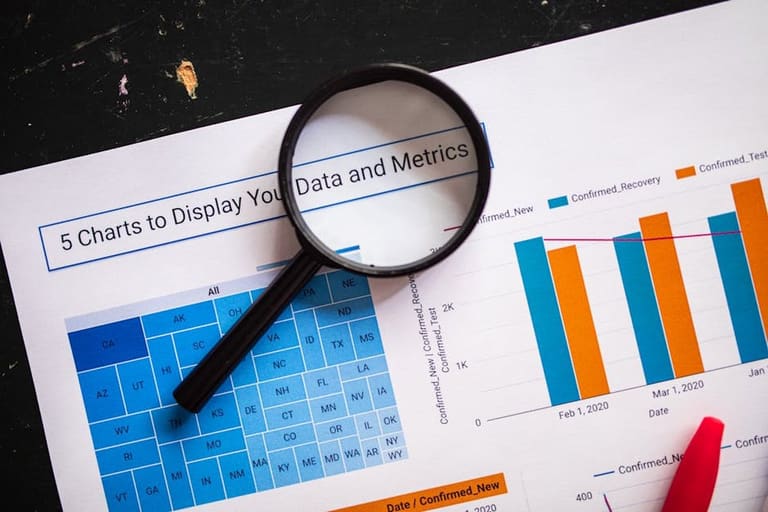
Evaluation metrics play a critical role in the process of making collected data meaningful and interpreting it. This process involves processing the collected raw data to turn it into information and making this information usable in decision-making processes. Data analysis and interpretation strategies allow an organization to accurately evaluate its performance and shape its future strategies. In this context, choosing the right analysis methods and interpreting the data correctly is of great importance.
Data Analysis and Interpretation Tools
| Tool Name | Description | Use Cases |
|---|---|---|
| Microsoft Excel | A tool widely used for basic data analysis and visualization. | Financial analysis, sales reports, simple statistical analyses |
| SPSS | Software with a user-friendly interface developed for statistical analyses. | Survey analyses, market research, academic studies |
| Python (Pandas, NumPy) | A programming language with powerful libraries used for data manipulation, analysis, and visualization. | Big data analysis, machine learning, custom analysis needs |
| Tableau | A tool used for data visualization and business intelligence that offers the ability to create interactive reports. | Dashboard creation, data exploration, reporting |
The methods used in data analysis vary according to the type of data obtained and the purpose of the analysis. Various techniques such as statistical analyses, regression analyses, time series analyses, and data mining help examine data in depth and draw meaningful conclusions. In addition, data visualization techniques also play an important role in making complex data more understandable. Presenting data through charts and tables allows decision-makers to evaluate the data faster and more effectively.
Stages of Data Analysis
The data analysis process consists of certain stages. These stages can be listed as data collection, data cleaning, data analysis, and interpretation of results. In the data collection stage, the data needed for analysis is collected from various sources. In the data cleaning stage, errors and gaps in the collected data are corrected. In the data analysis stage, the data is examined using appropriate analysis methods. Finally, in the interpretation of results stage, the findings obtained are evaluated and meaningful conclusions are drawn. Each stage is critically important for the accuracy and reliability of the data analysis.
Data Analysis Methods
- Descriptive Statistics: Summarizes the basic characteristics of the data.
- Inferential Statistics: Generalizes the results obtained from a sample to the population.
- Regression Analysis: Examines the relationship between variables.
- Time Series Analysis: Analyzes data over time.
- Data Mining: Discovers patterns and relationships in large data sets.
- Cohort Analysis: Examines the behavior of groups that share common characteristics over a specific time period.
In the data interpretation process, the results obtained need to be evaluated in line with the organization's goals and strategies. It is important that this evaluation be made not only by treating the data as numerical values but also by taking into account the dynamics of the sector in which the organization operates and the competitive environment. Data interpretation is a strategic tool that supports decision-making processes and guides the organization's future steps.
For a successful data analysis and interpretation process, the data analysis tools must be used correctly, the analysis methods must be well understood, and the data must be interpreted correctly. This way, evaluation metrics help the organization evaluate its performance objectively and contribute to its continuous improvement efforts.
Best Practices for Success Measures
Evaluation metrics are critically important for measuring how successful an organization is on the road to achieving its goals. Using success measures effectively improves strategic decision-making processes, increases performance, and ensures that resources are used more efficiently. In this section, we will examine the best practices for defining and applying success measures.
Points to Consider When Developing Success Measures
- Alignment with Goals: Success measures should be directly related to the defined strategic goals.
- Measurability: Success measures must be measurable numerically or qualitatively.
- Achievability: The defined goals should be achievable and realistic.
- Time Frame: A specific time frame should be defined for success measures.
- Relevance: The measures should be meaningful and important for the organization's overall performance.
- Clarity: Success measures should be easily understandable to all stakeholders.
In defining success measures, the SMART (Specific, Measurable, Achievable, Relevant, Time-bound) criteria are of great importance. These criteria provide a more effective evaluation process by ensuring that the measures are clear, measurable, achievable, relevant, and time-bound. For example, increasing monthly sales revenue by 15% can be a SMART success measure for a sales team.
| Success Measure | Description | Measurement Method |
|---|---|---|
| Customer Satisfaction | The level of satisfaction customers feel with a product or service. | Surveys, feedback forms, customer interviews. |
| Sales Revenue Growth | The rate of increase in sales revenue in a given period. | Financial reports, sales data analysis. |
| Market Share | The company's share in the total market. | Market research, competitive analysis. |
| Employee Engagement | The level of employees' commitment and motivation toward the company. | Employee surveys, performance evaluations. |
An effective success measure system should be reviewed and updated regularly. Market conditions, technological developments, and organizational changes may require success measures to be adapted as well. In this process, making use of data analysis and performance evaluation tools helps obtain more accurate and objective results.
It is important that success measures not be based solely on numerical data. A more comprehensive evaluation should be made by also taking into account elements such as qualitative data, customer feedback, and employee opinions. Success measures should create value for all of the organization's stakeholders and support a culture of continuous improvement.
The Impact of KPIs on Success
Evaluation metrics: KPIs (Key Performance Indicators) are critical tools used to measure and monitor an organization's performance in the process of achieving its goals. KPIs are numerical values that show how close a business is to its strategic goals. Their impact on success is undeniably significant. Correctly defined and effectively tracked KPIs help companies improve their performance, enhance their decision-making processes, and gain a competitive advantage.
KPIs clearly reveal in which areas companies are successful and in which areas improvements need to be made. This ensures that resources are used more efficiently and increases the likelihood of achieving strategic goals. For example, the KPIs defined for a sales team can measure performance in areas such as sales volume, customer satisfaction, and new customer acquisition. This data plays an important role in identifying the team's strengths and the areas that need to be improved.
The Impact of KPIs on Success
- Measuring and Monitoring Performance
- Achieving Strategic Goals
- Improving Decision-Making Processes
- Efficient Use of Resources
- Gaining a Competitive Advantage
- Identifying Areas for Improvement
The table below examines example KPIs for different departments and the impact of these KPIs on success in more detail:
| Department | KPI | Impact on Success |
|---|---|---|
| Sales | Monthly Sales Revenue | Revenue growth, market share gains |
| Marketing | Website Traffic | Brand awareness, customer potential |
| Customer Service | Customer Satisfaction Rate | Customer loyalty, positive reputation |
| Production | Production Cost | Profitability, efficiency |
KPIs allow companies to evaluate their performance objectively and make continuous improvements. However, for KPIs to be effective, they need to be defined correctly, monitored regularly, and the data obtained needs to be analyzed and interpreted correctly. This way, companies can achieve their strategic goals faster and more effectively.
Common Mistakes and Solutions
When using evaluation metrics, there are some mistakes that businesses and individuals frequently encounter. These mistakes can lead to the misinterpretation of measurements, the making of wrong strategic decisions, and consequently a decline in performance. In this section, we will examine these common mistakes and how they can be solved in detail.
For a successful evaluation process, it is essential to first define clear and measurable goals. Goals that are vague or unrealistic can cause the evaluation process to end in failure. In addition, goals that are not aligned with the company's overall strategy are one of the important problems encountered. This misalignment can lead to a lack of coordination between different departments and the inefficient use of resources.
Mistakes Made in Success Measures
- Goals that are not clear and measurable
- Errors in data collection processes
- Incorrect data analysis and interpretation
- A lack of feedback mechanisms
- Failure to adapt to changing conditions
- KPIs that are not up to date
Mistakes made in data collection and analysis processes can also negatively affect the evaluation process. Incomplete or incorrect collection of data reduces the reliability of analysis results and can lead to wrong decisions. In addition, failing to analyze or interpret the collected data correctly is also an important problem. This prevents the current performance from being accurately evaluated and causes improvement opportunities to be missed.
| Mistake | Description | Solution |
|---|---|---|
| Vague Goals | The lack of clarity in goals makes measurement difficult. | Define SMART (Specific, Measurable, Achievable, Relevant, Time-bound) goals. |
| Incorrect Data | Incomplete or incorrect data collection distorts analysis results. | Standardize data collection processes and perform accuracy checks. |
| Insufficient Analysis | Failing to interpret data correctly leads to wrong decisions. | Get support from experts in data analysis and use different analysis methods. |
| Lack of Feedback | Not giving employees regular feedback reduces motivation. | Conduct regular performance evaluations and establish feedback mechanisms. |
Not using evaluation results as feedback is also a common mistake. Evaluation results offer an important opportunity to improve employees and processes. However, not sharing these results with employees or not taking improvement suggestions into account can lead to a loss of motivation and a decline in performance. For this reason, sharing evaluation results transparently and actively managing improvement processes is of great importance.
Conclusion: Methods for Using Evaluation Metrics Effectively
Evaluation metrics, KPIs, and success measures play a critical role in the process of an organization achieving its goals. Correctly defining, applying, and analyzing these metrics provides an important advantage on the road to success. For businesses to continuously monitor and improve their performance, these metrics need to be used effectively.
| Metric Type | Description | Example KPI |
|---|---|---|
| Financial Metrics | Measures financial performance such as revenue, profit, and cost. | Annual Revenue Growth |
| Customer Metrics | Measures customer satisfaction, loyalty, and retention rates. | Customer Satisfaction Score (CSAT) |
| Operational Metrics | Measures the efficiency and effectiveness of business processes. | Production Cost Reduction Rate |
| Marketing Metrics | Measures the success and impact of marketing campaigns. | Website Traffic Growth |
The effective use of these metrics supports data-driven decision-making processes and helps the organization achieve its strategic goals. To achieve success, it is important to continuously review and update the metrics and to adapt to changing market conditions and business needs.
Recommendations for Effective Use
- First, define KPIs that fit your company's strategic goals.
- Make sure that the defined KPIs are measurable and achievable.
- Regularly review your data collection and analysis processes.
- Track and report your KPIs at regular intervals (monthly, quarterly).
- Share the results obtained with all stakeholders and gather feedback.
- Update your KPIs and strategies in line with the feedback.
It should not be forgotten that evaluation metrics do not consist solely of numerical data; qualitative feedback and insights are also important. For this reason, in addition to the metrics, it is necessary to take into account other sources of information such as customer reviews, employee feedback, and market research.
The effective use of evaluation metrics supports continuous improvement and learning processes. Through these processes, organizations can gain a competitive advantage and achieve sustainable success. Managing metrics correctly plays a critical role in helping businesses achieve their long-term goals.
Frequently Asked Questions
Why are evaluation metrics important for a business, and what benefits do they provide?
Evaluation metrics allow businesses to measure and improve their performance objectively. They show how close they are to their business goals, support decision-making processes, increase efficiency, and ensure that resources are used more effectively. In addition, they are also important for evaluating and motivating employee performance.
What should we pay attention to when selecting a KPI (Key Performance Indicator)? Which criteria make KPIs effective?
When selecting a KPI, it is important to pay attention to the SMART criteria (Specific, Measurable, Achievable, Relevant, Time-bound). KPIs should be specific, measurable, achievable, relevant, and time-bound. In addition, they should be aligned with the business's strategic goals and easy to track.
Whose input should we gather from stakeholders when defining success measures, and how should this process be managed?
When defining success measures, the input of different stakeholders such as senior management, middle managers, and field employees should be gathered. This ensures a shared understanding and participation in achieving goals at all levels. The process should be managed with open communication and feedback mechanisms.
Which types of evaluation metrics are more suitable for different sectors or departments? Can you give examples?
Evaluation metrics vary by sector and department. For example, while customer acquisition cost (CAC) and conversion rates are important for marketing, efficiency and error rates are critical for production. Revenue growth and customer satisfaction are important for sales, while employee turnover rate and satisfaction surveys are important for human resources.
Which common methods and tools are used to measure evaluation metrics? What are the advantages and disadvantages of these tools?
Among the common methods used to measure evaluation metrics are surveys, data analysis tools (Google Analytics, Tableau), CRM systems, and performance evaluation software. The advantages of these tools are that they facilitate data collection and analysis. Their disadvantages are that they can be costly and require technical knowledge.
What should we pay attention to when performing data analysis? Which strategies should we follow to prevent misinterpretation?
When performing data analysis, attention should be paid to data accuracy, sample size, and statistical significance. To prevent misinterpretation, it is important to examine the data from different angles, test assumptions, and get expert opinions. In addition, it is necessary to remember that correlation does not mean causation.
What should we pay attention to when defining success measures? What should a good success measure be like?
When defining success measures, it is important to set realistic and achievable goals, take stakeholders' expectations into account, and make sure that the measures are aligned with the company's overall strategy. A good success measure should be clear, measurable, achievable, relevant, and time-bound (SMART).
What are the most common mistakes encountered when tracking KPIs, and how can we avoid them?
The most common mistakes made when tracking KPIs include incorrect KPI selection, data collection errors, analysis deficiencies, and failure to turn results into action. To avoid these mistakes, it is important to select the right KPIs, standardize data collection processes, develop data analysis skills, and turn the results obtained into improvement plans.