 Afrikaans
 Azərbaycan
 Bosanski
 Čeština
 Dansk
Dansk Deutsch
 English
 Español
 Filipino
 Français
 Hrvatski
 Indonesia
 Italiano
 Magyar
 Melayu
 Nederlands
 Norsk
Norsk Oʻzbek
 Polski
 Português
 Română
 Slovenčina
 Slovenščina
 Suomi
Suomi Svenska
 Tiếng Việt
 Türkçe
 Ελληνικά
 Беларуская
 Български
 Русский
 Српски
 Українська
 עברית
עברית اردو
اردو العربية
 پښتو
پښتو فارسی
فارسی አማርኛ
አማርኛ मराठी
मराठी বাংলা
বাংলা தமிழ்
தமிழ் ไทย
ไทย မြန်မာ
 한국어
한국어 中文
中文 日本語
日本語

ఈ బ్లాగ్ పోస్టు, మైక్రోసర్వీస్ ఆర్కిటెక్ట్చర్లో ముఖ్య పాత్ర పోషించే API Gateway కాన్సెప్ట్ ను విస్తృతంగా వివరిస్తుంది. మైక్రోసర్వీసుల ప్రాథమిక సూత్రాల నుంచి, API Gateway అంటే ఏమిటి? ఇది ఎందుకు అవసరం? వంటి ప్రశ్నలకు సూక్ష్మంగా సమాధానాలు ఇస్తుంది. API Gateway వాస్థవ్యంగా ఏం చేస్తుంది, మైక్రోసర్వీసుల మధ్య కమ్యూనికేషన్ పద్ధతులు, భద్రత ప్రాక్టికల్స్, పనితీరు నిర్వహణ, API Gateway మరియు మైక్రోసర్వీసుల అనుసంధానం, ఉత్పాదకత పెంపు సూచనలు, విజయవంతమైన ఆశయాలు గురించి వివరించబడింది. చివరగా, API Gateway తో మైక్రోసర్వీసు మేనేజ్మెంట్ యొక్క ప్రాముఖ్యతను ఎత్తిచూపుతుండగా, ఆధునిక అప్లికేషన్ డెవలప్మెంట్ ప్రసారాల్లో ఈది ఇస్తున్న లాభాలనూ వివరించింది. ఇలా, పాఠకులకు API Gateway మైక్రోసర్వీస్ ఆర్కిటెక్ట్చర్లో పాత్ర పైన పూర్తిస్థాయిలో అవగాహన కలుగుతుంది.
API Gateway అంటే ఏమిటి? మరియు ప్రాముఖ్యత
API గేట్వే అనేది మైక్రోసర్వీస్ ఆర్కిటెక్ట్చర్లో క్లయింట్లు & వెనుక ఎండ్ సర్వీసుల మధ్య వారధిగా పనిచేసే ఒక శక్తివంతమైన వ్యవస్థ. అసలు లక్ష్యం: వెనుక ఎండ్ ప్రమేయాన్ని క్లయింట్ లకు కనిపించకుండా చేసి, సింగిల్ & consistent API interface ని ఇవ్వడం. ఇంత వలన, క్లయింట్ లు ఐదు లేదా పదే మైక్రోసర్వీస్లు వరకు పరోక్షంగా, సింగిల్ ఎంట్రీ పాయింట్ లోనుంచి ఈసుబావుగా పని చేయొచ్చు. API Gateway శరీరంలో ఒడ్డు నిరూపణ, authorization, traffic management, data transformation, విశ్లేషణ వంటి పలు పనులను నిర్వహించగలదు.
API Gatewayకి ప్రధానగానుండేది: మైక్రోసర్వీసుల స్వతంత్రతను కాపాడుతుంది. ప్రతి మైక్రోసర్వీస్ తన స్పెషాలిటీపై విజ్ఞానం పెంచగలుగుతుంది, కానీ క్లయింట్తో కమ్యూనికేషన్ బాధ్యతను API Gateway తీసుకుంటుంది. ఇది అజనబుల్లా development ను వేగవంతం చేస్తుంది, architectureను agileగా & responsive గా చేస్తుంది. అలాగే, mobile/web/IoT వంటి విభిన్న client types కు వేరే APIs ను అందిస్తుంది, tailor-made solutionsను సులభంగా చుట్టిస్తుంది.
API Gateway ముఖ్య లక్షణాలు & పనితనం:
| లక్షణం | వివరణ | ప్రయోజనం |
|---|---|---|
| Routing | Client requestsను సరైన మైక్రోసర్వీసులకు పంపిస్తుంది | Clientకు complexity తగ్గుతుంది |
| Authentication | Client identityను పక్కా చేస్తుంది మరియు authorization చేస్తుంది | భద్రతకు పను చేస్తుంది |
| Traffic Management | Requests rateని అదుపు చేస్తుంది, Load balancing చేస్తుంది | Performance స్వచ్ఛంగా మిగిలుతుంది |
| Transformation | Requests & responses formatను మార్చుతుంది | వేరు వేరు clientsికి optimal support |
API Gatewayను జాగ్రత్తగా అందించాలి – design నప్పుడు extra care అవసరం. ఇది నాణ్యమైన implementation కుదిరితే, development వాడిక, performance & security మరింత మెరుగుపడతాయి.
API Gateway ఉపయోగాలు:
- Clarity: క్లయింట్ ఇవ్వాల్సిన క్లిష్టత తగ్గిస్తుంది
- Microservice autonomy: మైక్రోసర్వీస్ ఫ్రీగా innovate చేయొచ్చు
- Security boost: multiple protocolsతో భద్రత బెటర్
- Performance: load balancing, caching ద్వారా వేగం
- Custom APIs: mobile/web/IoTకు ప్రత్యేక support
- Speed: development sprintలకు సహాయం
API Gateway ఆధునిక సాఫ్ట్వేర్ architecturesలో pivotal. మైక్రోసర్వీస్ success కోసం API Gatewayను జాగ్రత్తగా design & configure చేయడం must.
మైక్రోసర్వీసుల మూల సూత్రాలు
మైక్రోసర్వీస్ ఆర్కిటెక్ట్చర్ అంటే స్పష్టంగా explain చేసేసి: ఒక పెద్ద monolith ని చిన్న, free గా సోపేల్ మరియు scaleable unitsగా విడగొట్టడం. ఈ units అనేవి అంచనాకు ఆకారంలో ఉంటాయి, కావాలంటే ప్రత్యేక language/platformలో runమౌతాయి. API Gateway కూడా ఇక్కడే key కు నిలబడుతుంది – సర్వీసులతో బయట ప్రపంచానికి ఎంట్రీ పాయింట్ రూపొందిస్తుంది.
ప్రాథమిక సూత్రం: సింగిల్ రిస్పాన్సిబిలిటీ ప్రిన్సిపల్. ప్రతి మైక్రోసర్వీస్ తను దానికి అప్పగించిన task/activity మీదే focus చేస్తుంది – అలాగే, మార్పులు చేయడంలో ఓ service చేయబడితే ఇతర సర్వీసుల functionality దెబ్బ తగలదు. దీని వలన robustness & reliability వస్తాయి.
Communication మైక్రోసర్వీసుల మధ్య APIలు ద్వారా జరుగుతుంది. API Gateway కంట్రోల్ పాయింట్గా: security, routing, traffic management చేయడం. ముఖ్య కావాలంటే ఏ విధంగా మైక్రోసర్వీసులు ప్రిన్సిపల్స్ పాటిస్తాయి/ API Gateway వాటికి ఎలా support చేస్తుంది అన్నది ఈ క్రింది తరహాలో:
| ప్రిన్సిపల్ | వివరణ | API Gateway పాత్ర |
|---|---|---|
| Single Responsibility | Each service క్రొత్త పని మీదే concentrated | Right targetకు requestsను ముందిస్తుంది |
| Independent Deployment | Service by service upgrade/distribution | Version control & compatibility manage |
| Scalability | Individual services scale independently | Load balancing, traffic sharing |
| Fault Isolation | Service crash effect on others – nothing | Circuits break, isolate faults |
మైక్రోసర్వీసులా agility & flexibilityకు API Gateway బలమైన support. కొత్త రెండు లైన్లు- ఆయా services add/remove/update చెయ్యడమనేది ఇంకా easy. process steps in microservice architecture:
- Needs Analysis: ఏ భాగాలు విడిపించాలో decide చేయాలి
- Service Design: Every serviceకి clear API define చేయాలి
- Independent Development: Teams విడిగా డెవలప్ చేయాలి
- Automated Testing: Unit+Integration tests మార్చాలి
- Continuous Integration: CI నియంత్రణ
- Automated Deployment: CD pipelines valla deploy
- Monitoring/Logging: Realtime monitor & log track
Fault tolerance & resilience– ఇంకో pillar. ఒక service fail అయితే system మిగతా భాగాలు safe. API Gateway circuit breakerలతో faulty serviceను isolate చేస్తుంది.
మైక్రోసర్వీస్ ఆర్కిటెక్ట్చర్: పెద్ద అప్లికేషన్ ను manageable modules లొ పంచి development/process ని వేగవంతం చేస్తుంది. – Martin Fowler
మైక్రోసర్వీసుల సూత్రాలు అప్లికేషన్ను adaptability, scalability, reliability తో నింపుతాయి; API Gateway వాటిని నిజంగా practicalగా చేసే ముఖ్య కారకంగా నిలుస్తుంది.
API Gateway ఆర్కిటెక్ట్చర్: కీ మూలలు
API Gateway ఆర్కిటెక్ట్చర్ అనేది మైక్రోసర్వీస్ అప్లికేషన్లు లోని clients (mobile/web/browser) మరియు back-end services మధ్య communication ని సమర్ధవంతంగా middleman గా పూర్తి చేయడం. Direct interactionsని centralize చేసినందువల్ల, security/routing/authentication/authorization లాంటి critical processes uniformగా జరుగుతాయి.తీరు, API Gateway వినియోగం మైక్రోసర్వీసుల simplicityని పెంచుతుంది.
ఈ architectureలో, API Gateway వెనుక నుంచి వచ్చే data ని మిక్స్ చేసి, clientకు single responseనిస్తుంది – thus, clientకి అనవసర calls/complexity తగ్గుతుంది. Load balancing, routing తో performance & availability పెరుగుతుంది.
| ఫీచర్ | వివరణ | ప్రయోజనం |
|---|---|---|
| Routing | Requests ని సరైన సేవకు పంపిస్తది | Performance, load balance |
| Authentication | Requests ని secure wayలో process చేస్తది | Unauthorized access block, data safe |
| Transformation | Data formatsని uniformగా మార్చి ఇస్తది | Integration easy, diversity support |
| రేట్ లిమిటింగ్ | Excess requests thwart చేయడం | System stability, resource conserve |
API Gateway చివరి లక్ష్యం: architecture complexityను గ్రహించకుండా client-centric developmentకు సహకారిగా ఉండడం; developers UI/UXపై మరీ ఎక్కువ దృష్టి పెట్టడానికి వీలు. Security policiesని centralizedగా అమలు చేస్తుంది – మొత్తానికి app safe, robustగా ఉంటది.
API Gateway ఫంక్షనాలిటీలు
API Gateway యొక్క ప్రముఖ పనులు: routing, authentication/authorization, transformation, rate limiting, caching. ఇలా centralized security/processలు అవునే: individual microservicesలకు అది burdenలా ఉండదు.
API Gateway లక్ష్యబద్ధం components:
- Routing Engine
- Authentication Module
- Authorization Module
- Throttle Mechanism
- Cache Manager
- Request Transformation Layer
API Gateway అనేది disparate protocols/tools మధ్య mediation చేస్తుంది: RESTful API/gRPC both, seamless communicationకు అనువుగా change చేస్తుంది – thus, clientకి consistency, microservice tech diversityలో freedom.
మైక్రోసర్వీసు కమ్యూనికేషన్
API Gatewayలో microservices మధ్య communication orderlyగా ఉంటుంది. REST API/gRPC/message queues తో మైక్రోసర్వీసులు పరస్పర data share/trigger చేస్తాయి. API Gateway వీటిని orchestrate చేసి scalability, reliability ప్రక్రియను పెంచుతుంది. Monitoring/troubleshooting ప్రక్రియ కలిగి, communication health track చేయొచ్చు.
API Gateway error managementలో కూడా can play crucial role: error trap చేసి, clientకి readable messages పంపి, alternative actions suggest చేయడం. Thus, user experience improves.
Microservices: a set of small, autonomous services working together for one application. – Martin Fowler
మైక్రోసర్వీసుల మధ్య కమ్యూనికేషన్ పద్ధతులు
మైక్రోసర్వీస్ systemsలో service-to-service communication efficiency/system performance/root stabilityకి vital. కమ్యూనికేషన్ కోసం వివిధ protocols/tools. అయితే ఆ విధానాల ఎంపిక: దగ్గరి ప్రెసల్ అవసరాలు, scalability/securityకు ఆధారంగా ఉండాలి. Broadly, two approaches: Synchronous & Asynchronous communication.
| కమ్యూనికేషన్ విధానం | Protocol | అడ్వాంటేజ్ | డిజ్అడ్వాంటేజ్ |
|---|---|---|---|
| REST API | HTTP/HTTPS | Simple, universal, easy implement | Synchronous, latency-sensitive |
| gRPC | HTTP/2 | High performance, Bi-directional | Complex, learning curve high |
| Message Queues | AMQP, MQTT | Asynchronous, reliable, scalable | Setup complexity, inconsistency risk |
| Event Driven Architecture | Kafka, RabbitMQ | Loose coupling, realtime data flow | Event handling/tracking hard |
Synchronous communication: ఒక service responseకోసం wait చేస్తుంది – REST/gRPC తరహా. REST APIs పూర్తిగా standard HTTP callsలో JSON/XML pay load. gRPC HTTP/2లో పుష్ అప్పీరం high throughput. Drawback: ఒక service timeout అయితే, others wait/write bottlenecks.
Asynchronous communication: messaging queues లేదా event-based systems ద్వారా, loosely coupled, scalable architecture – Kafka/RabbitMQతో prevalent. Data consistency & scalability improve, though infra complexity ups.
Choosing method అంటే: Real time needs, throughput, reliability, security, infra skills.
- Needs: Realtime/latency requirements
- Scalability: Load spikes expect అయితే
- Reliability: Data loss risks
- Security: Data protection approaches
- Complexity: Infra/tools familiarity
API Gatewayలో, service-to-service communication simplification/security ఏమీపడుతుంది – requestsను proper servicesకి route చేస్తుంది, authentication/authorization/rate limitingను centralize చేస్తుంది.
API Gateway భద్రత: ఉత్తమ ప్రక్రియలు
API Gateway అనేది మైక్రోసర్వీసులలో out-facing central system – thus, hacker target. API Gateway security మెరుగుపడితే, system-wide securityనూ improve. Aim: unauthorized access prevent, data privacy protect, uptime maintain.
Authentication (OAuth 2.0/JWT) & Authorization protocols integrate చేయడంతో security wonders. Authentication– who are you? Authorization– what you can do? Proper mechanisms – hackers access limit. Also, traffic encrypt (SSL/TLS), sensitive info shield. Key practices:
- Authentication & Authorization: OAuth 2.0, JWT(parallel security)
- Input Validation: Incoming data filter, injection prevent
- Rate Limiting: Overuse block, DoS defense
- SSL/TLS Encryption: Traffic protect, privacy safeguard
- API Keys: Access control, audit trail
- Web Application Firewall (WAF): Common attacks prevent
| Threat | Descrip. | Defense |
|---|---|---|
| Unauthorized Access | Unauthenticated users API access | OAuth 2.0/JWT, RBAC |
| SQL Injection | Malicious SQL in API requests | Input validation, ORM, Prepared statements |
| XSS | Malicious scripts in client browsers | Sanitize output, CSP policies |
| DoS | Excess demand, API downtime | Rate limiting, filtering, resource allocation |
Security protocols evolve; so, periodic scanning, patching essential. New threats appear; thus, incident response plans must be on standby.
పనితీరు నిర్వహణలో API Gateway వినియోగం
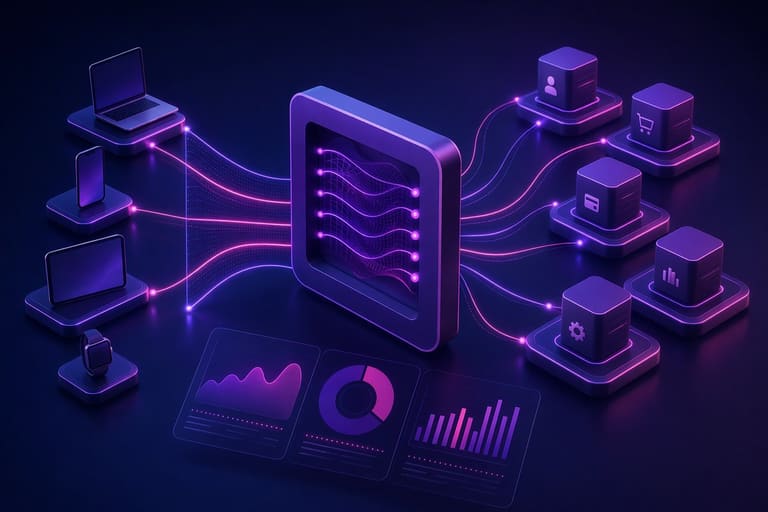
API Gateway మైక్రోసర్వీస్ పరిణామంలో performance pillar. Proper configuration– overall speed boost, latency minimize, experience enhance.
API Gatewayలోని central logging, metrics monitor ద్వారా bottlenecks pin-point చేయొచ్చు; optimization scope ఏర్పడుతుంది. Caching frequently used data reduces service load. Key metrics:
| Metric | Meaning | Importance |
|---|---|---|
| Response Time | API Gateway request processing speed | User experience/performance key |
| Request Count | API incoming frequency | Capacity/load control |
| Error Rate | Failed API calls percent | Stability/reliability measure |
| Resource Use | CPU/memory/network consumption | Efficiency/scalability |
Performance strategies include:
- Caching: Frequently used data store/serve
- Throttling: Request frequency limit– overload prevent
- Compression: Payload shrink– bandwidth optimize
- Monitoring/Analytics: Constant metrics watch/improve
API Performance మెరుగుదల హెచ్చరికలు
API Gateway performance upgradation steps: load balancing, circuit breaker, auto-scaling, async communication. Load balancing: distribute API calls, prevent service overload. Circuit breaker: faulty service access block, system stable. Auto-scaling: resource allocate as per traffic. Async communication: long process background run, fast response to user.
API Gateway performance optimization: microservice architecture successలో must-have element. Proper strategy/configuration: Overall speed leaps.
Latest updates, patching crucial for security/performance. Updated Gateway better security/tools/features.
API Gateway & మైక్రోసర్వీసులు: రిలేషన్ ఎలా ఏర్పడుతుంది?
Microservice architecture: applications to mini independent services split– rapid development, scalable infra. But client నడిపిన complexity. Solution: API Gateway. Client point of access– direct service interaction avoid, central route. Thus, less frontend complexity, better backend control.
Relation analogy: API Gateway– conductor, Microservices– orchestra. Requests direct (right service), responses transform/aggregate, security/watch, all managed centrally. Security, performance tuning– API Gateway role. Microservices focus on core business logic, API Gateway on orchestration.
- Client request accept
- Identify target microservice(s)
- Request transformation/enhancement if needed
- Route to relevant service
- Collect responses from microservices
- Aggregate/transform/reply to client
Performance tuning: caching/frequent data speed access, load balancing– distribute requests, data analytics– optimize services. Feedback loop– constant improvements.
| Feature | API గేట్వే | Microservice |
|---|---|---|
| Role | Client-service mediator | Independent business logic processor |
| Responsibilities | Routing, auth, throttling, caching | Core operation, data processing |
| Independence | Microservice independent | Other microservices independent |
| Scalability | High-traffic scale | Demand-based scale |
API Gateway– microservice potential unleash, development speed up, overall app performance elevate. Architecture migration– careful Gateway design/fitting essential.
API Gatewayతో ఉత్పాదకత పెంపు సూచనలు
API Gateway– microservice productivity amplifier. Properly tuned API Gateway– rapid development, lower cost, robust performance. Here, Gateway efficiency max చేసేందుకు practical tips.
API Gateway Efficiency Metrics:
| Metric | Description | Optimization |
|---|---|---|
| Response Time | Requests–gateway–responses speed | Caching, load balancing, optimized routing |
| Cost/request | Resource expense per API call | Reduce unnecessary data transfer, optimize resource use |
| Release frequency | Feature/updates deployment rate | CI/CD automation |
| Error rate | Failed API calls ratio | Error trap, monitoring, alerts |
Biggest advantage: single entry– complexity less– client direct multi-service interaction avoid– app maintenance simplifies.
- Caching: Frequently accessed data–cache–speed boost/service load reduce
- Load Balancing: Distribute calls–performance boost–single node failure avoid
- Auto-scaling: Dynamic resource adjust–cost efficiency
- API Monitoring/Analytics: Continuous tracking–identify/resolve bottlenecks
- Error Management: Proactive error handling–better UX/faster debugging
- Versioning: API versions manage–backward compatibility, seamless updates
Gateway securityవంటి best practices– not only data sichere, but system reliability improve, thus enhance productivity. Unauthorized access prevent– resource wastage avoid.
API Gateway must continuous monitoring/optimization. Regular metrics feedback– bottleneck fix– productivity & performance integrate.
విజయవంతమైన API Gateway ఉపయోగాల ఉదాహరణలు
API Gateway real world success stories – e-commerce, finance, healthcare, media/entertainment– everywhere Gateway shines, microservice control, security, performance, manageability benefits practically evident.
| Usage Area | Benefits | Sample Application |
|---|---|---|
| E-commerce | High-traffic management, personalized UX, secure payments | Product suggestion, rapid checkout |
| Finance | Secure API access, compliance, fast operations | Mobile banking, automated credit scoring |
| Healthcare | Safe patient data share, integrated services, mobile health apps | Telemedicine, remote patient monitoring |
| Media/Entertainment | Content delivery optimize, personalized recommendations, cross platform | Video streaming, online games |
Example: E-commerce– API Gateways mobile/web integration కలిగిస్తాయి, fast/safe shopping experience. Backend load balance, frontend speed/UX improve.
Finance: Mobile APIs secure via Gateway; OAuth, compliance aligned, automated analytics/tools securely exposed. Gateway enables regulatory controls easily.
Healthcare: Hospitals/tech– Gateway use– patient data safe, telemedicine integrated. Remote doctor/patient access, low cost, better outcomes.
Media/Entertainment: Video/Gaming– Gateway content manage, user-tailored features surface. Engagement/revenue upscale.
ఫలితం: API Gatewayతో మైక్రోసర్వీస్ మేనేజ్మెంట్
API Gateway microservice architectureలో central pillar: communication streamline, development ease. Security, performance, scalability advantages umbrella– single entry access, management simpler, complexity avoided.
| Feature | API Gatewayతో | API Gateway లేకుండా |
|---|---|---|
| Security | Central policy | Distributed config |
| Performance | Optimized routing/cache | Individual service-level optimization |
| Manageability | Centralize control/monitor | Distributed, complex management |
| Scalability | Independent scale | Service dependency–scale hurdles |
API Gateway benefits microservice adoption, success, developer focus on business logic, infra complexity handled centrally. Even integration becomes easier, standard.
- Security priority while implementing Gateway
- Performance metrics periodically monitor–bottleneck fix
- Analyze scalability needs–adjust strategies
- Standardize microservice communication–integration smooth
- API Gateway central management–efficiency up
- Development optimized with Gateway tools
API Gateway– microservice architecture must-have. Properly set/configured– application speed, safety, scaling– leap forward. Business agility, competitive edge– Gateway investనితం recommendable.
అడుగుతున్న ప్రశ్నలు
API Gateway అసలు పని ఏమిటి, ఏ సమస్యలు సులువు చేస్తుంది?
API Gateway అనేది మైక్రోసర్వీస్ వేదికకు ఒకే ఎంట్రీ. Clients directly individual services access చేయొద్దు – దాని వలన complexity తగ్గుతుంది, security పెరుగుతుంది, requests central route/authenticate/authorize/traffic-control etc, all centrally managed. Thus, client teams service whereabouts గురించి తెలుసుకోకుండా efficient development చేస్తారు.
Monolithic appకి బదులు, ఎందుకు మైక్రోసర్వీస్ structure ఉపయోగించాలి?
Microservices– smaller, independent, rapid develop/test/deploy units. Faster delivery, problem fixing, diverse tech support, partial failure impact low. Scalable architecture possible.
API Gatewayలో ప్రధాన భాగాలు/ఫంక్షన్లు ఏమిటి?
API Gatewayలో routing, authentication/authorization, rate limiting, request transformation, API composition. Routing– relevant service access. Authentication/authorization– requests secure procession. Rate limiting– overload prevent. Request transformation– requests/service-expected format adapt. API composition– multi-service data aggregate, unified response.
Microservice communication methods– advantages/disadvantages?
RESTful APIs (synchronous), Messaging queues (asynchronous) major methods. REST– simple, but tight coupling. Messaging queues– loose coupling, scalability, but infra complexity.
API Gateway సంరక్షణకు ప్రధాన security practices?
Authentication (OAuth 2.0/JWT), authorization, input validation, HTTPS, API keys, DDoS defense, firewall. Regular scanning/patching mandatory.
API Gateway పనితీరు improve/monitor చేయాలంటే ఏ metrics చూడాలి?
Caching, load balancing, connection pooling, compression, parallel process– all speed up. Monitor: latency, request count, error rate, CPU/memory.
API Gateway– architectureను ఆదారంగా మానవ పరిణామం ఎలా వేగవంతం చేస్తుంది?
API Gateway– clients service complexity నుండి protect, central route, uniform API– central security/manageability. Developers– implementation details worry nodig; API మరియు authorization సెలవుని. API Gateway– API manage/security–centrally solve.
Gateway ఉపయోగంలో గొప్ప వైపులు మిగులు ఎదురులు & వాటి పరిష్కార మార్గాలు?
Single point of failure, complexity, performance problems– potential drawbacks. Resolution: High availability, proper load balancing, monitoring/alerts, performance tuning– all essential.